A counterfeit product does not need to be a perfect copy to cause damage. A convincing box, a familiar logo and an item that looks legitimate at first glance can be enough to mislead a customer, disrupt a distributor or create an expensive returns problem. Stock hologram labels UK businesses can order quickly offer a practical, visible way to make genuine products easier to recognise and packaging interference harder to hide.
For many product owners, the immediate need is not a long custom-label project. It is a dependable security seal that can be applied to existing packaging, introduced during a product launch or used to strengthen a vulnerable distribution route. Ready-to-buy hologram labels meet that need without the development time of a fully bespoke design.
What stock hologram labels do
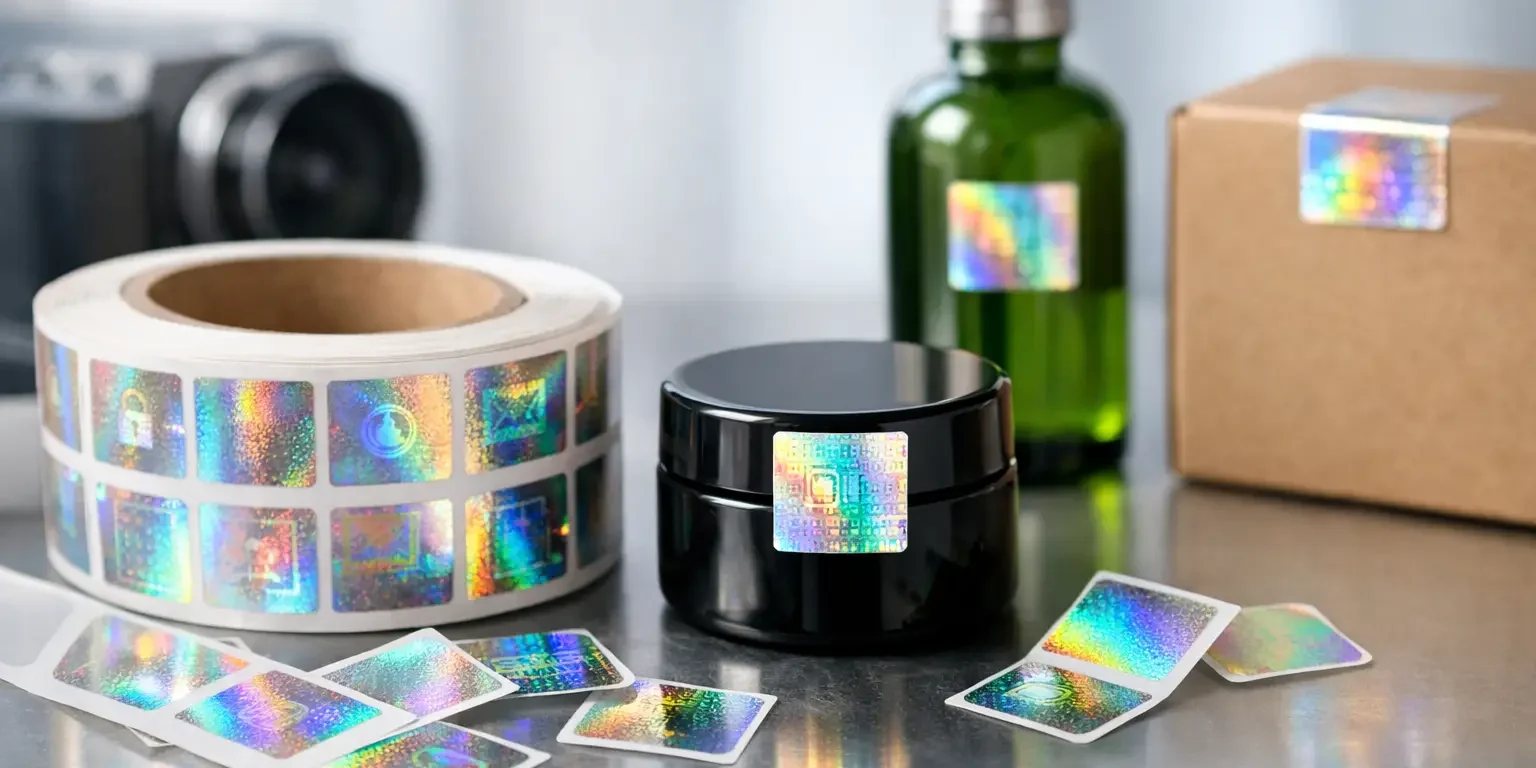
A stock hologram label is a pre-designed security sticker produced with a holographic image or pattern. When viewed from different angles, it reflects light and changes appearance in a way that is difficult to reproduce with ordinary print. It gives customers, retailers and warehouse teams a quick visual cue that the pack has been considered, protected and checked.
The strongest value often comes from combining that visible effect with tamper evidence. A label placed over a carton flap, cap, closure or access point can show whether the product has been opened. Depending on the material selected, it may break apart on removal, reveal a void message or leave a patterned residue. The pack cannot simply be opened and returned to the shelf looking untouched.
This matters across a broad range of products. Cosmetics and supplements need to inspire confidence before use. Electronics, automotive parts and industrial components can be vulnerable to substitution. Collectibles, alcohol and premium retail goods benefit from a stronger impression of authenticity. Even where counterfeiting is not the main concern, a security seal can discourage opportunistic interference in transit or at the point of sale.
When stock hologram labels UK buyers should choose
Stock labels are a sensible choice when speed, simplicity and cost control matter more than exclusive artwork. They are particularly useful for a first security-label trial, a short production run, a seasonal range or an urgent packaging update. A generic holographic seal can be introduced without waiting for custom artwork approval, tooling or a bespoke production schedule.
They also work well as part of a layered approach. A business may already use branded cartons, batch coding and controlled distribution, then add a stock hologram seal at the closure point. The hologram gives a quick inspection point for people handling the product, while tamper evidence adds a physical barrier to undetected access.
There is a trade-off. Because stock designs are available to more than one buyer, they are not a unique proof of origin in the way that a custom hologram featuring your logo, distinctive artwork or hidden authentication device can be. A determined counterfeiter may imitate the general look of a hologram, even if they cannot accurately reproduce the original material or effect.
For lower-risk products or immediate requirements, that may be entirely appropriate. For high-value goods, regulated products or brands facing an established counterfeit problem, stock labels are often best used as an interim measure or as one component of a more specific security programme.
Choose the material around the application
The visual design attracts attention, but the material determines how the label performs. Before ordering, consider where it will be applied, what surface it will meet and what should happen if someone attempts to remove it.
A standard permanent adhesive hologram label may be suitable for packaging that does not require evidence of opening. If the label is meant to protect a closure, a destructible material is often more suitable. It fragments when lifted, making removal difficult without obvious damage. Void and honeycomb materials are designed to reveal a message or pattern when the label is removed, which provides a clear indication of tampering.
Surface conditions make a difference. Smooth, clean cartons and coated packaging are usually straightforward. Textured surfaces, low-energy plastics, curved containers, cold storage and oily industrial parts may need more careful testing. A label that looks excellent on a sample board is of little use if its adhesive fails after transport, refrigeration or normal handling.
Label size matters too. A small circular seal can be ideal for bottle caps, jars and compact retail packs. Larger rectangular labels may suit cartons, cases or equipment housings. The right format should cover the opening point without obscuring statutory information, instructions or a barcode.
Make the label part of a clear checking process
A hologram label is more effective when people know what they are expected to look for. That includes your own packing team, distributors, retailers and, where appropriate, the end customer. The message does not need to be complicated. A simple instruction such as checking that the seal is intact before opening can support the label’s purpose.
Internally, establish where the labels are applied and who is responsible for them. Keep stock controlled, record usage where the risk justifies it and inspect application quality during packing. A skewed seal, poor adhesion or incorrect placement can undermine the benefit of an otherwise high-quality product.
For goods moving through multiple warehouses or distributors, photographs of the correctly sealed pack can be useful reference material. Teams should know that a broken, missing or visibly re-applied label is a reason to pause and investigate, not simply an aesthetic issue. This protects product integrity and helps identify where a weakness may have entered the supply chain.
Visible security is valuable, but it is not everything
Holograms are excellent at making a product look more difficult to copy, and that deterrent has real commercial value. They can raise the effort and cost required to imitate packaging, while giving legitimate goods a more professional finish. However, visibility alone does not solve every authentication challenge.
If the consequences of a fake product are serious, consider what happens after the initial visual check. Do authorised teams need to verify a hidden feature? Is it necessary to identify individual packs? Would a serial number, barcode, QR code or variable data support traceability? These requirements move beyond a standard stock label and may call for a bespoke solution or specialist variable-data label service.
A custom hologram can incorporate brand-specific imagery, colours, patterns and overt or covert devices such as UV features, hidden text, hidden images, thermo-reactive effects or scratch-off areas. These features create several levels of inspection, from a quick customer check to a more controlled verification process. They are not always necessary, but they can be worthwhile where brand reputation, consumer safety or revenue exposure is high.
The sensible approach is to match the security level to the risk. There is no benefit in paying for complex features that nobody will check. Equally, a basic seal may be insufficient if a product is frequently targeted, sold through uncontrolled channels or carries safety-critical implications.
Questions to settle before placing an order
A quick internal discussion can prevent the wrong label being chosen. Start with the product and its journey: where will the seal sit, who handles it, and what conditions will it face? Then decide whether the priority is a visible authenticity cue, evidence of opening or both.
It is also worth agreeing how long the label needs to remain effective. A seal on a short-life promotional pack has different demands from one used on stored spare parts or premium goods sold over several years. Consider the finish of the pack, the available application area and whether labels will be applied by hand or as part of a packing process.
Finally, be honest about the threat. If the main concern is casual opening in a retail environment, a stock tamper-evident hologram may be a very efficient answer. If the concern is organised counterfeiting or diversion, a tailored design with stronger authentication features gives more control.
HologramLabel.co.uk helps UK businesses make that distinction without turning label buying into a technical exercise. The aim is simple: select security that fits the product, the risk and the budget, with no unnecessary complication.
The most useful next step is to take one current pack, identify the point most vulnerable to opening or substitution, and decide what a legitimate, intact product should look like at a glance. That practical answer will usually point you towards the right stock label – or show when a bespoke hologram is the better long-term investment.