A genuine product sold through the wrong wholesaler, in the wrong territory or at an unauthorised price can damage a brand almost as quickly as a counterfeit. The best anti diversion packaging methods give products a visible identity, make interference apparent and provide evidence when stock turns up where it should not. For UK brands, the right approach protects margin, distributor relationships and customer trust without making packing operations needlessly complicated.
Diversion is often misunderstood as a counterfeiting problem. It is different. Counterfeiters make unauthorised goods; diversion involves genuine goods moving outside their agreed route to market. That might mean premium cosmetics intended for one export market appearing in UK discount retail, pharmaceutical stock being resold through an unapproved channel, or automotive components supplied to one distributor being passed to another.
Packaging cannot solve every channel-management issue on its own. Contracts, allocation controls and distributor due diligence still matter. But a well-designed label or seal gives a business something highly practical: a way to identify, inspect and investigate product movement.
What an anti-diversion pack needs to do
Effective anti-diversion packaging works best when it performs three jobs at once. It should deter opportunistic resale, help legitimate partners and customers recognise an approved product, and leave useful evidence when stock is diverted or opened.
The balance depends on the product and the supply chain. A high-value electronic item moving through several distributors may justify layered security and unit-level identification. A fast-moving retail product may need a simpler, highly visible seal that can be checked in seconds. The aim is not to make every pack look like a banknote. It is to make unauthorised movement harder, riskier and easier to prove.
Make unauthorised opening obvious
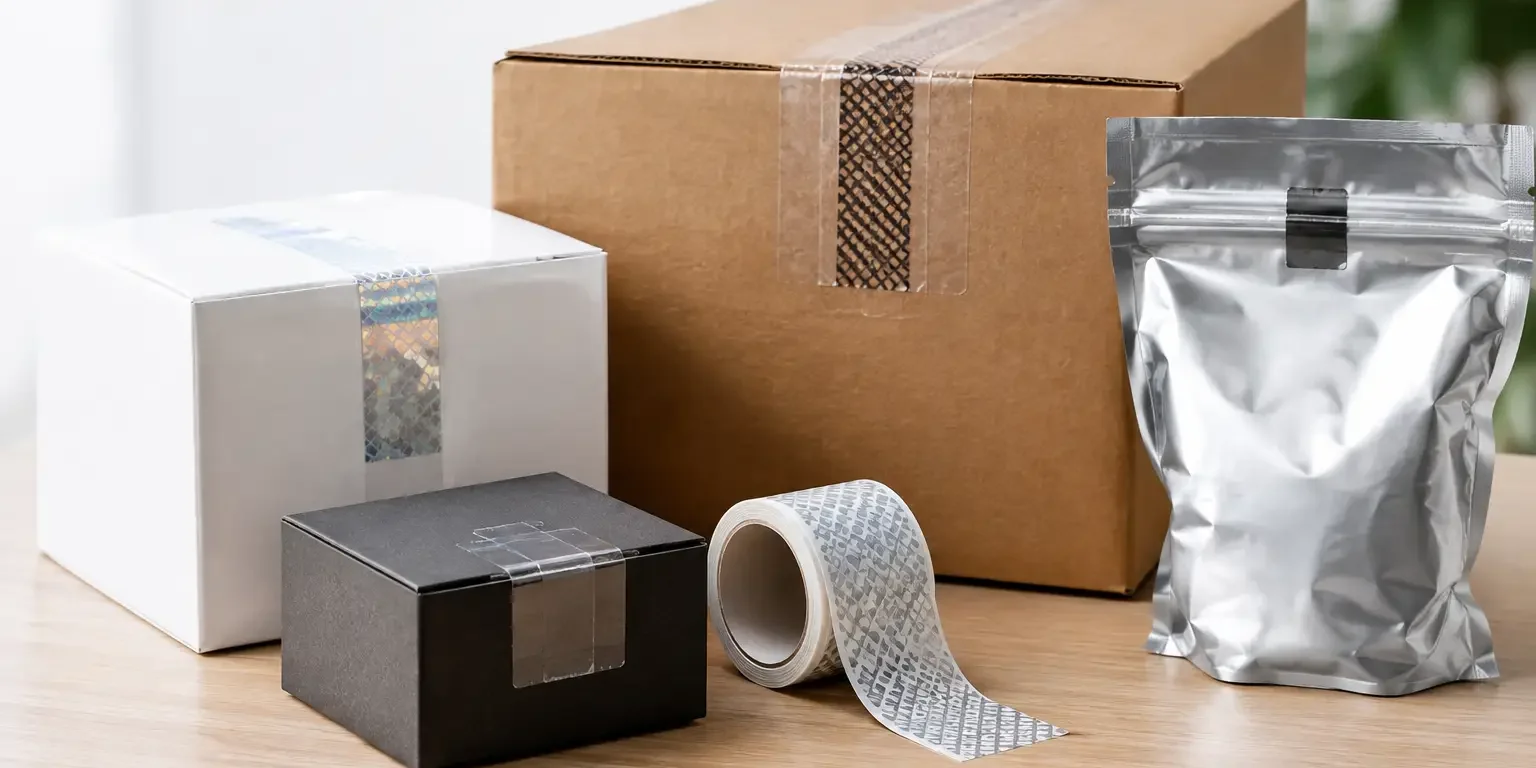
Tamper-evident packaging is a strong starting point because it shows whether a carton, bottle, pouch or box has been opened and resealed. Destructible labels break apart when lifted. Void labels leave a clear message on the packaging and often on the label itself. Honeycomb materials distort or separate, making removal especially difficult.
These materials matter in diversion cases because diverted stock is often relabelled, repacked or altered to suit a new market. A security seal placed across a closure or carton flap makes that intervention visible. It also reassures the next buyer that the product has remained intact.
Placement is as important as material choice. A label applied to a smooth panel away from the opening may be easy to remove without affecting the pack. A seal bridging the lid and carton, or crossing a join that must be opened to access the goods, creates meaningful evidence. Testing on the final packaging substrate is essential, especially where cartons have coatings, textured surfaces or cold-chain handling requirements.
Best anti diversion packaging methods to combine
The strongest programmes layer features rather than relying on one device. A copied sticker, an altered carton or a missing code should each create a reason to stop and check the product.
Custom hologram security labels
A bespoke hologram label is difficult to reproduce accurately because its visual effects are produced using specialist origination and manufacturing processes, not ordinary print. It gives warehouse teams, retailers and consumers an immediate visual cue that a product belongs in the approved supply chain.
For anti-diversion use, the design can incorporate a brand logo, distinct pattern or market-specific wording. This makes it easier to spot if export stock has appeared in a domestic channel. Holographic movement and colour shifts are simple to inspect without tools, which is valuable where product checks need to happen quickly.
The label becomes more effective when it is made tamper evident. A hologram that leaves a void message, breaks on removal or uses destructible material does more than decorate a carton. It makes label transfer from one product to another far less attractive.
Covert authentication features
Visible holograms deter and reassure, but covert features give trusted teams a second level of proof. UV elements, hidden text, concealed images, thermo-reactive details and coin-reactive effects can be built into a custom security label without making the whole method obvious to unauthorised sellers.
These features are particularly useful when a diverted product is suspected rather than confirmed. A distributor, field representative or investigator can perform a controlled check and distinguish genuine authorised packaging from copied or substituted materials. Covert devices are not a replacement for clear process, but they provide stronger evidence than appearance alone.
Choose features that your people can actually verify. If a check requires specialist equipment that no warehouse or field team has access to, it may have limited day-to-day value. A UV feature, for example, is practical when authorised staff have a suitable UV torch and written inspection guidance.
Unique identification and traceability
A unique serial number, barcode or other variable identifier links an individual unit, case or batch to a known production run and intended route. When a diverted item is found, the identifier can help establish when it was packed, who received it and whether it has appeared elsewhere.
This approach is most effective when records are maintained properly. A serial number with no scan process or allocation data will not tell you much. Conversely, even a straightforward system can reveal repeated leakage from a particular shipment, distributor or territory.
Many businesses use variable data alongside a security seal: the seal protects package integrity, while the number supports investigation. Where serialisation, barcodes, asset labels or custom variable text are needed, HologramLabel.co.uk can help point buyers towards the appropriate specialist service through its partner company.
Market-specific packaging cues
Territory-specific colour bands, wording, product codes, language panels or hologram variants can make diverted stock immediately easier to identify. A UK product may have a different security mark from stock intended for Ireland, Europe or another export market. The difference need not be conspicuous to consumers, but it should be clear to approved partners.
This method is useful when a brand has a small number of sales regions and distinct distribution agreements. It can become harder to manage when products move legitimately across many markets, or when frequent artwork changes increase packaging complexity. The practical question is whether your team can identify the variant quickly and act on the finding.
Scratch-off and controlled-release features
Scratch-off panels can protect a concealed authentication code until purchase, activation or a supply-chain check. They are helpful for high-value goods, collectibles, promotions and products where end-user verification is part of the brand-protection plan.
They are not ideal for every product. A code that can be revealed only once needs a clear policy for who checks it and when. If distributors scratch panels during routine handling, customers may question the product. Used thoughtfully, however, controlled-release information can expose product that has been handled outside the intended channel.
Design for the people who will inspect it
A security feature only works if people know what to look for. Give warehouse teams, sales representatives and authorised distributors a short, practical checking procedure. It should explain where the seal sits, what a genuine hologram looks like, how tamper evidence appears and what to do if something is wrong.
Avoid publishing every covert detail. Customers may need a simple message such as “check the intact security seal”, while internal teams receive fuller instructions. This separation preserves the value of hidden features and prevents fraudsters from receiving a step-by-step copying brief.
It is also worth planning the escalation route before an incident happens. Decide who receives photographs, serial numbers, batch details and the location where product was found. Consistent records turn isolated concerns into evidence of a pattern.
Choose protection that fits the commercial risk
The most expensive security label is not automatically the best choice. A premium spirit, medical device or high-value component may justify several overt and covert features with unit-level traceability. A growing cosmetics brand might begin with a bespoke tamper-evident hologram across the carton closure, then add market variations as distribution expands.
Consider product value, likelihood of diversion, the number of handovers in the supply chain, packaging surface, expected storage conditions and the consequences of a diverted unit reaching a customer. Low minimum order quantities can make it realistic to test a custom design before committing to a larger programme.
Good anti-diversion packaging is not about making a pack look complicated. It is about making the approved route visible, interference difficult and investigation credible. Start with the point at which your stock is most likely to leak, then build a label and seal strategy that your team can check with confidence.