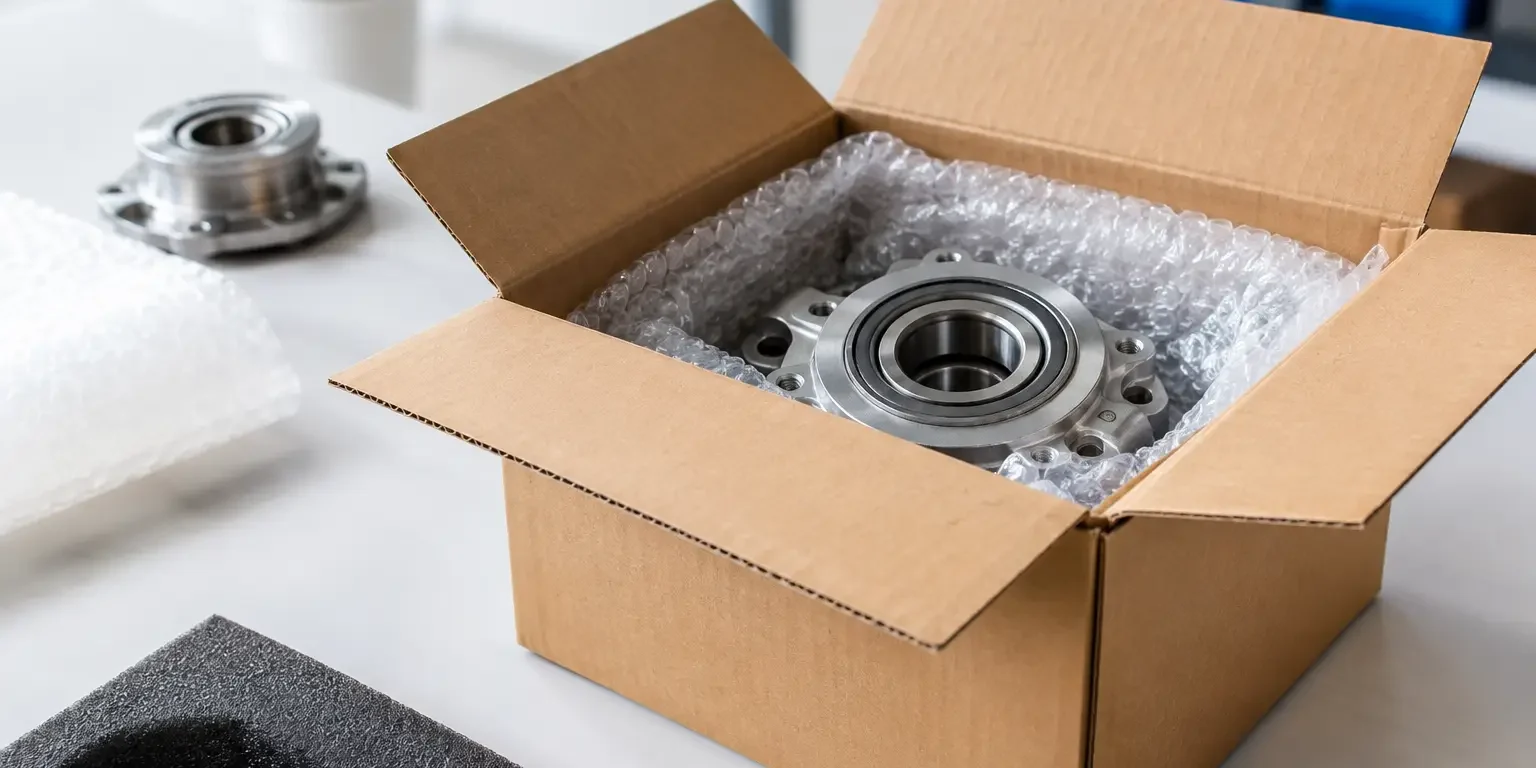
A replacement component can look perfectly legitimate and still create a costly problem. A brake sensor in the wrong box, an altered electronic module or a substituted industrial seal can lead to warranty disputes, production delays and serious questions about safety. Secure spare parts packaging gives businesses a practical way to show that a part is genuine, correctly supplied and has not been interfered with before it reaches the installer, distributor or end user.
For manufacturers, distributors and product owners, the goal is not simply to make packaging harder to copy. It is to make tampering obvious, give genuine stock a recognisable identity and help people make a quick, confident decision at the point of receipt.
Why spare parts need their own security strategy
Spare parts move differently from finished consumer products. They may pass through warehouses, workshops, service centres, independent resellers and international distribution channels long after the original product was sold. Packaging is often opened, handled and sometimes returned, which creates more opportunities for unauthorised substitution or diversion.
That matters especially where a part affects safety, performance or compliance. In automotive, electronics, pharmaceuticals and industrial equipment, a counterfeit or unsuitable replacement can damage more than a product. It can affect customer safety, contractual obligations and the reputation built around an established brand.
A standard carton, bag or plain label provides identification, but it does not necessarily reveal whether the pack has been opened and resealed. Nor does it make an imitation difficult to produce. Secure packaging should address both questions: is this the correct branded item, and has the pack remained intact?
Secure spare parts packaging starts with the risk
There is no single security label that suits every component. The right approach depends on the part’s value, the consequences of failure, the route to market and how buyers inspect it. A low-cost consumable sold in large volumes may need a clear tamper-evident seal that is easy for warehouse teams to recognise. A high-value control unit may justify several layers of visible and hidden authentication.
Begin by considering where the risk sits. Is the concern that counterfeit parts are entering the supply chain? Are original packs being opened so lower-grade components can be substituted? Could stock be diverted into unauthorised channels? Or does the business need customers to verify authenticity without specialist equipment?
These questions shape the packaging solution. They also prevent overspending on security features that do not address the actual threat. Effective protection is proportionate, practical and easy for the people receiving goods to understand.
Tamper evidence makes interference visible
Tamper-evident hologram seals are particularly useful for cartons, bags, boxes and component housings. Applied across an opening or closure, they show whether a pack has been accessed. Depending on the material selected, removal can leave behind a visible VOID message, a honeycomb pattern or a destructible residue that cannot be reapplied neatly.
This is valuable because it moves the discussion from suspicion to evidence. A workshop, warehouse or customer service team does not need to guess whether a seal has been lifted. They can see that the packaging integrity has been broken and follow the correct inspection process.
Material choice matters. A destructible label is ideal where the seal should fragment when removed. A void material can be better where a clear message left on the carton or container is useful. Smooth, curved, textured or dusty surfaces may require different adhesives, so testing on the real packaging is always sensible before a full run.
Holographic features make genuine packaging easier to recognise
A holographic design gives authorised packaging a distinctive appearance that is difficult to reproduce convincingly with ordinary printing. It can incorporate a company logo, a custom pattern or a branded visual device, helping staff and customers recognise the genuine article at a glance.
Visible security should be clear enough to use in a busy goods-in area. If someone must study a label for several minutes to decide whether it looks right, it will not be checked consistently. A well-designed hologram provides an immediate visual cue while reinforcing the quality of the brand.
For higher-risk applications, visible holographic effects can be combined with covert details. UV-reactive features, hidden text, concealed images, thermochromic elements and coin-reactive effects provide extra ways to authenticate a label. These features can be reserved for trained inspectors, authorised distributors or field engineers, making it harder for counterfeiters to understand every element they need to imitate.
Design security into the pack, not around it
The strongest labels are placed where they serve a clear purpose. A security seal should cross the opening that needs protecting, not sit decoratively on an area that can be avoided when opening the box. For bagged components, a label can secure the closure. For cartons, it may bridge the lid and side panel. For housings or cases, it can protect access points or critical fasteners.
It is also worth considering the customer journey. Can the recipient inspect the seal before breaking it? Will the label remain visible after the part is installed? Does the packaging need to be opened by gloved hands, or in a workshop with oil, dust and limited lighting? These details influence label size, position and material.
Branding and security do not need to compete. A bespoke hologram can carry a logo, colour elements and a tailored pattern while still functioning as a tamper-evident seal. That gives spare-parts packaging a more professional finish and makes it easier for legitimate stock to stand apart from generic or copied alternatives.
Build checks into everyday operations
A label only works when people know what to look for and what to do when something is wrong. The inspection process does not need to be complicated. Receiving teams should know the expected location and appearance of the seal, understand the signs of tampering and have a clear route for quarantining questionable stock.
Documentation should reflect the packaging control too. Procurement specifications can state the required seal type, placement and authentication features. Distribution partners can be shown reference examples of genuine labels and common warning signs. When a supplier, warehouse and service network all follow the same basic checks, gaps become much harder to exploit.
Where individual traceability is required, variable information such as serial numbers, barcodes or bespoke text may form part of the wider packaging system. That is a separate requirement from holographic authentication, but the two can work alongside each other. The key is to define who needs to verify the part, what information they need and at which point in the supply chain they need it.
Avoid security that creates operational friction
More features are not automatically better. A highly complex label may be appropriate for premium components targeted by organised counterfeiters, but it can be unnecessary for every product line. It may also confuse customers if the checking method is not explained clearly.
Equally, the cheapest plain seal can be a false economy if it is easy to remove, copy or bypass. The balance lies in selecting security that reflects the commercial exposure. Consider the value of the component, replacement cost, likelihood of counterfeiting, safety implications and the damage caused by a warranty claim or product recall.
Low minimum order quantities make it possible to protect a priority range first, rather than waiting for a large-scale packaging overhaul. A trial on one high-risk component family can show how labels perform in transit, how quickly staff adopt the inspection process and whether the design needs refining before wider rollout.
Make authenticity part of the customer experience
Secure packaging should reassure legitimate buyers without making their work harder. Clear tamper evidence tells them that a sealed pack is intact. A distinctive hologram helps them recognise the brand they chose. Additional covert checks give the business an escalation route when a part looks doubtful.
HologramLabel.co.uk can help turn those requirements into a bespoke label design, from a straightforward branded tamper seal to a multi-layer security feature built around your packaging and risk profile. Bring the component, the pack format and the challenge you are trying to solve. The right security label should make genuine spare parts easier to trust, and interference much harder to hide.