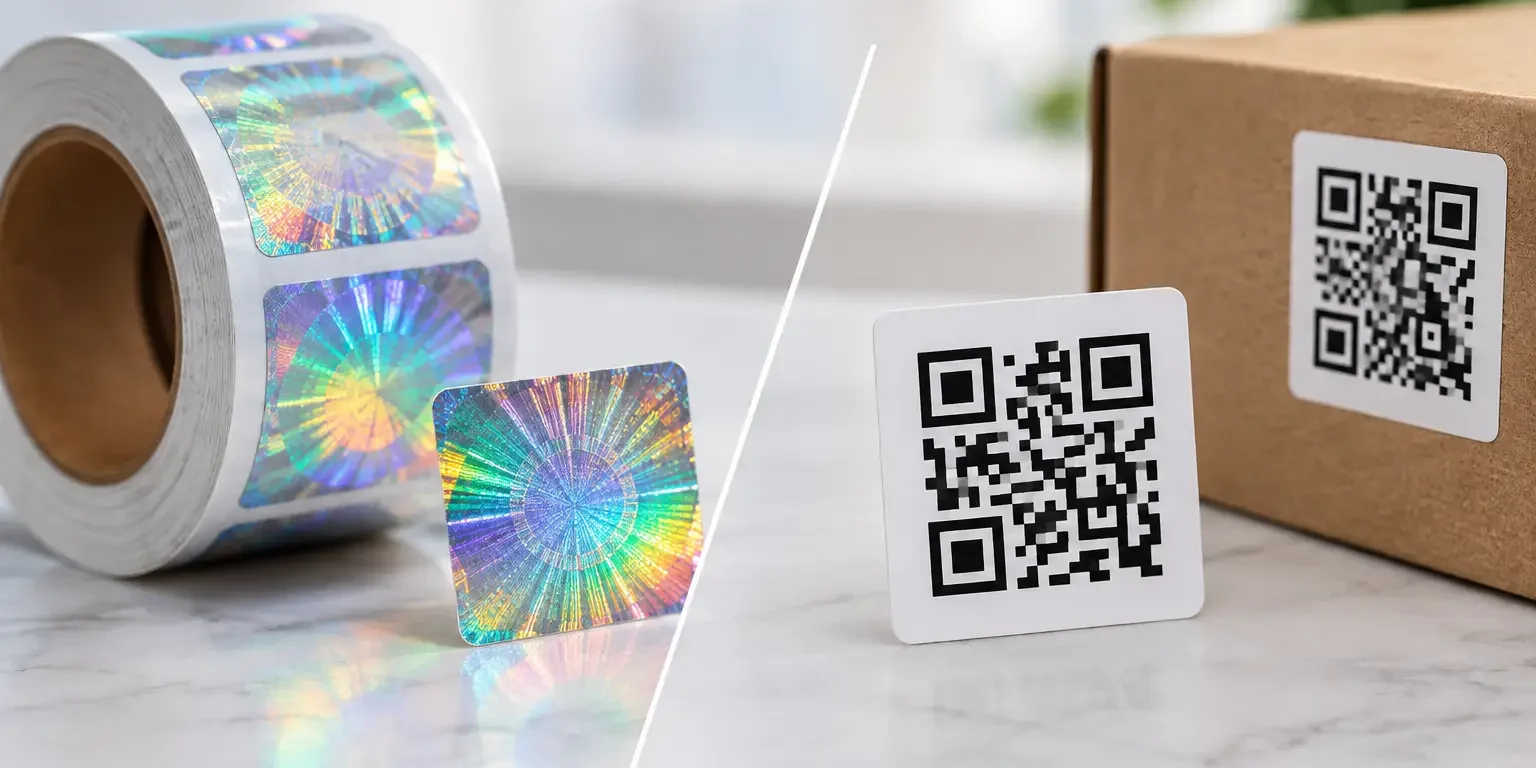
A counterfeit bottle, component or cosmetic box does not need to look perfect to cause damage. It only needs to look convincing enough at the point of purchase. That is why the choice between hologram labels versus QR codes should not be treated as a packaging preference. It is a decision about how readily a buyer, retailer or inspector can recognise the genuine article – and what happens when a product has been opened, copied or diverted.
QR codes and holograms can both have a place in a well-considered protection strategy. They do different jobs, however. One provides a visible physical security cue that can also show interference. The other can connect a physical item to digital information. For many UK brands, the strongest answer is not choosing one in isolation, but understanding where each method is credible and where its limits lie.
Hologram Labels Versus QR Codes: The Core Difference
A hologram label is a physical security device. Its shifting image, diffraction pattern and reflective effect are difficult to reproduce accurately using ordinary print processes. When it includes bespoke artwork, such as a company logo or a unique pattern, it gives customers and supply-chain teams a recognisable sign that the packaging has been produced for your brand.
A QR code is a machine-readable square that directs a smartphone or scanner to information. It may lead to a product page, a registration form, a batch record or an authentication service. It is useful because it can carry digital interactions beyond the package itself.
The key distinction is simple: a hologram is assessed with the eye and the product in hand; a QR code is assessed through a device and a connected system. A hologram can make unauthorised opening obvious if it is specified as a destructible or void tamper-evident seal. A QR code cannot do that on its own. Equally, a standard hologram does not automatically tell you where an item was scanned or whether a particular code has already appeared elsewhere. A QR-based system can, provided it uses unique codes and has the right data behind it.
Why a QR Code Alone Is Often Not Authentication
Many packaging teams add a QR code with good intentions, then assume it offers anti-counterfeit protection. A basic, static QR code does not. It can be photographed, copied and printed onto counterfeit packaging with very little effort. If every genuine item uses the same code, every fake can use it too.
Even a QR code leading to a genuine webpage can mislead the customer. Counterfeiters may copy the code directly from an authentic pack, or create a similar web address designed to collect customer data. The presence of a scannable square is not proof of authenticity.
QR codes become more useful for security when each product has a unique, controlled identity. This may involve serialisation, variable data, scan monitoring and rules that flag repeated or unexpected scans. That approach can support investigations into diversion, parallel trading and counterfeiting. It also requires careful system management, a clear customer journey and a plan for what happens when a scan raises a concern.
For brands that need serial numbers, barcodes, asset labels or variable custom text, the production and data-management side should be discussed from the outset. It is a specialised requirement, not simply a design detail.
Where Hologram Labels Add Practical Protection
Hologram labels work particularly well where a product needs an immediate, visible indication of legitimacy. A retailer receiving goods can make a quick visual check. A consumer can compare a familiar branded hologram with the one they expect to see. An inspector can look for agreed visual markers without depending on mobile signal, app downloads or access to a database.
The security can be layered to suit the risk. A bespoke hologram may include visible logo artwork and colour effects, alongside hidden text, micro details or UV-reactive elements that are checked under ultraviolet light. More specialised options can incorporate thermo-reactive features, coin-reactive details or scratch-off areas. These measures make copying more demanding because a counterfeiter must replicate more than a printed appearance.
Tamper evidence is often just as valuable as authentication. If the label bridges a carton flap, cap or closure, it can be made to break apart, leave a void message or damage in a honeycomb pattern when lifted. This does not stop every attempt to interfere with a product, but it makes interference easier to spot. For pharmaceuticals, cosmetics, alcohol, electronics and high-value components, that visible warning can protect consumers and reduce arguments over whether a pack was previously opened.
A hologram should not be presented as magic. Determined counterfeiters may imitate its look, especially if the design is generic and widely available. The better approach is to use bespoke artwork, select security features that match the threat, and train relevant teams on what they should see. Good security makes copying uneconomic or obvious, rather than relying on one feature to defeat every risk.
Choosing the Right Option for Your Product
The decision depends on what you need the label to prove. If your main concern is packaging interference, a tamper-evident hologram label is usually the more direct choice. It remains attached to the physical product and gives an immediate signal when the seal has been disturbed.
If you want to provide instructions, warranties, product registration or traceability information, QR codes are useful. They can help turn the pack into a point of contact with the customer, particularly when the destination is genuinely helpful and works well on a mobile phone.
Consider four practical questions before specifying either solution:
- Can a member of staff or a customer check it quickly without specialist equipment?
- Would a copied version be easy for a counterfeiter to reproduce or reuse?
- Does the packaging need to show whether it has been opened or replaced?
- Do you need a digital record of individual items, batches or scan activity?
Your answers may point clearly to one method. A low-risk retail item might benefit from a branded stock hologram as a visible packaging enhancement and deterrent. A regulated or high-value product may need a custom hologram seal with overt and covert features. A brand managing warranties, returns or complex distribution may benefit from QR-led serialisation as well.
When Combining Holograms and QR Codes Makes Sense
For higher-risk products, combining the two can create a more convincing and useful defence. The hologram gives the package a difficult-to-copy physical feature and can protect a closure with tamper evidence. The QR code provides a route to product information, registration or item-level checks. Each covers a weakness in the other.
The important point is to make the experience clear. If customers are asked to scan a code, tell them what a successful scan means and what they should do if something looks wrong. If a hologram contains a hidden or UV feature, decide who will be trained to verify it. Security only helps when the people using it understand the check.
Design also matters. A QR code should remain easy to scan after printing and handling, while the hologram should be placed where its movement, branding and tamper function are visible. Crowding several security devices into a small area can confuse customers and create unnecessary cost. A well-designed label often looks simple because the complexity has been considered before production.
Cost, Minimum Orders and Procurement Reality
A QR code can appear cheaper because the printed symbol itself is inexpensive. But the full cost may include unique-code generation, database hosting, integrations, monitoring, customer support and ongoing maintenance. Those costs can be worthwhile when tracking and data are central to the project.
Hologram labels have an upfront design and production consideration, especially for bespoke origination and layered security features. In return, they provide a physical deterrent, visible brand enhancement and, where required, tamper evidence in a single label. Low minimum order quantities can make custom protection accessible to growing brands as well as established manufacturers.
Procurement should compare outcomes rather than unit price alone. A cheap code that is easily copied, or an attractive hologram that is not placed across the vulnerable opening, may offer less value than a properly specified label. The right specification considers the product value, likely counterfeit threat, pack material, distribution route and the consequences if a fake reaches a customer.
HologramLabel.co.uk helps businesses turn those practical questions into bespoke hologram labels without making the process unnecessarily technical. You can bring the product, packaging challenge and brand idea; selecting the right materials and security layers is our job.
The most useful closing thought is this: choose the feature that makes the next fraudulent step harder. If that step is opening a pack, use tamper evidence. If it is copying the brand, use bespoke holographic security. If it is hiding movement through the supply chain, add controlled digital identification. The best protection starts with the risk you actually need to stop.