A counterfeit rarely arrives announcing itself. It may look close enough to the real thing to pass through a distributor, sit convincingly on a shelf or appear in an online marketplace listing beside your genuine product. By the time a customer notices a fault, your brand may be the one answering the complaint. Effective anti-counterfeiting is therefore not simply about catching copies. It is about making authenticity easy to recognise, interference hard to hide and imitation expensive to attempt.
For UK product owners, this is a practical commercial issue. Counterfeit goods can erode sales, create warranty costs, compromise compliance and, in sectors such as cosmetics, electronics, automotive parts and pharmaceuticals, put people at risk. A well-designed security label gives genuine products a visible marker of trust while adding features that are much harder for an opportunist copier to reproduce.
The real cost of a convincing copy
Counterfeiting is often treated as a problem for famous consumer brands. In reality, any business with a product that has demand, a recognised name or a dependable route to market can be a target. Smaller and growing brands can be especially exposed because their packaging may be easier to copy and their teams may have less time to investigate suspicious stock.
The immediate loss is the sale you did not make. The wider damage is more difficult to measure. A poor-quality imitation can lead customers to question the genuine product. Unauthorised substitution can confuse distributors. A package that has been opened, diluted or refilled can create a safety issue that becomes associated with your name rather than the counterfeiter’s.
That is why the best protection starts with a realistic assessment of where your risk sits. Is the principal concern copied products? Product diversion into an unauthorised territory? Returns fraud? Or packages being opened and resealed? The answer affects the label material and security features you should choose. There is no single sticker that is right for every product.
Anti-counterfeiting labels work in layers
A hologram is recognisable at a glance, which is part of its value. Its shifting light, movement and depth provide a visual cue that ordinary print cannot easily match. Yet the strongest anti-counterfeiting approach does not rely on a hologram alone. It combines features that work for different people at different points in the supply chain.
A customer needs something simple to check. A warehouse team may need a clearer sign that packaging has been disturbed. Your quality, compliance or brand-protection team may need a feature that is not publicly disclosed. Layered security meets all three needs without making the pack difficult to use.
Visible features build confidence at the point of sale
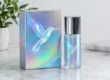
Overt features are those a person can see without specialist equipment. A custom holographic design, your logo, a distinctive pattern, colour effects or kinetic imagery can make genuine packaging recognisable within seconds. They also improve the presentation of premium goods, collectibles and limited editions.
The crucial word is custom. Generic holograms can be useful as a simple deterrent or for lower-risk applications, but they are not a unique proof of origin. A bespoke hologram incorporating brand-specific artwork gives customers and trading partners a more meaningful point of reference. It makes a counterfeiter reproduce your identity, rather than merely source a shiny label.
Covert features give authorised teams a second check
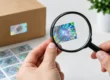
Features such as UV-reactive elements, hidden text, concealed images, thermo-reactive areas and coin-reactive details add another level of authentication. They are useful because they are not obvious from a photograph or a casual inspection. A copyist may replicate the broad appearance of a pack while missing the feature your staff know to test.
Covert devices should be chosen with care. If a feature requires a UV torch, then the people expected to inspect it need access to one and a clear instruction on what they should see. If the verification process is too obscure, even a clever security device can go unused. The aim is practical verification, not technical theatre.
Tamper evidence protects package integrity
Authentication confirms that a label is genuine. Tamper evidence answers a different question: has this product been opened or interfered with since it left authorised control?
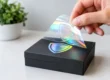
Destructible materials, void labels and honeycomb tamper-evident constructions are designed to show evidence of removal. Depending on the material, the label may break apart, leave a message behind or reveal a patterned residue when lifted. This makes it far harder to open a carton, refill a container or substitute contents without leaving a visible trace.
For many products, this function is as valuable as the hologram itself. A genuine security seal on an altered package is not enough. The label and application method must make attempted access apparent. That is why the position of the seal, the packaging surface and the opening route all need consideration before production begins.
Choosing the right level of protection
Security should be proportionate. Adding every available feature may sound reassuring, but it can be unnecessary if the product is low risk, frequently redesigned or sold in small quantities. Equally, a basic stock label may not be sufficient for a high-value product sold through multiple distributors or vulnerable to online copying.
Start with the value at risk and the likely method of attack. For a sealed cosmetic jar, a branded hologram with a destructible or void function may provide an effective balance of presentation and protection. For an automotive component, a durable label with concealed authentication details may be more appropriate. A premium spirit, pharmaceutical item or high-value electronic accessory may need several layers, including tamper evidence and controlled checks by authorised teams.
It also depends on the product environment. Labels for cold storage, curved containers, textured cartons, oily surfaces or outdoor equipment must be specified for their real-world conditions. A label that looks excellent on a flat sample board but lifts during transit does not provide security. Material selection is part of the anti-counterfeiting plan, not an afterthought.
Design the label around how it will be checked
The most useful security label is one people can understand. Before approving artwork, decide who will inspect it and what action they should take when something looks wrong. Customers may only need a visual reassurance. Retail staff may need to see whether a seal has been broken. Internal teams may need a confidential guide for checking hidden features.
A few focused design decisions make a significant difference. Place the label where it crosses an opening point if tamper evidence is required. Avoid hiding visible holographic effects in a fold or beneath a secondary sleeve. Keep the design distinctive enough that a genuine label is easy to describe. If you use hidden features, record the checking process and keep it within the appropriate team.
For products that require unique serial numbers, barcodes, asset identification or variable text, the label specification may need a variable-data solution alongside the holographic security design. This is where discussing the full requirement early prevents a gap between your authentication plan and your operational process.
Make security part of the supply chain
A label is strongest when it is supported by sensible handling. Control access to unused labels, record quantities received and reconcile them against production runs where the product risk warrants it. Give distributors and customer-service teams a simple route for escalating suspicious items, supported by photographs, batch details and purchase information.
Do not reveal every security feature in public-facing packaging or marketing. A visible hologram can signal that the brand takes protection seriously, while the details that distinguish a genuine label remain known only to authorised people. This balance discourages casual copying without handing a counterfeiter a complete specification.
It is also worth reviewing the programme as your business changes. A label selected for a first product launch may need upgrading when distribution expands, a product becomes more valuable or counterfeit activity appears in a new channel. Security is not a one-off purchasing decision. It is a managed part of protecting revenue, reputation and customer confidence.
HologramLabel.co.uk helps businesses turn those requirements into custom hologram labels, security seals and tamper-evident solutions without making the process needlessly complicated. Low order quantities can make it practical to protect a new range as well as an established one, while a bespoke design can bring your branding and security needs together.
The useful next step is not to choose features from a long list. Put one genuine product on the table, consider how it could be copied or opened, and decide what a customer, a distributor and your own team should each be able to verify. That conversation usually makes the right label specification much clearer.