A counterfeit rarely announces itself at the point it enters the market. It may look convincing on a shelf, arrive in a distributor’s consignment, or be offered online at a price that seems too good to be true. Authentication technology gives brands a practical way to show what is genuine, make interference visible and give customers a reason to trust the product in their hands.
For UK manufacturers and product owners, this is not only a packaging decision. It is a protection decision. A copied cosmetic, unauthorised vehicle part or substituted industrial component can damage revenue, customer confidence and, in some sectors, safety. The right security label helps create a clear distinction between an authentic product and an imitation that merely looks the part.
What authentication technology does
Authentication technology is the combination of features used to verify that a product, package or component is genuine. Some features are designed to be checked immediately by anyone. Others are intended for trained staff, distributors or investigators. The strongest approach usually combines both, so that counterfeiting becomes harder to attempt and easier to identify.
A holographic security label is a familiar example. Its changing colours and movement are difficult to reproduce with ordinary printing, allowing a buyer to make a quick visual check. Yet a hologram can do more than create a striking finish. It can carry bespoke artwork, a company logo, hidden text, micro-detail, UV-reactive elements or other security devices built into the label design.
Authentication and tamper evidence work especially well together. Authentication answers the question, is this product genuine? Tamper evidence answers another vital question, has this package been opened, removed or interfered with? A label that breaks apart, leaves a void message or distorts when lifted provides evidence that cannot simply be ignored.
Why visible security still matters
There is a temptation to assume that product protection must be digital to be effective. Digital systems can be valuable, particularly where products require traceability through a complex supply chain. However, a physical check remains useful because it is immediate. A customer, retailer or warehouse team can inspect a holographic seal without downloading an app, logging into a portal or relying on a mobile signal.
Visible features also act as a deterrent. Counterfeiters prefer easy targets: plain packaging, generic labels and products with no obvious proof of origin. A well-designed hologram label signals that the brand has considered security. It raises the time, cost and expertise required to produce a convincing copy.
That said, an overt hologram alone may not be enough for a high-risk product. If a feature can be seen by everyone, a determined counterfeiter can study it. This is why layered protection matters. Public-facing features should be supported by details that are less obvious and harder to replicate.
Overt, covert and forensic checks
Overt features are the details anyone can see or feel. Holographic movement, distinctive patterns, custom colours, embossed effects and tamper-evident materials fall into this category. They provide a fast first check and can enhance the appearance of branded packaging at the same time.
Covert features require a particular condition or simple tool to reveal them. UV elements, hidden images and concealed text can be included for use by internal teams or trusted distributors. They are useful where products move through multiple channels and staff need a secondary way to confirm authenticity without making the check obvious to the public.
Forensic features are normally reserved for more specialised investigations. Not every business needs them, and adding complexity without a clear purpose can waste budget. The sensible question is not which feature sounds most advanced. It is which combination addresses the actual risk your products face.
Choosing authentication technology for your risk
The right label specification depends on the product, the route to market and the consequences of a fake. A premium spirits brand may be concerned about bottle refilling and retail substitution. An electronics supplier may need to show whether a device has been opened or whether a genuine component has been fitted. A pharmaceutical or healthcare business may need highly controlled checks throughout distribution.
Start with the likely point of attack. Are products copied before sale, diverted into an unauthorised market, returned after use, or opened and resealed? Is the greatest concern a consumer being misled, a distributor accepting the wrong stock, or an engineer fitting an unsafe part? Clear answers make the label design more purposeful.
Material choice is equally important. Destructible labels break into fragments when removal is attempted. Void materials leave behind a visible pattern or message. Honeycomb tamper-evident constructions offer another way to make lifting obvious. The best option depends on the surface, storage conditions and whether the label must remain intact for the life of the product.
A label that performs perfectly on a smooth carton may behave differently on curved glass, textured plastic, powder-coated metal or a component exposed to heat, moisture and handling. Testing the proposed material on the real application is not an unnecessary delay. It prevents a security measure becoming a packaging problem.
Design security into the label from the start
The most effective authentication labels look intentional. They support the brand rather than appearing as an afterthought applied to the side of a box. Custom holographic artwork can incorporate logos, product lines, colours and repeat patterns, making the security device recognisably yours.
This matters because generic stock holograms can provide a visible deterrent, but they are not unique to one company. They may be a sensible choice for a lower-risk application, a short production run or a business that needs protection quickly. For established brands, high-value goods or products affected by persistent copying, bespoke artwork offers a clearer identity and a more difficult target.
Good design also considers where the label will sit. A seal bridging a carton flap has a different job from a label applied to a bottle cap, warranty point or product casing. Position affects both tamper evidence and visibility. If the feature cannot be checked easily, staff and customers are less likely to use it.
Avoid overloading one small label with every possible device. Crowded artwork can make a security feature difficult to read and can dilute the brand presentation. A focused design with a visible holographic effect, one or two controlled verification details and suitable tamper evidence is often more effective than a long catalogue of features.
Authentication technology needs a checking process
Even sophisticated labels are only as useful as the process around them. Your team should know what a genuine label looks like, where it is placed and what action to take when something does not match. This does not require a complicated manual. A short guide for receiving teams, sales representatives, retailers or service engineers can make checks consistent.
Consider who needs which level of information. Customers may only need to know that an unopened holographic seal is a sign of authenticity. A distributor may need to recognise the correct holographic artwork and packaging format. Internal quality or investigation teams may be given instructions for checking UV or hidden features.
It is also worth reviewing labels as products and threats change. A design that was suitable when volumes were small may need stronger features when the brand gains wider distribution or enters export markets. Equally, a security specification should not be fixed forever simply because it was used previously. Reviewing risk periodically helps you spend where it has the greatest effect.
When variable data is part of the answer
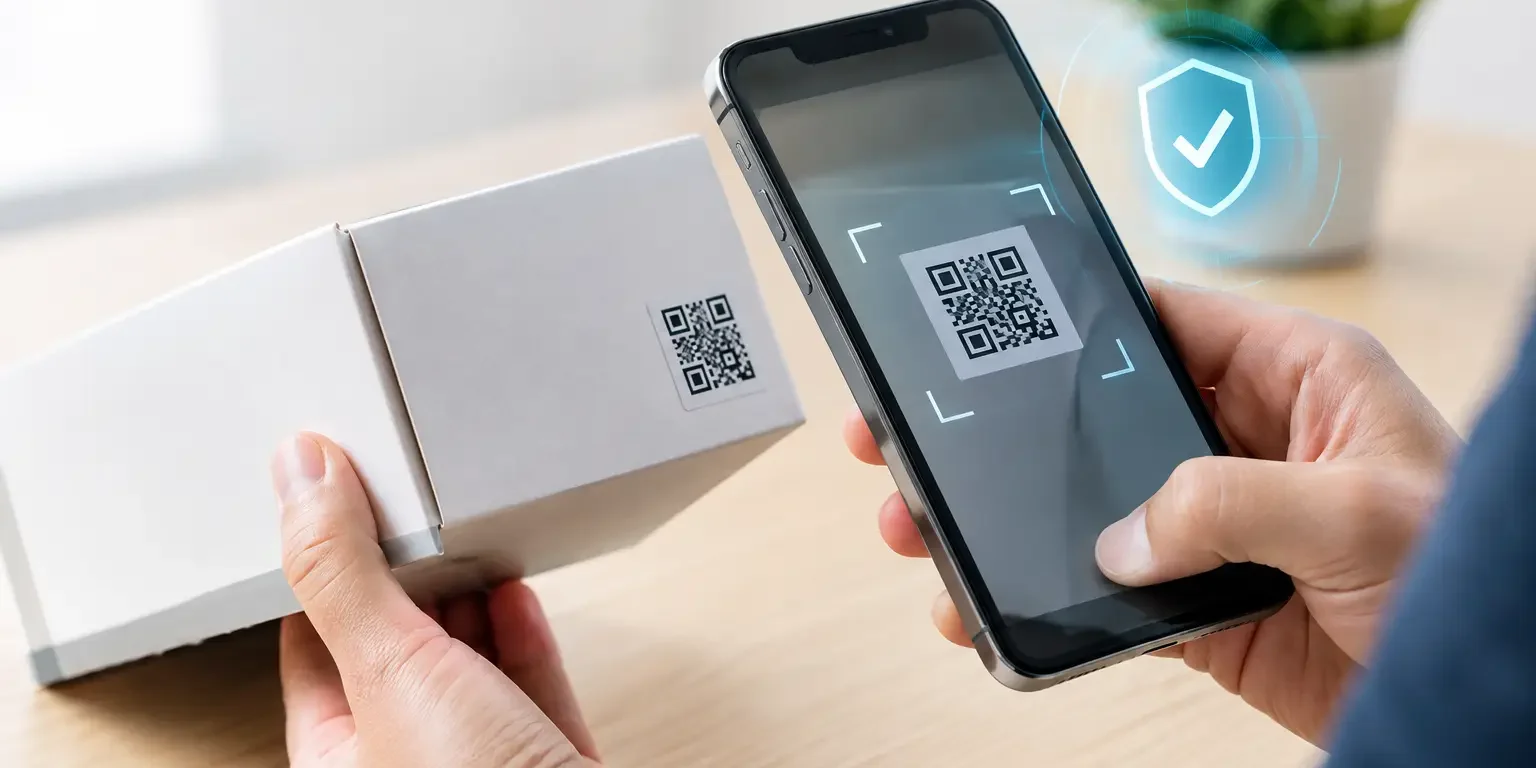
Some protection strategies benefit from unique serial numbers, barcodes or batch-level information. These can support stock control, traceability and investigation, particularly when a suspicious item needs to be connected to a production batch or supply route. They are not a replacement for physical authentication, though. A copied code can still be printed onto copied packaging.
The strongest arrangement often pairs a difficult-to-copy physical label with appropriate variable data and a clear checking procedure. Each element covers a different weakness. Physical features give an immediate visual and tamper check; unique data can add a record-based check where it is needed.
For businesses requiring serial numbers, barcodes, asset labels or variable text, the specification should be discussed at the outset so the physical and data elements are planned together rather than added later.
A practical investment in trust
Security labels do not need to turn procurement into a technical project. The goal is straightforward: specify a label that suits the product, the threat and the budget, then make sure the people handling the product can recognise what it is telling them.
HologramLabel.co.uk can help turn that brief into a bespoke holographic security label, from an accessible tamper-evident seal to a layered design with overt and covert authentication features. Bring the product, packaging surface and concern to the conversation. The right protection usually starts with those practical details, and that is where a useful design begins.