A pharmaceutical seal example is not simply a shiny sticker placed on a carton. It is a visible signal that a medicine, supplement or healthcare product has reached the buyer in its intended condition – and that any attempt to open, replace or interfere with the pack can be identified. When product safety and brand trust are on the line, that small area of packaging has a serious job to do.
For UK manufacturers, distributors and product owners, the strongest seals bring together three practical benefits: they make unauthorised opening obvious, give staff and customers a quick authenticity cue, and make counterfeiting more difficult and costly. The right approach depends on the product, the pack format and how it moves through the supply chain.
A pharmaceutical seal example in practice
Imagine a carton containing a high-value medicine or a premium food supplement. A custom holographic security seal bridges the opening flap and carton body. It carries the brand name within a detailed holographic pattern, which is difficult to reproduce convincingly with ordinary print.
When the carton is opened, the seal either breaks apart or leaves a clear VOID, honeycomb or patterned message behind. The pack cannot be reclosed neatly with the original seal in place. At a glance, a pharmacist, warehouse operative, retailer or end user can see whether the carton has been opened.
That is the basic pharmaceutical seal example. Its value rises when the hologram includes security details selected for the risk level of the product. Visible features might include bespoke artwork, colour effects and fine detail. Covert features can include UV-reactive text or an image that is only visible under the right light. Hidden wording, thermo-reactive elements or coin-reactive features can add another check for trained teams.
The purpose is not to make every pack look complicated. It is to give the right person the right way to check it. A consumer needs a straightforward visual cue. A pharmacist or quality team may need an additional authentication point. Brand investigators dealing with suspected counterfeit stock may need a harder-to-copy feature that is not publicly described.
What a good pharmaceutical seal needs to prove
A security seal should match the threat rather than follow a generic specification. A low-cost over-the-counter product sold through controlled retail channels has different risks from a high-value treatment, parallel-imported product or clinically sensitive device.
Evidence of tampering
Tamper evidence is often the first requirement. If a seal can be lifted and reapplied without visible damage, it may look professional but offer little real protection. Destructible materials are designed to fragment when someone tries to remove them. Void materials reveal a message on the surface, the label, or both. Honeycomb patterns create a similarly obvious indication that the seal has been disturbed.
Material choice matters. A carton flap may suit a destructible seal, while a plastic bottle, jar or pouch may require a different adhesive and face material. Surfaces can be glossy, coated, textured, curved, cold or exposed to handling friction. Testing on the actual packaging is the sensible route. A seal that performs well on a flat sample board may behave differently on a production carton or refrigerated container.
A credible authenticity signal
Holography is useful because it is immediately recognisable, visually distinctive and hard to imitate accurately. It can elevate the appearance of legitimate packaging while making basic copied labels easier to spot. A generic hologram may deter opportunistic interference, but a bespoke holographic design gives counterfeiters fewer shortcuts.
A good design can incorporate the brand logo, a recognisable pattern or product-specific imagery. It should be attractive without obscuring essential pack information, batch coding, legal text or dispensing instructions. For pharmaceuticals and healthcare products, security must support clear communication, not compete with it.
Checks that fit real operations
Security only works if people can use it. A warehouse team cannot reasonably inspect a long list of microscopic features on every delivery, and a patient should not need specialist equipment to decide whether a carton has been opened.
It helps to establish a simple checking hierarchy. First, confirm that the seal is present and intact. Next, check the visible holographic design against an approved reference. Finally, where appropriate, use a UV or other controlled feature for a higher-confidence inspection. The more complex checks can remain with quality, compliance and investigation teams.
Choosing the right seal format
There is no single best pharmaceutical seal. The format should reflect the packaging design and the likely method of interference.
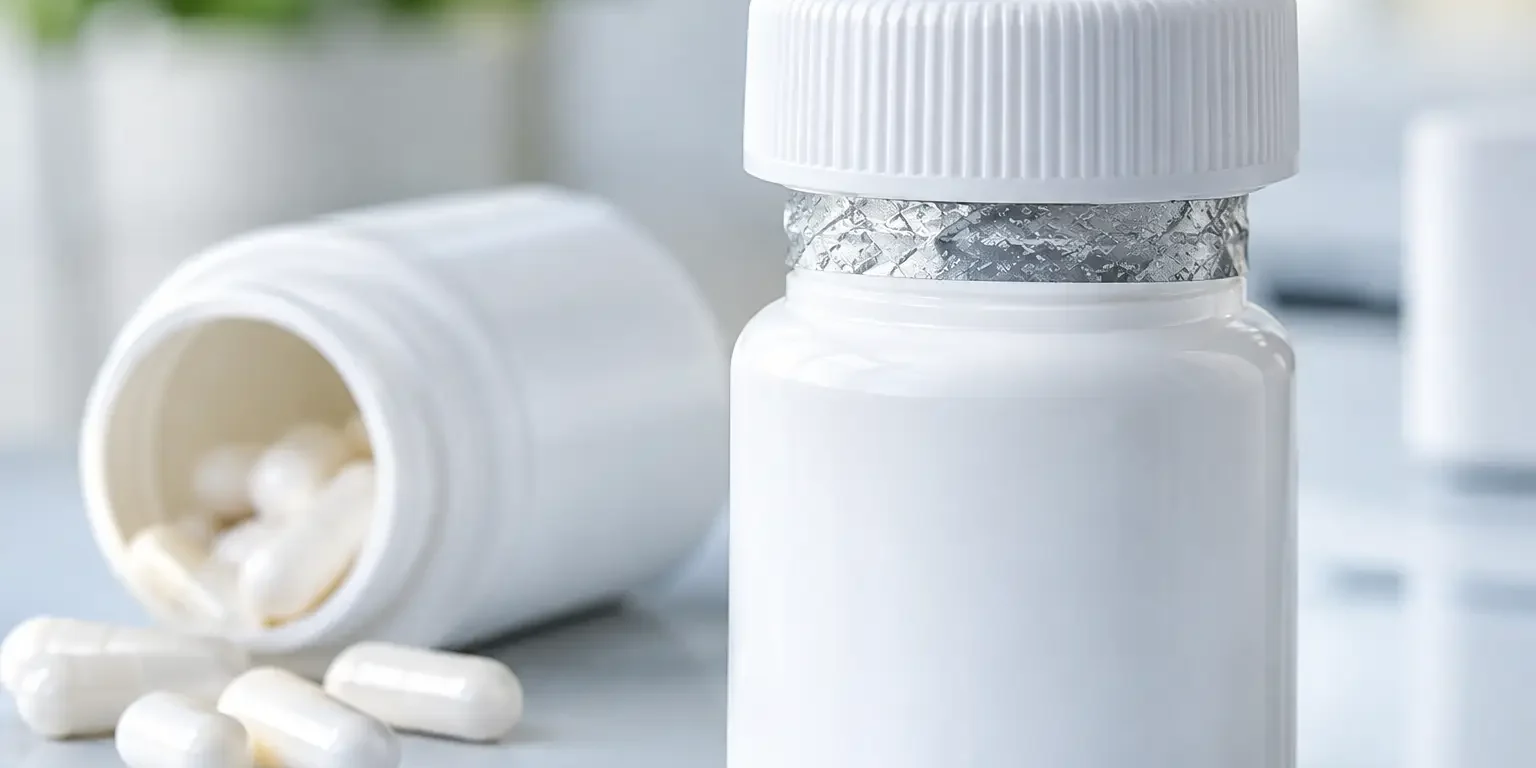
For folding cartons, a small seal across a closure flap is a common, practical option. It gives immediate evidence of opening and can be positioned to avoid mandatory information. For bottle caps and jars, a seal bridging the cap and container can show whether the closure has been disturbed. For pouches, sachets and flexible packs, placement needs careful consideration so the seal does not wrinkle, lift or impede opening.
Some businesses need a security seal primarily for anti-counterfeit protection. Others are more concerned with package integrity during distribution. Many need both. A holographic, tamper-evident label can address both needs, but only where the label material, adhesive, artwork and placement have been considered as one system.
There are trade-offs. A highly destructible label may give excellent evidence of removal but may not be ideal where a perfectly clean appearance is required before first opening. An elaborate design can add powerful authentication layers, but may not be necessary for a low-risk product. The sensible solution is proportionate security – enough protection to deter, expose and investigate problems without creating unnecessary production cost or complexity.
Designing for counterfeit resistance, not just appearance
Counterfeiters usually target the easiest weakness. If the carton looks convincing but the seal can be copied from a photograph, the packaging has an obvious gap. If the seal contains advanced features but is applied inconsistently, it may create uncertainty rather than confidence.
Start with the questions that reveal the genuine risk. Which products are most often diverted, substituted or copied? Are packs sold through pharmacies, online channels, clinics or international distributors? Does the product have a high resale value? Would a compromised pack create a direct safety issue, a regulatory problem or reputational damage?
From there, build a combination of overt and covert measures. Overt features are there to be seen: holographic movement, bespoke branding, fine patterns and a tamper-evident response. Covert features are there for controlled verification: UV details, hidden text or images, and other elements not obvious to a casual observer.
Avoid putting every security detail into public-facing instructions. A counterfeit operation should not receive a checklist of what to reproduce. Instead, provide approved reference samples and clear guidance to the people who inspect incoming goods, investigate complaints or manage recalls.
Production details that deserve attention
The best artwork cannot compensate for poor application. Before committing to a full order, confirm the seal size, orientation, label roll format and application method. Hand application may suit small batches or specialist products. Automated application can be more consistent for larger volumes, but requires labels that run reliably through the chosen equipment.
Adhesion should be tested after realistic storage and transport conditions. Consider humidity, chilled environments, abrasion in outer cases and contact with curved surfaces. If cartons are packed tightly, label placement must also avoid scuffing during transit.
It is equally useful to agree what an acceptable application looks like. A slight placement tolerance may be normal, while a seal that fails to bridge the opening flap is not. Clear quality expectations reduce disputes and give production staff a practical standard to follow.
Where packs require serial numbers, barcodes, variable data or individual tracking, these should be planned as part of the broader packaging-security process. They serve a different function from a holographic tamper-evident seal, although the two can work alongside each other. HologramLabel.co.uk can help develop the bespoke holographic element, while variable-data requirements may need a partner solution.
Make the seal part of a wider pack-security plan
A seal is a strong frontline defence, but it cannot solve every supply-chain problem alone. Its greatest value comes when it sits within a clear process for approved packaging, incoming-goods checks, complaint handling and escalation.
Keep a controlled reference of genuine seals, including photographs under normal light and instructions for authorised secondary checks. Train relevant staff to look for damaged, missing, misaligned or unfamiliar seals. If a suspect pack appears, isolate it rather than allowing it back into stock while questions are answered.
For growing brands, this need not become a complex programme overnight. Begin with the product most vulnerable to interference or imitation, choose an appropriate tamper-evident holographic seal, and test it properly on the finished pack. Security can then develop in line with the product range and the level of risk.
A well-designed seal gives people a clear reason to trust what they are holding. Give your packaging that proof, and make it difficult for anyone else to fake it.