A security seal that looks impressive but peels away cleanly has failed at the one moment it matters. This security seal procurement guide is designed for UK buyers who need to protect products, packaging and reputation without paying for features that do not match the real risk.
The right label can make interference obvious, help customers spot genuine goods and add a recognisable mark of quality to your packaging. The wrong specification can create false confidence, slow production or leave counterfeiters with an easy target. Good procurement starts by deciding what the seal must prove.
Start with the threat, not the finish
Security seals are often bought as a packaging detail. They should be treated as part of a wider commercial defence. A cosmetics brand may need to show that a jar has not been opened before purchase. An electronics distributor may need a way to discourage unauthorised returns or substitution. A manufacturer selling high-value components may need a visible sign that helps staff and customers distinguish genuine stock from imitation.
Write down the risk in plain language before choosing a material or hologram pattern. Are you trying to reveal opening? Deter copying? Protect warranty conditions? Reduce product diversion? Support product authentication at the point of sale? One seal can address several of these issues, but the balance of features should follow the risk.
A low-value retail item facing occasional package interference needs a different answer from a pharmaceutical, alcohol or collectible product facing deliberate counterfeiting. It depends on what would happen if a seal were copied, removed or ignored, and who needs to check it: a consumer, a warehouse team, a distributor or a trained inspector.
Choose the evidence of tampering carefully
Tamper evidence is not simply a claim printed on a label. It is the physical result left when somebody attempts to remove or disturb it. That result needs to be clear enough for the intended user to understand.
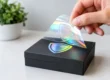
A destructible label breaks into small pieces when removal is attempted. It is a practical choice where a permanent, obvious indication is required and the surface allows good adhesion. Void materials leave a repeated message or pattern on the product, the label, or both, making removal more visible. Honeycomb and other specialist tamper-evident constructions can provide a distinctive fractured effect.
The best choice depends on the application surface and the product journey. Cardboard cartons, coated boxes, glass bottles, plastic containers, metal casings and uneven surfaces all behave differently. A seal that performs well on a smooth carton may not give the same result on textured plastic or a product exposed to heat, moisture or oils.
Ask for the seal to be tested on the actual substrate wherever possible. This small step can prevent a costly mistake. It also allows procurement and operations teams to check placement, removal behaviour and whether the remaining evidence is easy to see under normal warehouse or retail conditions.
Build authentication into the design
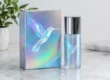
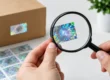
Tamper evidence shows that something may have been opened. Authentication helps show that the product or packaging came from you. Holographic security seals are particularly useful here because their appearance is difficult to reproduce convincingly with ordinary printing.
A custom hologram can incorporate your logo, brand colours, repeated patterns and visual effects that customers learn to recognise. This makes the seal part of the packaging rather than an afterthought stuck on at the end. It can also give genuine products a more premium, carefully controlled appearance.
For higher-risk goods, visible features alone may not be enough. Consider adding security elements that are less obvious to a counterfeiter, such as UV-reactive details, hidden text or images, thermo-reactive features, coin-reactive elements or scratch-off areas. These can give authorised staff a second way to check a product when a quick visual inspection is not sufficient.
There is a trade-off. Every additional feature can improve the security story, but complexity should have a purpose. If no-one knows how to verify a covert feature, it will not deliver its full value. Keep verification practical: decide who checks the seal, what they need to look for and when they will do it.
A security seal procurement guide for specification
A clear brief helps suppliers recommend the right construction quickly and price it honestly. You do not need to know production terminology before making an enquiry. You do need to provide the operational facts that affect performance.
Start with the product or pack type, the application surface, seal dimensions and the area available for application. Explain whether labels will be applied by hand or machine, the expected storage conditions and whether the product may encounter refrigeration, humidity, heat, oils or outdoor exposure. Include expected order volumes and the date by which you need delivery.
It is also helpful to state whether the seal needs to carry a brand logo, a warning message or an instruction such as “do not accept if seal is broken”. If the application requires serial numbers, barcodes, variable data, asset identification or custom text, say so early. These requirements can affect the production route and should be handled as part of the overall label plan rather than added after artwork approval.
Finally, define the approval process. Procurement may be responsible for cost, but brand, operations, quality and compliance teams may each need to sign off different aspects. Agree who approves the visual design, material sample and final quantity. This avoids a technically suitable seal being held up because the artwork or wording was never reviewed by the right person.
Compare suppliers on more than unit price
Low pricing matters, especially when labels are used across large product ranges. But the cheapest quote only represents value if the seal performs as promised and arrives when production needs it. Compare what is included in the proposal: bespoke design support, holographic origination, tamper-evident material, sampling, lead time and delivery expectations.
Ask direct questions about minimum order quantities. Growing brands and specialist product lines should not have to buy excessive stock simply to access meaningful protection. Equally, check whether the supplier can repeat an approved design consistently as your volumes increase.
Quality control deserves the same attention. You want confidence that the holographic effect, adhesive behaviour, cut shape and tamper-evident result are consistent from one batch to the next. A supplier should be able to explain the options plainly, not hide behind technical language or pressure you into features you do not need.
HologramLabel.co.uk supports this approach with bespoke holographic security seals, low minimum order quantities and a Scotland-based team that can turn a product-security idea into a practical label specification. The aim is straightforward: high-quality protection, honest pricing and no unnecessary complexity.
Plan application before placing the full order
A seal can be perfectly specified and still underperform if it is applied in the wrong place. Position it so that opening or disassembly requires disturbing the label. Avoid placing it where a natural crease, sharp edge or poor surface contact could cause premature lifting.
For cartons, consider whether the seal should bridge a flap or closure. For bottles and jars, check that the label covers the point of access without obscuring mandatory information. For electronics or industrial items, consider whether the seal must cross a casing join, cover a screw point or act as evidence of warranty interference.
Give line operators a simple application instruction and retain an approved sample. Small differences in pressure, positioning and surface cleanliness can affect adhesion. If several sites, co-packers or distributors apply the seals, consistency becomes even more important.
Treat the seal as part of your brand protection process
Security labels work best when they are supported by a simple internal process. Train relevant teams to recognise genuine features, document the approved design and keep samples available for comparison. If counterfeit or tampered goods are discovered, record where they were found and what the seal looked like. That information can help refine the next specification.
You do not need to turn every product into a high-security project. A well-designed holographic seal with suitable tamper evidence may be exactly right for many applications. Where the consequences are greater, layered visible and covert features provide stronger reassurance.
The most useful next step is to put a real product, pack and risk scenario in front of a specialist supplier. A clear conversation at that stage can turn an uncertain security purchase into a label that protects the product, supports the brand and gives customers a reason to trust what they are buying.