A carton can look perfectly normal after it has been opened, refilled or substituted. That is the problem tamper evidence is designed to solve. It gives customers, retailers and your own team a clear, visible indication that a product or pack has been interfered with, so they can act before a compromised item reaches its intended user.
For businesses selling products where safety, quality and authenticity matter, this is more than a packaging detail. A well-chosen security seal protects confidence in the product, makes unauthorised access harder to hide and gives your brand a more credible defence against counterfeiting and diversion.
What tamper evidence actually does
Tamper-evident labels do not make a product impossible to open. Instead, they make opening or removal apparent. A label may break apart, leave a visible message behind, tear the packaging surface or show a honeycomb pattern when someone tries to lift it. Once disturbed, it cannot be returned to its original condition without leaving signs behind.
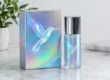
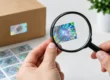
That distinction matters. Tamper evidence is about revealing interference, while product authentication is about confirming that an item is genuine. The two are strongest when used together. A holographic security label can offer an instantly recognisable visual feature for customers and retailers, while its tamper-evident construction shows whether the pack has been opened or the label has been transferred.
This is particularly useful where products move through distributors, warehouses, retail shelves and customer returns. At every handover, a seal provides a simple visual check. No special equipment is needed to spot that a closure has been broken or a label has been lifted.
Why package interference creates a commercial risk
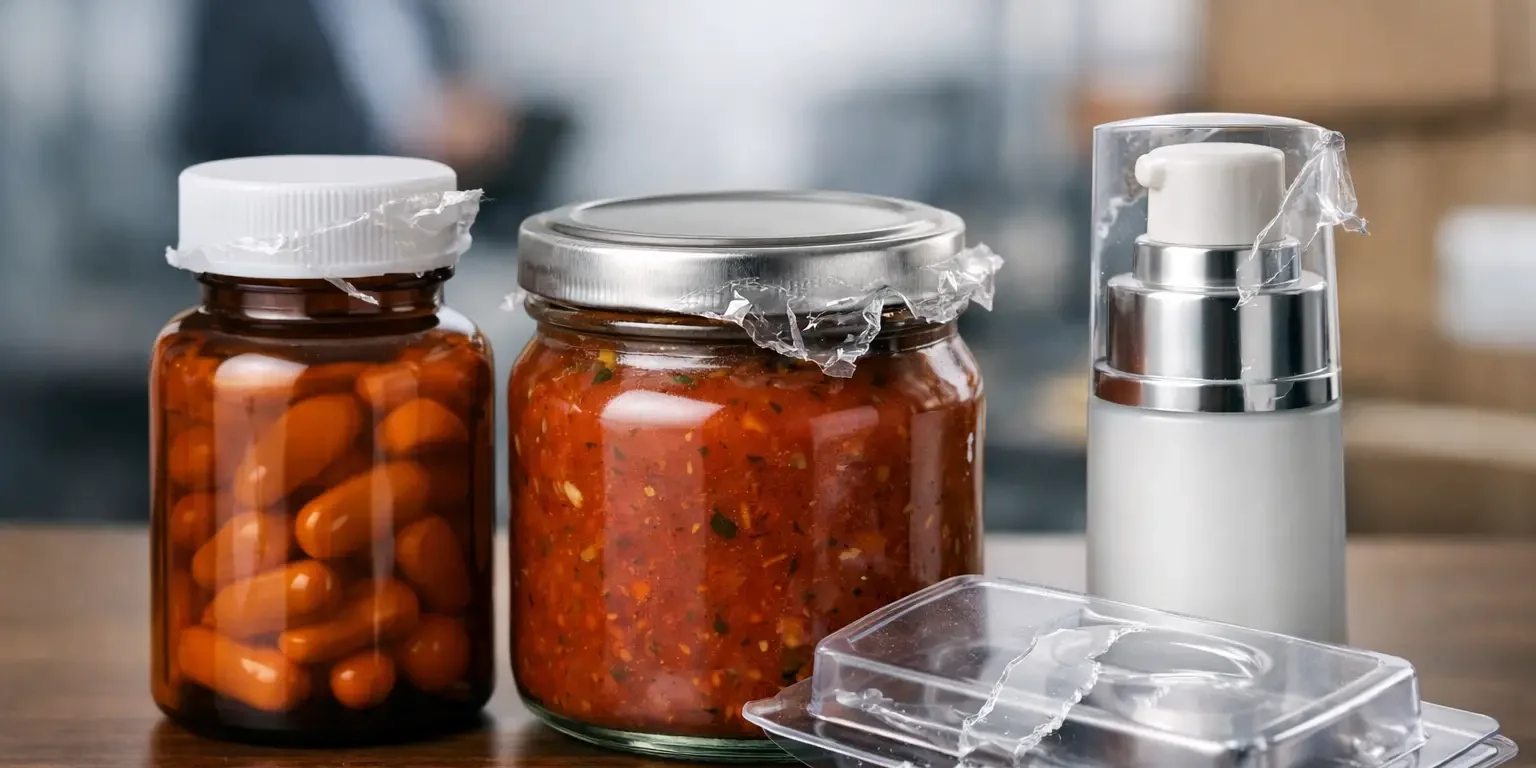
The immediate concern is often consumer safety. In pharmaceuticals, cosmetics, food supplements and alcohol, interference can create serious consequences. But the commercial impact reaches further. One questionable item can lead to complaints, returns, retailer discussions and reputational damage that far outweigh the cost of applying a security label.
Electronics, automotive parts, collectibles and industrial components face a different but equally costly problem: substitution. A genuine item can be removed from its packaging and replaced with an inferior, used or counterfeit alternative. If the outer pack is then resealed convincingly, the customer may blame the original brand when the product fails.
Tamper-evident seals also support better control of diverted goods. Where authorised products appear in the wrong market, altered packaging or broken seals can help identify where stock has been accessed or repacked. They are not a complete traceability system on their own, but they create a useful physical barrier and a visible point of accountability.
Choosing the right tamper-evident label material
The best material depends on the product, its packaging and the level of risk. There is no benefit in choosing the most complex option if a simple destructible seal would do the job. Equally, a basic paper-style seal may not be suitable for a high-value product exposed to moisture, handling or deliberate removal attempts.
Destructible labels
Destructible labels are designed to fragment into small pieces when someone attempts to remove them. They are effective on smooth, clean surfaces and make label transfer difficult. Because the label breaks up, it cannot usually be reapplied neatly to another product or pack.
They are a practical choice for electronics, warranty applications, component housings and cartons where a clear broken-label result is sufficient. The trade-off is that surfaces need testing. Highly textured, dusty or low-energy plastics can affect adhesion and the way the material breaks.
Void and residue labels
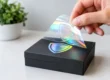
Void labels reveal a message, pattern or evidence of removal when lifted. Depending on the construction, the word VOID or a custom pattern may remain on the packaging, within the label itself, or both. This makes interference particularly obvious during inspections and returns processing.
These labels suit cartons, cases, bottles, storage boxes and closures where the label needs to span an opening point. They can be specified to leave residue or to provide a cleaner lift, depending on whether permanent marking of the surface is acceptable. For reusable equipment or premium packaging, that decision deserves careful thought.
Honeycomb tamper-evident materials
Honeycomb materials create a distinctive patterned effect when a label is peeled away. The pattern is difficult to disguise and gives teams a clear visual cue that the seal has been disturbed. It can be an excellent option where a visible, consistent result is needed across larger product ranges.
As with all adhesive labels, proper application matters. The substrate, temperature, pack shape and dwell time after application all influence performance. A label applied to a cold, damp or dusty surface may not behave as intended, regardless of how advanced the material is.
Where a seal should be placed
A tamper-evident label only works when it protects a genuine access point. It should bridge the opening of a carton, box, cap, lid or case so that the pack cannot be opened without disturbing the label. Applying a security seal to a non-critical part of a package may look reassuring but offers little practical protection.
Think through the product journey before approving artwork. Will the label be exposed to refrigeration, heat, oil, moisture or abrasion? Is the item packed by hand or on an automated line? Does the customer need to remove the seal cleanly, or should the evidence remain permanently visible? These details determine the right adhesive, material and label shape.
It is also worth considering how the seal looks at the point of sale. A clearly positioned holographic label can reassure a customer before purchase, especially on products vulnerable to imitation. On the other hand, an overly large seal can obscure essential instructions, regulatory information or brand design. Security should support the pack, not overwhelm it.
Combining tamper evidence with holographic security
A hologram adds another layer because it is difficult to copy convincingly using ordinary print methods. Light-responsive effects, custom patterns, logos and colour shifts give customers and staff a quick first-level authentication check. When paired with a destructible or void construction, the same label can help prove both that the item is genuine and that its packaging has not been opened.
For higher-risk applications, further features can be built into the design without making the label confusing. UV details, hidden text or images, thermo-reactive elements, coin-reactive effects and scratch-off areas can give inspectors additional ways to verify a label. These features work best when your team knows what to look for and when to escalate a concern.
There is a balance to strike. A consumer-facing seal should be easy to understand at a glance. Covert features are better reserved for trained staff, distributors or investigators. Layering both types creates a more useful security label than relying on a single visible device.
Make tamper evidence part of a wider process
Labels are most effective when they are supported by sensible packaging and operational controls. Keep approved artwork and label stock secure, make sure production staff know the correct placement, and establish a simple process for dealing with broken seals. Retailers and customer-service teams should know whether an item with a disturbed seal can be returned, quarantined or investigated.
Testing matters too. Apply sample labels to the actual packaging, not just a similar material. Test them after realistic storage and transport conditions, then check how they perform when someone tries to lift, cut or reposition them. This is where a specialist supplier can remove uncertainty before a full production run.
HologramLabel.co.uk can help businesses turn a packaging concern into a clear bespoke label specification, from straightforward destructible seals to custom holograms with layered security features. Low minimum quantities make it possible to test an approach without committing to an unnecessarily large order.
The right seal is the one that fits your product, your packaging line and the level of risk you need to manage. Start with the point an unauthorised person would most likely try to access, then make that interference impossible to miss.