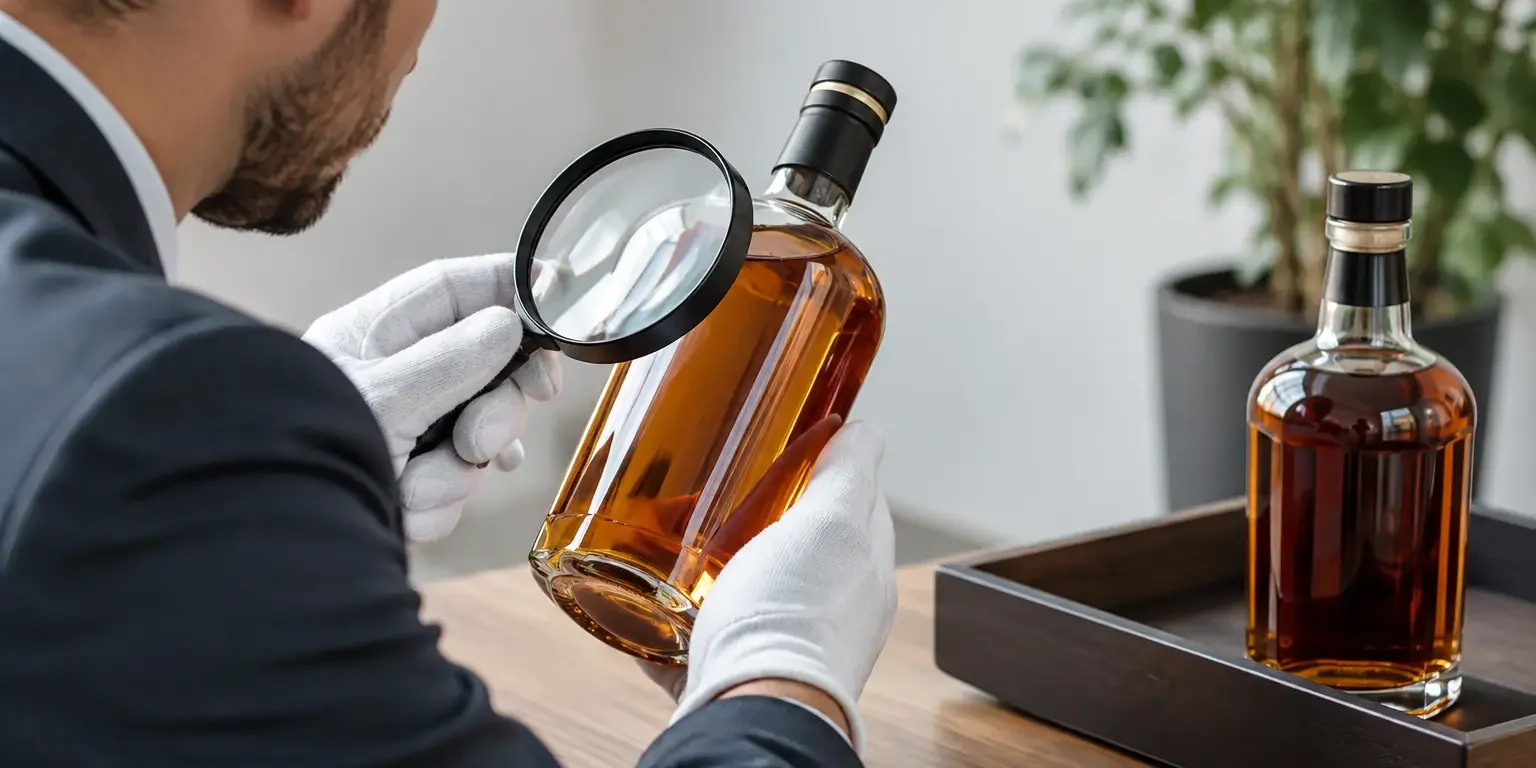
A premium whisky bottle may spend years in a warehouse, a bonded store or a private collection before it reaches its next owner. By then, the label, closure and presentation box are doing more than making it look desirable. They are evidence. Effective whisky bottle authentication helps prove that evidence has not been copied, substituted or interfered with.
For distilleries, independent bottlers and drinks distributors, the risk is not limited to a convincing fake bottle. Counterfeiters can refill genuine empties, replace a closure, copy a front label or divert stock into unauthorised channels. One suspect bottle can damage consumer confidence, strain retailer relationships and put a hard-won reputation at risk. The right security label system makes imitation more difficult and checking more straightforward.
Why whisky bottle authentication needs layers
A single visible feature is rarely enough for a valuable bottle. If a counterfeiter can see it, they can attempt to reproduce it. That does not make visible protection less useful – it means visible protection should be part of a considered, layered approach.
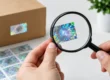
The first layer should give a retailer, buyer or collector a quick reason to pause. A custom hologram, distinctive pattern or colour-shifting element is immediately recognisable and difficult to replicate convincingly with ordinary print. It gives genuine packaging a consistent security cue without undermining the presentation expected of a premium whisky.
A second layer can be reserved for trained staff, distributors or brand representatives. UV-reactive graphics, concealed text, micro-detail or hidden images can be checked using simple methods without telling a counterfeiter exactly what to copy. For high-value releases, this controlled verification is often more valuable than adding another obvious visual device.
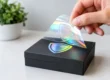
The final layer is physical. A security seal should show whether the closure or carton has been opened. Tamper-evident materials, including destructible, void and honeycomb constructions, are designed to leave clear evidence when somebody tries to remove or lift the label. This matters because a genuine bottle with an altered closure is not a bottle that should pass unquestioned.
Start with the real points of risk
Whisky packaging varies enormously. A standard retail bottle, a numbered limited release and a decanter in a presentation case do not need identical protection. Good whisky bottle authentication begins by mapping where a product could be copied, opened, refilled or diverted.
For many bottles, the closure is the priority. A seal bridging the cap and bottle gives a clear visual indication of first opening and makes a replacement closure harder to conceal. The label must be positioned carefully so that it performs its security role while still fitting the bottle shape, cap profile and brand design.
The bottle body is another useful location, particularly when the front label itself is highly collectable or easy to imitate. A small bespoke holographic label can sit discreetly on the rear label, neck or shoulder. It should be distinctive enough to inspect, but not so prominent that it looks like an afterthought on premium packaging.
Presentation cartons, tubes and outer cases deserve attention too. Counterfeit stock is often made credible by copying the primary bottle and overlooking the details around it. A tamper-evident seal on a carton can reveal substitution before the bottle is opened. Where stock moves through multiple distributors, applying a matching security device to the case can also help staff identify genuine packs quickly.
Visible security should work with the brand
Security does not need to look industrial. In fact, whisky brands are right to be protective of a label design that communicates heritage, provenance and craftsmanship. A generic sticker may signal that a product has been protected, but a bespoke hologram can become part of the packaging rather than a distraction from it.
Custom artwork can incorporate a distillery mark, monogram, pattern, release motif or a chosen colour treatment. Holographic effects create movement and depth that standard ink cannot reproduce easily, helping a label stand out under shop lighting and during close inspection. The goal is not decoration for its own sake. It is to create a recognisable detail that consumers and trade partners learn to associate with genuine stock.
There is a trade-off. Highly prominent security features make fast checks easier, while subtle features preserve a minimal premium design. The best balance depends on the product’s price point, distribution model and the likely buyer. A limited-edition bottle sold to collectors may justify several visible and covert elements. A broad retail release may benefit more from a clean, reliable closure seal that can be checked at a glance.
Make opening evidence impossible to ignore
A hologram only protects the pack if it remains where it was applied. This is why material choice matters as much as artwork. Standard adhesive labels can sometimes be removed intact with heat, solvent or patience. Tamper-evident construction changes that calculation.
Destructible labels break apart when removal is attempted. Void labels leave a message or pattern behind on the surface and on the lifted label. Honeycomb materials fracture into a distinctive pattern. Each option creates a different visual result, so the right choice depends on the bottle surface, cap finish, application method and the evidence you want a recipient to see.
Testing is essential. A glossy coated carton, textured paper label, waxed cap and curved glass bottle do not behave in the same way. Before committing to a full run, assess adhesion, removal behaviour, storage temperatures and how the seal looks after transport. A security label should survive normal handling and still reveal abnormal handling. That is the practical standard.
Give different people the right way to check
Authentication works only when someone knows what to look for. Consumers should not need specialist training to see that a seal has been broken or that a hologram looks wrong. Retail staff need a simple inspection process they can perform without slowing down goods-in or sales. Brand teams and investigators may need access to deeper features that are not publicised.
This is where layered design earns its keep. An overt holographic device gives an immediate first check. A UV element or concealed image gives authorised staff a second check. Where appropriate, a controlled code or serialisation programme can create a further level of traceability, although it requires clear record-keeping and a process for handling duplicate or invalid scans.
Do not rely on a code alone. Codes can be copied from genuine products and placed on fakes. Combined with a difficult-to-copy hologram and tamper-evident seal, however, variable data becomes far more useful. The physical pack and the recorded identity should support each other.
Build security into procurement, not after a problem
The most cost-effective time to consider authentication is before packaging is printed and bottling begins. Retrofitting a security label after counterfeit stock has appeared can still be worthwhile, but it may force compromises on position, design and application. Early planning allows the label dimensions, adhesive and placement to be properly integrated with the packaging line.
Procurement teams should also think beyond unit cost. A very cheap label that lifts cleanly, conflicts with the pack artwork or arrives too late for production is not good value. Equally, a complex feature set may be unnecessary for an entry-level product with a limited risk profile. Honest specification means choosing protection that suits the product rather than paying for security nobody will use.
A specialist supplier can turn a brand team’s initial idea into a practical label specification, including bespoke holographic artwork and the right tamper-evident material. HologramLabel.co.uk works with businesses that need that support, including smaller runs where low minimum quantities make testing or limited releases more realistic.
Treat authentication as a promise to the buyer
A security seal cannot replace careful supply-chain control, retailer education or proper investigation of suspect goods. It can, however, give each of those activities a stronger foundation. When a buyer can see that a closure is intact and a recognised feature checks out, uncertainty becomes easier to manage.
For whisky producers, the value is larger than one protected bottle. Consistent whisky bottle authentication tells retailers, collectors and loyal customers that authenticity has been designed into the product, not left to chance. Start with the point most vulnerable to interference, choose features people can genuinely check, and let the security device reinforce the quality already inside the bottle.