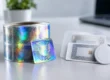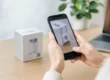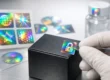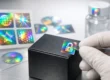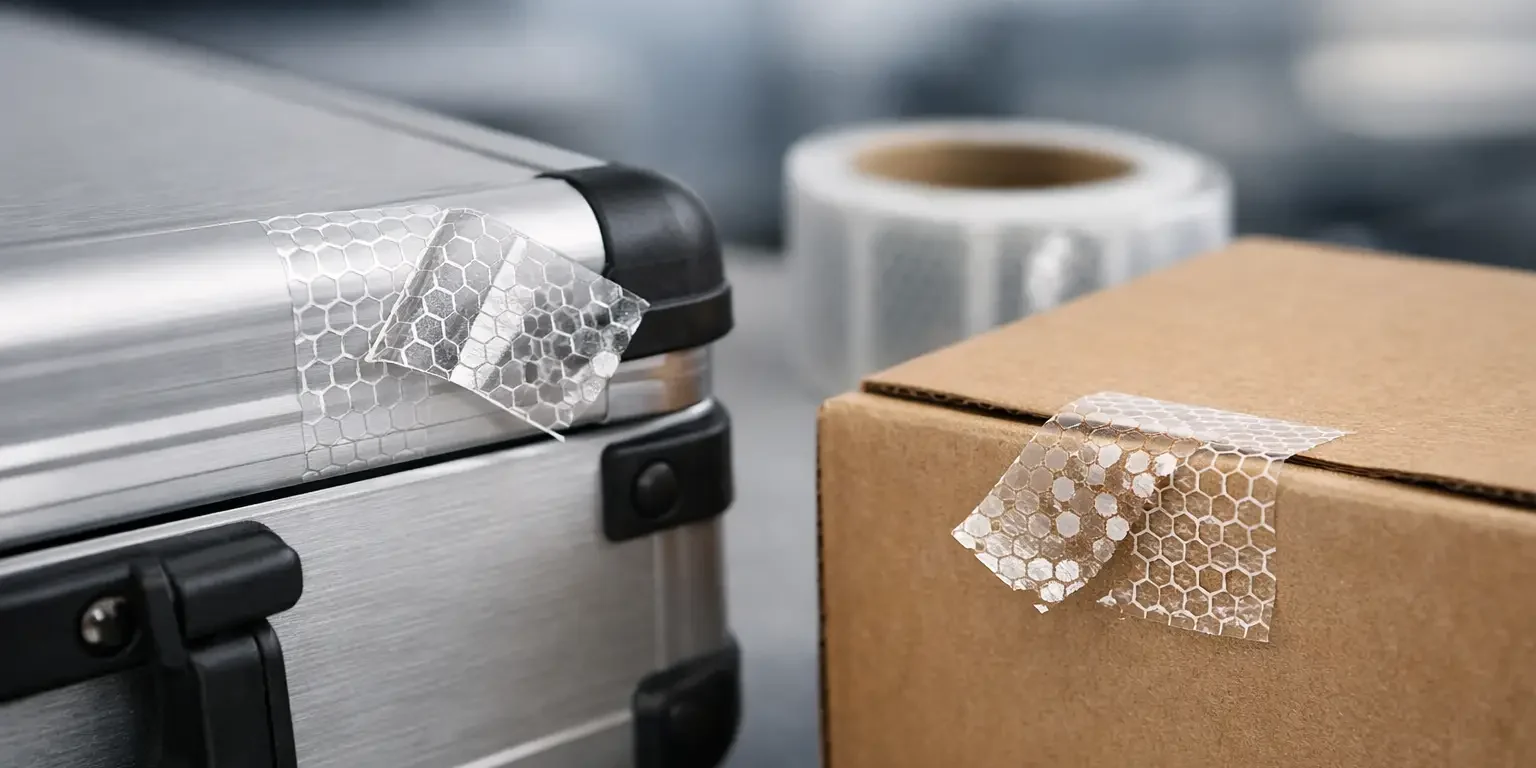
A carton can look perfectly legitimate after it has been opened, altered and closed again. That is the gap honeycomb security seals are designed to close. Applied across a closure, lid or access point, they break apart when lifted and leave a distinctive honeycomb pattern behind. The result is immediate, visible evidence that somebody has interfered with the package.
For businesses selling products where safety, authenticity and presentation all matter, that evidence can be far more valuable than a general warning label. It gives warehouse teams, distributors, retailers and end customers a simple way to spot a compromised item before it is accepted, sold or used.
What are honeycomb security seals?
Honeycomb security seals are tamper-evident labels made from a specially engineered material. Once applied, the seal is intended to bond firmly to the packaging surface. If someone tries to remove it, the face material splits into small cells, creating a honeycomb-like residue or pattern that cannot be put back as it was.
Unlike a standard sticker, the point is not simply to hold two surfaces together. The seal creates a visible record of opening. A fraudster may still be able to access the contents, but they should not be able to do so discreetly. That distinction matters when packaging integrity is part of your quality process.
Honeycomb material is often used on cartons, bottle closures, electronic housings, cases, warranty points and transit packaging. It can be supplied as a plain tamper seal, but it is also well suited to bespoke holographic labels carrying your logo, wording, colours or a recognisable security design.
Why visible tamper evidence protects more than packaging
Counterfeiters and opportunistic tampering both rely on uncertainty. If an opened package can be resealed without a trace, the next person in the chain has no reliable reason to question it. A clearly fractured seal changes that. It makes the package condition easier to assess at a glance.
For a pharmaceutical, cosmetic or food-adjacent product, this can support consumer safety and reinforce the message that your business takes quality control seriously. For electronics, automotive parts and industrial goods, it can help identify unauthorised access, component substitution or invalid warranty claims. For premium alcohol, collectibles and retail products, it protects the confidence attached to an original, unopened item.
There is also a brand benefit. Customers tend to notice packaging only when something looks wrong. A well-designed security seal gives them a useful visual cue without making the pack look clinical or over-engineered. A holographic finish can support a premium appearance while the tamper-evident construction does the practical work.
That said, a honeycomb seal is not a complete anti-counterfeiting strategy on its own. It indicates opening or attempted removal. It does not automatically prove where a product came from, whether it is genuine, or whether an identical-looking label has been copied. Where the threat includes organised counterfeiting, it is sensible to pair tamper evidence with distinctive holographic artwork and selected overt or covert security features.
Where honeycomb security seals work best
The best application is one where the label genuinely bridges an opening point. On a folding carton, for example, the seal should cross the lid and side panel so the lid cannot be lifted without disturbing it. On a jar or bottle, it may run from the cap onto the container. On a device enclosure, it should cover a screw, seam or access panel.
Placement deserves more thought than it sometimes receives. A seal hidden beneath another label may technically work, but it loses the instant visual check that makes tamper evidence so useful. Conversely, a very prominent seal can become part of the pack design, particularly when it includes a logo or holographic pattern.
The packaging material matters too. Smooth coated board, clean glass, metal and many plastics can provide a strong bond, but results vary according to coatings, mould-release agents, recycled content, texture and storage conditions. A label that performs well on one substrate may not behave in the same way on another. Testing the actual pack is the sensible route, especially for high-value or regulated products.
Opening behaviour should match the real risk
Not every product needs the same response to tampering. Some brands want a seal that leaves a clear honeycomb pattern on the carton. Others need the seal itself to fragment, making clean removal impractical. A destructible material or a void label may be more appropriate in certain applications.
The question is not which material sounds most secure. It is what an unauthorised person is likely to try, and what evidence your staff or customers need to see afterwards. If a carton is routinely opened during legitimate inspection, a single-use honeycomb seal may create unnecessary waste or delays. If it should remain closed from packing line to purchaser, that same feature can be exactly right.
Designing a seal people can recognise
A generic tamper label can show that something has been opened, but a custom seal can also show whose product it is. This makes substitution harder and gives customers a familiar point of reference when comparing genuine stock with suspicious goods.
Clear brand elements are usually most effective: a logo, product line name, repeated motif or a simple instruction such as “Do not accept if seal is broken”. The design should remain legible at the label size you need. Fine artwork can look impressive on screen but may not be the best choice for a small seal on a compact cosmetic carton or a component bag.
Holographic effects add movement, reflectivity and visual complexity that are difficult to reproduce convincingly with ordinary printing. Depending on the application, further protection can include hidden text or images, UV-reactive details, thermo-reactive features, coin-reactive elements or scratch-off areas. These additions give different people in the supply chain different ways to check a label.
For example, a customer may verify the overall holographic appearance, while a retailer checks a visible micro-detail and an internal quality team uses a UV feature. Layering features in this way is often more useful than relying on one highly technical device that nobody is equipped to inspect.
Questions to settle before ordering
A good brief does not need to be packed with production terminology. It does need to explain the job the seal must do. Start with the packaging type, its surface and the precise point you need to protect. Then consider the label size, whether the seal must be visible from the front of the pack, and what should happen when removal is attempted.
You should also account for the journey after application. Will products be stored in cold conditions, exposed to humidity, handled with gloves, packed in outer cases or moved through several distribution centres? Adhesive performance is affected by temperature, dust, moisture and application pressure. A clean, dry surface and consistent application process are essential if the seal is to perform as intended.
It is worth deciding who will inspect the seal and what they need to know. A simple message can help consumers, while warehouse teams may need acceptance criteria built into their procedures. If staff do not know whether a partial honeycomb pattern counts as a failed pack, the security feature cannot deliver its full value.
Finally, think about order quantities and future consistency. Growing brands often need smaller initial runs, while established manufacturers may require repeatable specifications across multiple SKUs. A bespoke design should be capable of scaling without forcing you to redesign the security approach every time a pack format changes.
Honeycomb seals and the wider security plan
Tamper evidence works best as part of a practical, layered approach. Your packaging design, supplier controls, batch processes, distribution checks and staff training all influence how easily suspicious stock is identified. Labels are a highly visible part of that system, but they cannot compensate for unclear handling procedures or weak controls elsewhere.
For many businesses, the right starting point is straightforward: make unauthorised opening obvious, make genuine packaging recognisable, and give the people handling your products a clear action to take when something does not look right. From there, security features can be increased in line with the value of the product and the level of risk.
At HologramLabel.co.uk, the practical focus is on making that decision easier – from selecting an appropriate tamper-evident material to creating a bespoke holographic design that fits your packaging and budget. Bring the pack, the risk and your ideas to the conversation; the right seal is the one that makes interference difficult to hide and easy to act on.