A customer holding a premium skincare carton, an electronics accessory or a bottle of spirits may make an authenticity judgement in seconds. The right security features for consumer products make that judgement easier, while giving counterfeiters and unauthorised sellers a much harder job. For brand owners, the goal is not simply to add a shiny sticker. It is to create clear evidence that a product is genuine, unopened and supplied through the right channel.
Counterfeiting, product diversion and package interference can affect businesses of every size. A growing brand may be particularly exposed because its packaging is becoming recognisable before its supply chain and resale controls have fully matured. Security labels offer a practical, accessible way to protect that investment without redesigning the whole pack.
What should product security achieve?
A good security feature should answer a real commercial risk. If products are being copied, customers and distributors need a quick way to recognise the genuine article. If cartons or containers could be opened and refilled, the pack needs to show visible evidence of interference. If stock is appearing in markets where it was not intended to be sold, authentication features can help investigators identify what belongs in a particular product range or channel.
This distinction matters because no single label solves every issue. A decorative holographic effect may improve shelf presence, for example, but it will not necessarily prove that a pack has not been opened. Likewise, a highly covert feature may help a brand protection team verify stock, but does little to reassure a shopper at the point of purchase.
The strongest approach usually combines visible authentication with tamper evidence, then adds concealed features where the risk and product value justify them.
Security features for consumer products: build in layers
Layered protection makes copying more expensive and verification more useful. It also lets different people check different things: consumers can inspect obvious visual cues, retailers can examine the seal, and brand teams can use features that are not publicised.
Start with a recognisable holographic design
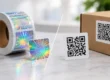
A bespoke hologram label gives customers an immediate visual reference point. Light movement, depth and a changing holographic image are difficult to reproduce convincingly with ordinary printing, particularly when the design includes your logo, brand name or a distinctive pattern.
Custom artwork matters here. A generic hologram can make packaging look more premium, but a design created around your brand is harder to transfer to another product and easier for customers to recognise. It can include colour, repeated motifs and fine detail that complement the packaging rather than appearing as an afterthought.
That said, a hologram should not be treated as a guarantee on its own. Determined counterfeiters can imitate a basic visual effect. The better question is how the hologram works alongside features that reveal tampering and provide a deeper level of authentication.
Make opening the pack evident
Tamper-evident materials are among the most practical security measures for consumer goods. Applied across a carton flap, lid, closure or access point, they show whether someone has tried to open the pack before purchase.
Destructible labels break apart when removed, making clean reuse impossible. Void materials leave a visible message or pattern on the packaging and label when lifted. Honeycomb-style materials can also break up on removal, creating clear evidence that the original seal has been disturbed.
The right material depends on the surface, pack format and customer experience you need. A delicate cosmetic carton may suit a label that tears visibly, while a durable electronics box may benefit from a void seal. On a curved bottle or textured container, adhesive performance must be assessed carefully. Security is only useful if the label stays in place through normal handling, storage and transport.
Add covert checks for your team and trusted partners
Covert features provide a second line of defence because they are not obvious to a counterfeiter or the general public. UV inks, hidden text and concealed images can be checked by trained staff using the appropriate light source or viewing method.
These features are especially useful when products move through distributors, retail estates or service networks. A field representative can inspect stock quickly without revealing every detail of the authentication method. If a suspect product appears, the brand has a more meaningful basis for investigation than appearance alone.
Covert devices work best when access is controlled. Tell the people who need to verify them, but avoid publishing a complete guide to every feature. Security depends partly on the feature itself and partly on sensible verification procedures.
Use interactive effects where they add value
Thermo-reactive and coin-reactive elements offer an engaging way to verify a label. A thermo-reactive area changes with warmth, while a coin-reactive feature can reveal an effect when rubbed or pressed in the intended way. Both can provide a memorable check for retailers, collectors or consumers.
These options are not necessary for every product. They are most valuable where the product has a higher unit value, where buyers are likely to inspect the pack, or where an interactive feature reinforces an existing brand experience. For fast-moving, low-cost goods, a clear hologram and tamper-evident seal may be the more proportionate choice.
Match the label to the risk, not the trend
It is easy to add features because they sound advanced. A better procurement decision starts with the threat. Consider the value of the item, the potential harm caused by a fake, the likelihood of packaging being opened, the number of distribution points and how easily customers can identify the genuine product.
Pharmaceutical, cosmetic and alcohol brands may place particular weight on package integrity because interference can create serious safety and compliance concerns. Electronics and automotive suppliers may need protection against substituted components or imitation accessories. Collectibles may favour highly visible, difficult-to-copy holograms that support provenance and resale confidence.
Budget also matters, but low cost should not mean low protection. A well-specified label applied to the right point on the pack can deliver far more value than an expensive feature used without a clear purpose. Ask what an attempted fraud should look like when it fails: should the label tear, leave a void message, reveal a hidden check or all three?
Design and application are part of the security plan
A technically sophisticated label can underperform if it is applied inconsistently or placed where it does not protect the vulnerable part of the packaging. A seal should bridge the opening route, not sit beside it. It should be difficult to remove intact and difficult to replace without visible signs.
Think about the full journey from production line to customer. Labels may encounter heat, cold, moisture, friction and repeated handling. The substrate and adhesive need to suit that environment, whether the pack is a cardboard carton, glass bottle, plastic tub, metal case or product component.
Visual design also needs discipline. The hologram should be easy to find and inspect, while important legal text, batch details and product instructions remain readable. A security label is part of the packaging experience, so it should support the brand rather than make the pack look cluttered or suspicious.
Before committing to a large run, test samples on the finished pack. Check adhesion, attempted removal, legibility and how the label performs after realistic transit and storage conditions. This small step can prevent costly rework later.
Give people a clear way to verify
Even the best label has limited value if nobody knows what to look for. Consumer-facing guidance should be simple: look for the hologram in a stated position, check that the seal is intact and buy from authorised sources. Avoid explaining every covert device in public-facing materials.
Internally, create a short verification process for customer service, warehouse teams, sales representatives and selected distributors. They should know what genuine labels look like, how to inspect tamper evidence and what to do if a product seems suspect. Photographs of genuine and failed seals can be useful for training, provided they are kept within the appropriate team.
For products that require traceability through individual serial numbers, barcodes or variable data, that requirement should be planned alongside the label specification. Authentication, tamper evidence and track-and-trace serve related but different purposes, and the most effective programme gives each one proper attention.
Make security a practical part of your packaging
Security labels do not need to be complicated to be effective. A bespoke hologram combined with a suitable tamper-evident material can give many consumer brands a strong, visible defence. Where the risk is greater, UV details, hidden imagery and interactive effects add further confidence without forcing customers to become security experts.
HologramLabel.co.uk helps businesses turn these choices into a practical label specification, from initial design ideas to the material and security devices that suit the pack. Bring the product, the risk and the ambition to the conversation. The right label should make genuine goods easier to trust and dishonest interference much harder to hide.