A carton can look perfectly intact after it has been opened, resealed and returned to the supply chain. That is the gap void security labels are designed to close. When someone lifts or removes the label, a clear message, pattern or residue appears on the packaging, the label, or both. The evidence is immediate, visible and difficult to disguise.
For businesses selling products where authenticity, safety and presentation matter, that visible proof can prevent a small packaging incident becoming a costly brand problem. It helps warehouse teams spot interference, gives retailers greater confidence in stock received, and reassures customers that their purchase has not been opened before it reached them.
What void security labels actually do
A void label uses a tamper-evident construction that changes permanently when the seal is disturbed. Before opening, it may look like a standard branded label or holographic seal. Once lifted, it can leave behind wording such as VOID, OPENED or a custom message. Some constructions reveal a repeating pattern rather than text.
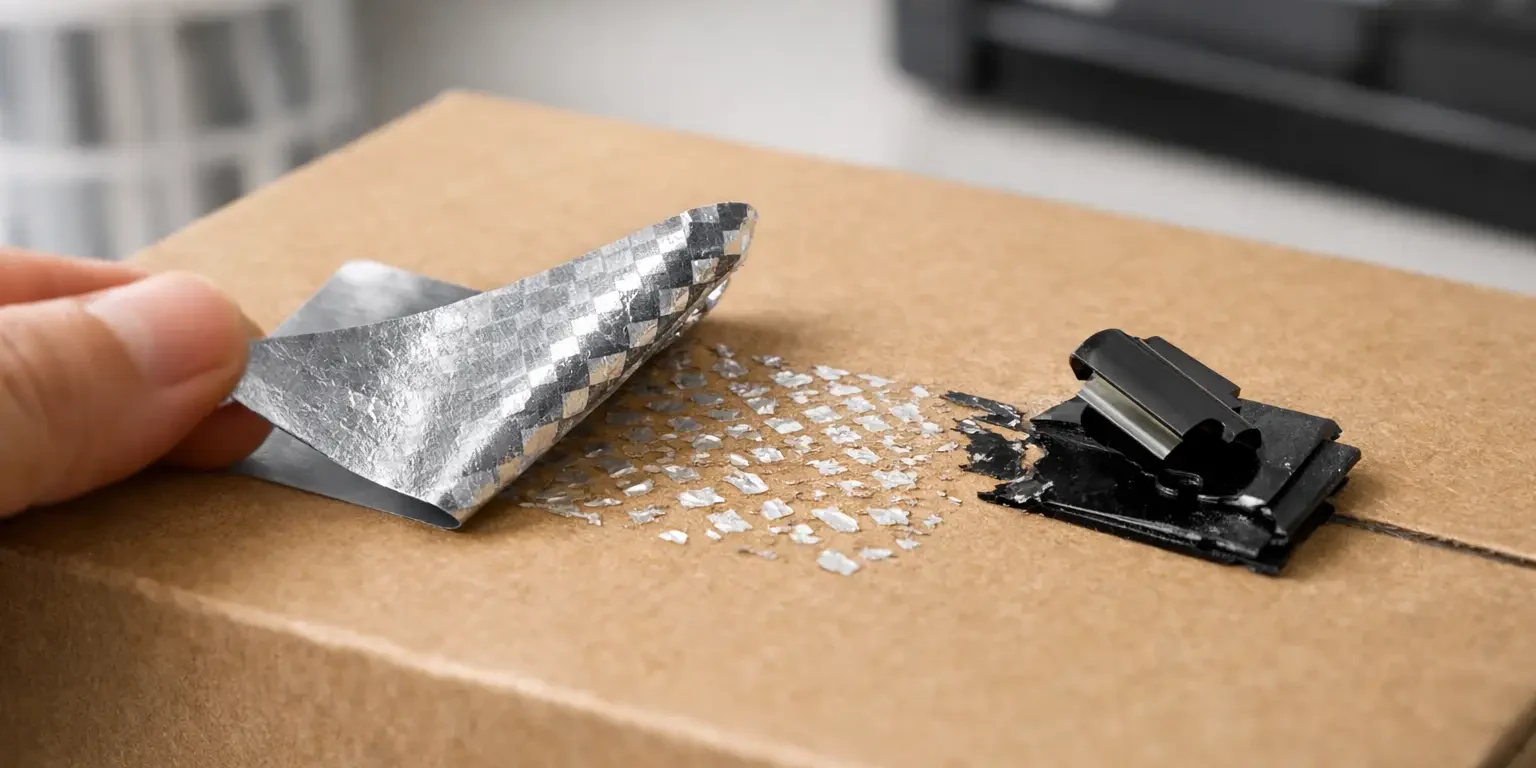
The precise effect depends on the material and adhesive selected. In one format, the hidden message remains on the pack while the lifted label also shows evidence of tampering. In another, the label itself fragments or leaves a residue that makes it unsuitable for reuse. The objective is the same: removal must leave an obvious, irreversible trace.
This differs from a label that simply holds a carton closed. An ordinary seal may be cut, lifted carefully or replaced with a matching alternative. A properly specified void seal makes that interference visible. It does not physically prevent every determined attempt to access a product, but it makes unauthorised opening far harder to conceal.
That distinction matters in pharmaceuticals, cosmetics, electronics, alcohol, automotive parts and collectible products. A customer receiving a product with a broken or activated seal has a clear reason to stop, check and contact the supplier rather than assume everything is as it should be.
Where a void label delivers the most value
Void tamper-evident labels work best where they bridge a point of access. That might be the flap of a retail carton, the lid of a jar, the closure on an electronics box, a service panel, a carry case or a shipping pack. The label should make opening impossible without activating the tamper evidence.
For high-value goods, a seal can also help identify substitution. If an original item is removed and a counterfeit, used or lower-value item is put in its place, a disturbed label gives the retailer or end user a quick warning. For warranty applications, it can show whether an enclosure has been opened before inspection.
The commercial benefit is not limited to counterfeit deterrence. Clear tamper evidence can reduce avoidable disputes about returns, damaged stock and unauthorised repairs. It creates a straightforward visual check at goods-in, on the shop floor and at the point of purchase.
It depends, however, on the risk you are trying to manage. A basic void seal may be appropriate for a small run of premium retail packaging. A product exposed to organised counterfeiting may need a layered approach, combining tamper evidence with a bespoke hologram, hidden text, UV elements or another authentication feature. The best specification is proportionate to the value of the goods and the likely threat.
Choosing void security labels for your packaging
The right label is not chosen by appearance alone. Packaging material, surface finish, storage conditions and the way the product is opened all affect performance. A seal that performs well on a smooth coated carton may behave differently on a textured box, a low-energy plastic, a curved bottle or a rough industrial casing.
Start with the surface and application point
First, identify exactly where the seal will sit and what it needs to bond to. Gloss board, uncoated card, glass, metal and plastics can require different adhesive choices. If the label must span two surfaces, such as a lid and box base, both surfaces need to be considered.
Temperature also matters. Labels applied in a warm production area may later travel through cold warehouses, humid distribution conditions or demanding industrial environments. A practical sample test on the real pack is the safest way to confirm that the seal applies cleanly and activates as intended.
The opening route should be equally clear. If the carton can be opened without touching the seal, the label is decorative rather than tamper-evident. Position it across the actual access point, allowing enough contact area on both sides for a reliable bond.
Decide what tamper evidence should look like
A bold VOID message is quick for anyone to recognise. It suits consumer packs, stock rooms and situations where a simple visual decision is needed. A repeating honeycomb effect can be useful where a more subtle but still obvious break is preferred. Custom wording can reinforce a brand instruction, such as “seal broken” or “do not accept if opened”.
There is a trade-off. Highly visible messages make inspection fast, but they also tell a counterfeiter exactly what feature they need to imitate. For products with a greater security risk, visible void evidence can sit alongside details that are harder to copy, including bespoke holographic artwork, microtext, covert images or UV-reactive features.
Make the label part of the brand experience
Security does not have to look industrial. A void seal can carry your logo, chosen colours and product details while still doing its main job. On premium packaging, a holographic finish can add a quality cue and make the seal more distinctive at first glance.
Bespoke artwork also makes generic replacement labels less convincing. A label designed around your own visual identity is harder to substitute than an off-the-shelf strip with a standard void pattern. It gives customers a familiar detail to look for, while supporting a more polished unboxing experience.
Void labels, destructible labels and other options
Void labels are one of several tamper-evident materials, and they are not automatically the right answer for every pack. Destructible materials break into fragments when someone tries to remove them. They can be particularly effective on hard surfaces or asset-related applications where removing the whole label intact should be impossible.
Honeycomb labels leave a patterned residue and can provide a strong visual signal across the sealed area. They are often chosen where a broad, unmistakable tamper effect is wanted. Security tape may suit larger shipping cartons, while a small custom seal is usually neater for retail packs, containers and warranty points.
The selection comes down to the package, the journey and the action you want the label to reveal. If you need a customer to see immediately that a box has been opened, a prominent void message is often effective. If the concern is unauthorised removal from an equipment casing, a destructible label may be the better fit. There are no catches in this decision – the material should be matched to the job, not sold as a one-size-fits-all solution.
Getting the specification right before production
A useful brief starts with the product and the risk. Share the pack dimensions, the label position, surface type, expected storage conditions and how many labels are needed. It also helps to explain whether the main priority is product authentication, tamper evidence, presentation, warranty control or a combination of these.
From there, decide whether stock labels are sufficient or whether bespoke artwork is worthwhile. Stock options can be a practical route for straightforward sealing requirements and short lead times. Custom labels give you control over shape, holographic design, branded text and additional security devices, often without the high minimum quantities businesses expect.
Before committing to a full run, check the proposed label on finished packaging rather than an empty sample if possible. Varnishes, coatings, curves and closure tension can all alter the result. Test application by the people who will use it on the line, then inspect a deliberately opened sample from the viewpoint of a warehouse operative and a customer. The tamper message should be clear without instructions.
HologramLabel.co.uk can help turn those practical requirements into a bespoke tamper-evident label specification, without forcing buyers to become materials experts. That is the value of working through the detail early: the final seal should look right, apply reliably and show exactly what it needs to show when it matters.
A good void seal gives your product a visible line of defence. Put it where opening cannot avoid it, make the evidence easy to understand, and let the design reflect the value you have worked hard to place inside the pack.