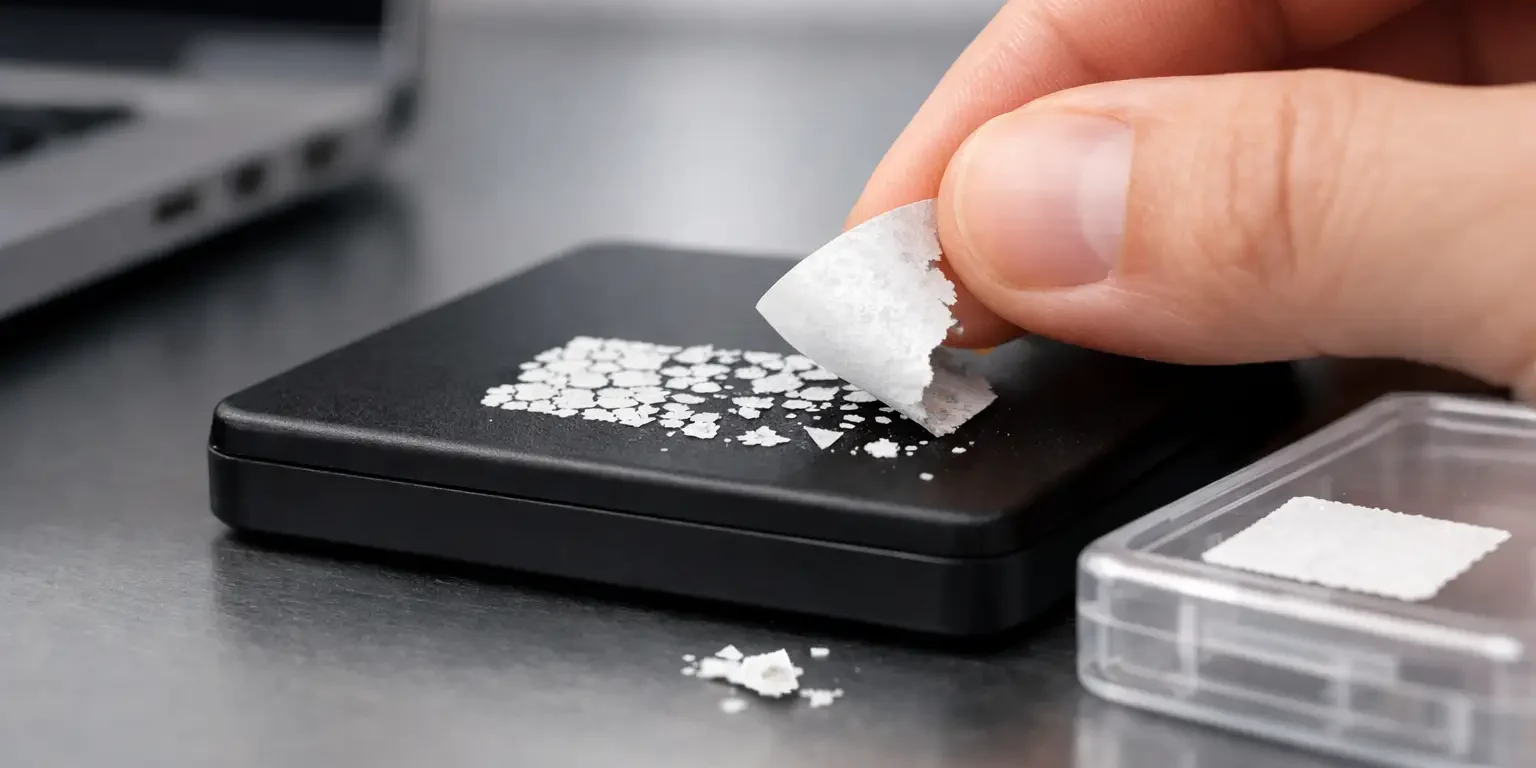
A seal is only useful if people can tell when it has been disturbed. Destructible security stickers make that evidence immediate: once someone tries to lift, peel or reposition the label, the material breaks apart. The package, product or enclosure cannot be returned to its original appearance without visible damage.
For businesses handling high-value goods, regulated products or reputation-sensitive consumer brands, that simple physical response can close a serious gap. It helps distributors identify suspect stock, gives customers confidence that a product has not been opened, and makes unauthorised substitution harder to hide.
What destructible security stickers do
Destructible labels are made from a deliberately fragile face material. Unlike a conventional paper or plastic sticker, which may peel away in one piece, a destructible sticker fractures into small fragments when removal is attempted. The broken label leaves a clear sign that the seal has been interfered with.
This is particularly useful where the label bridges two surfaces, such as a carton flap and box body, a bottle cap and container, or an electronics enclosure and its casing. Opening the item means breaking the label. A replacement sticker may be applied afterwards, but it cannot disguise the fact that the original seal has been destroyed.
The purpose is tamper evidence, not invincibility. A determined party may still open a package, but they cannot do so quietly. That distinction matters. A well-chosen security label creates a visible checkpoint for warehouse teams, retailers, engineers and end users.
Where destructible security stickers make sense
The best application is one where access, removal or replacement should be obvious. Pharmaceutical and cosmetic packaging can use a destructible seal to show whether a carton or container has been opened before sale. Spirits, speciality foods and premium retail goods can protect caps, closures and presentation boxes. Electronics and industrial equipment can use them across access panels, calibration points or warranty-sensitive components.
They are also useful for collectibles, branded merchandise and limited-edition products where condition has a direct effect on value. If a buyer expects a factory-sealed item, a broken security sticker gives them a clear reason to ask questions before accepting delivery or putting the product on sale.
For automotive parts and other complex supply-chain goods, the label can support checks at multiple handover points. It will not track an item through the supply chain by itself, but it can show whether a sealed pack has remained intact between dispatch and installation.
There is no single answer for every product. A low-cost retail carton may need a simple destructible seal in a prominent position. A premium product vulnerable to counterfeiting may need a holographic label with tamper evidence and authentication features combined. The right choice depends on the likely risk, the product’s value and who needs to inspect it.
Destructible material versus void labels
Destructible and void labels are both tamper-evident, but they communicate interference differently.
A destructible label breaks into fragments. It is often the better option when you want an unmistakable physical change to the label itself, particularly on small seals, closures and casing joints. Its damaged appearance is easy to understand without training.
A void label is designed to leave behind a message or pattern, such as VOID or OPENED, when lifted. This can work well on smooth surfaces where an inspection team needs a clean, readable residual message. Some void constructions also show a pattern on both the label and the surface beneath it.
Surface type matters. Destructible materials need suitable adhesion and are generally intended for applications where they are not expected to be removed intact. Dusty, textured, oily or highly curved surfaces can affect performance, as can very cold storage conditions. Testing on the actual pack, component or closure is sensible before committing to a larger order.
A void label may be preferable where the residue message is the key requirement. A destructible material may be better when the seal must visibly disintegrate. Neither should be selected on appearance alone.
Adding authentication to a tamper-evident seal
Tamper evidence answers one question: has this product or package been opened? Authentication answers another: is this label genuine? When counterfeiting is part of the risk, combining both gives a stronger practical defence.
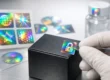
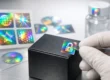
A bespoke holographic destructible label can carry your logo, brand colours and a custom visual pattern while retaining its break-up behaviour. This makes the seal harder to copy convincingly than a standard printed sticker and ensures it looks like a considered part of the packaging rather than an afterthought.
Further features can be chosen according to the level of protection required. UV-reactive details and hidden text can give internal teams a quick verification method. Microtext, concealed images, thermo-reactive effects, coin-reactive features and scratch-off areas can add further checks without making the label difficult for legitimate customers to understand.
More features are not automatically better. Every added device should have a clear purpose and someone who knows how to check it. For example, a retailer may need an overt holographic effect that staff can recognise at a glance, while a brand protection team may benefit from a discreet UV feature for investigation. The most effective label design matches the verification method to the people using it.
Choosing the right label specification
Start with the physical application. Consider the size of the sealing area, the material beneath the label, whether the surface is flat or curved, and the temperatures the product will encounter in storage and transit. A seal placed across a folding carton behaves differently from one used on powder-coated metal, glass or flexible plastic.
Next, decide what must happen when the label is disturbed. Should it fracture when lifted? Should it bridge a closure? Does it need to make an opened pack obvious from a distance? These answers shape the material, adhesive and label format.
Design also deserves attention. The label needs enough contrast to show damage clearly, but it should still support the product presentation. A security seal can carry a polished holographic finish, a familiar brand mark or a simple instruction such as “Do not accept if seal is broken”. Clear wording is especially helpful where consumers are expected to inspect the seal themselves.
Finally, be realistic about the threat. A basic seal may deter casual interference. A brand facing counterfeit copies, product diversion or warranty fraud may require a bespoke hologram design and layered features that are harder to reproduce. There is no benefit in paying for complexity that cannot be checked, but under-specifying a label can leave a valuable product looking protected without delivering meaningful assurance.
Practical placement and application advice
A tamper-evident sticker only works if it is placed where opening the product requires damaging it. On cartons, this is usually across the opening flap rather than on a side panel. On jars and bottles, it may bridge the cap and container. On equipment, it can cross a service panel or cover a screw recess where unauthorised access needs to be visible.
Application conditions should be controlled. Surfaces need to be clean, dry and free from dust, release agents or oil. Labels should be applied with consistent pressure and given time to bond before handling or shipping. If packaging is filled, chilled or moved quickly through a production line, assess how those conditions affect application and adhesion.
It is worth creating a simple inspection rule for staff and partners. They should know what an intact label looks like, where it should be positioned and what action to take when it is damaged or missing. A security feature is most valuable when a broken seal leads to a clear process, such as quarantine, investigation or supplier contact.
A security label should fit the wider product journey
Destructible security stickers are one useful layer, not a complete anti-counterfeiting programme. They work best alongside controlled packaging supply, clear batch procedures, staff awareness and, where appropriate, additional authentication features. If a product is frequently resold or passes through several distributors, consider how each party will inspect the seal and report an issue.
For first-time buyers, the technical choices can appear more complicated than they need to be. HologramLabel.co.uk can help turn the product, surface and threat information you already have into a practical bespoke label specification, with low order quantities and straightforward pricing. That is the point of specialist advice: you bring the commercial challenge, and the label is designed to meet it.
A broken seal should never be an ambiguous detail. Place it where it matters, make it easy to recognise, and give the people handling your products a clear reason to stop when it has been disturbed.