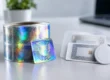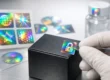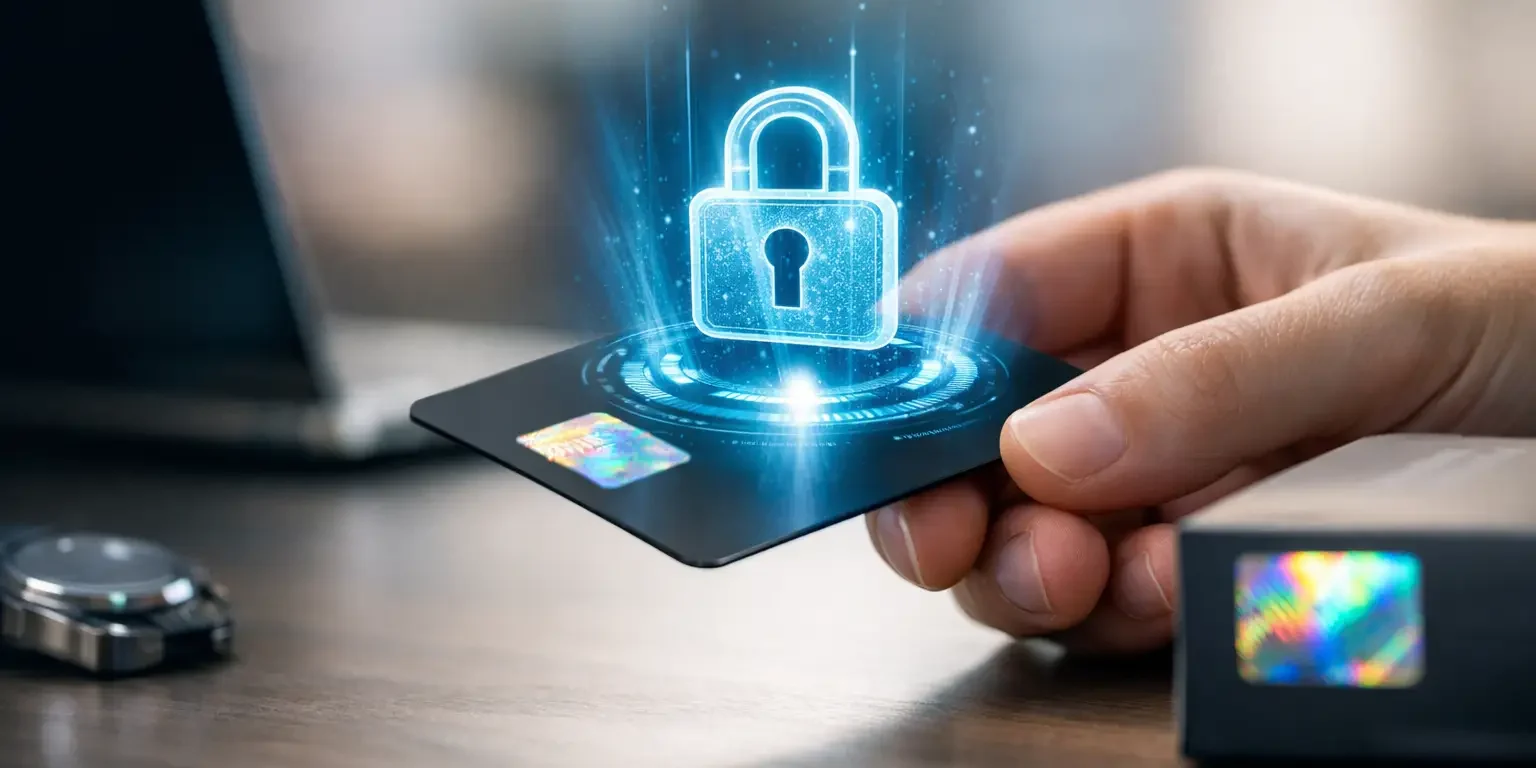
A counterfeit product can look convincing from across a shop floor, warehouse or marketplace listing. The real test often comes when someone responsible for quality needs a quick, reliable way to tell genuine stock from a copy. Hidden text holograms give brands that extra check: a controlled message, logo, code or pattern built into the holographic design and revealed only when the label is viewed correctly.
For businesses selling products where reputation, safety and traceability matter, this is more than a packaging detail. It is a practical security feature that helps staff, distributors and authorised partners verify products without relying solely on a printed logo that can be reproduced.
What are hidden text holograms?
Hidden text holograms are security labels containing words, letters, symbols or imagery that are not obvious under normal viewing conditions. Depending on the design, the feature may become visible when the label is tilted, viewed at a particular angle, examined with magnification or checked under UV light.
The text might be a brand name, a short authentication message, a product range identifier or a discreet symbol known to authorised users. It can sit within a larger holographic pattern, making the label attractive on pack while adding a feature that is much harder for a counterfeiter to understand and replicate.
That distinction matters. A hologram should not merely look shiny or decorative. When it includes concealed information and carefully planned visual effects, it becomes part of an authentication process. The person checking it knows what to look for, where to look and how it should behave in the light.
Why concealed text is valuable for product security
A standard printed label tells anyone what it says, including a would-be copier. Hidden text creates a controlled layer of information. It remains available to the people you authorise to inspect your goods, but it is not immediately handed to everyone handling the product.
This is particularly useful where goods pass through several hands before reaching the customer. A distributor receiving a shipment can check a feature before releasing stock. A retailer can inspect suspect items. A field engineer can identify an approved replacement part. In each case, the check is fast and does not require a laboratory or specialist equipment.
It also makes casual copying less effective. Counterfeiters may imitate colours, carton artwork and an obvious holographic surface, yet still fail to reproduce the concealed text accurately. A poor copy might have no hidden message at all, show the wrong wording, reveal it at the wrong angle or lack the crisp definition of the genuine feature.
Hidden text is not a guarantee that counterfeit goods will disappear. Determined criminal operations can be sophisticated, and no single label should be presented as a complete anti-counterfeiting strategy. Its strength lies in adding another obstacle and giving your team a clear, repeatable way to spot a problem early.
Choosing the right hidden-text feature
The best feature depends on who needs to authenticate the product and where that check happens. If warehouse staff need to make a quick visual decision under normal lighting, an angle-reveal message may be the most practical option. If the information should remain available only to trained inspectors, a UV or microtext feature may be more appropriate.
A short message generally works better than a long sentence. Initials, a compact brand mark, a simple authentication word or a recognisable icon are easier to verify consistently. The aim is not to hide a great deal of information. It is to create a distinctive detail that a genuine label shows clearly and a copied label struggles to mimic.
Consider the product itself, too. Labels for cosmetics, spirits and consumer electronics may need to support premium presentation as well as security. Industrial components may prioritise durability, adhesion and clear inspection during goods-in procedures. Small products can have limited label space, so the feature must be designed around the available area rather than added as an afterthought.
Your checking environment matters just as much. If the label will be inspected in a warehouse with variable lighting, test it in realistic conditions. If staff need a UV torch or magnifier, make sure that equipment is available and the process is understood. A security device only helps when the people expected to use it can use it confidently.
Overt, covert and semi-covert checks
It helps to think of security features in layers. An overt feature is visible to anyone, such as a holographic image that shifts in the light. It supports brand presentation and gives customers a basic visual reassurance.
A covert feature is deliberately difficult to see or interpret without knowledge or a checking aid. UV text and very fine microtext are common examples. These are useful for internal teams, investigators or trusted supply-chain partners.
Between them sits the semi-covert feature. Hidden text that appears at a particular viewing angle can be found without a tool, but only by someone who knows it exists and how to reveal it. For many brands, this strikes a sensible balance between easy verification and discreet protection.
Pair hidden text with tamper evidence
Authentication answers one question: is this label likely to be genuine? Tamper evidence answers another: has this pack been opened, substituted or interfered with?
Combining both functions makes commercial sense. A holographic label can incorporate hidden text while also using a destructible material, a void effect or a honeycomb-style tamper-evident construction. Once removed, the label may break apart, leave a visible message or show obvious signs that it cannot be reapplied neatly.
This is valuable for products vulnerable to refilling, grey-market diversion or unauthorised returns. A genuine-looking label on a resealed package is not enough. Where package integrity is part of your risk, the label should show that it has remained in place from the point of packing to the point of sale.
There are trade-offs. Highly destructible materials may not suit every surface, and some packs need a clean removable label for operational reasons. Labels applied to curved bottles, textured cartons, oily components or outdoor equipment also need the right adhesive and material selection. The practical answer is to review the pack, surface and expected handling before committing to a design.
Build a checking process around the label
A sophisticated label is most effective when it is backed by a simple procedure. Decide who is allowed to verify stock, what they should check, and what happens when a feature does not match expectations. Keep the instruction short enough to be used on a busy shift.
For example, an authorised receiver might check that the hologram displays the correct movement effect, tilt the label to reveal the hidden wording and confirm that the seal has not been disturbed. If any stage fails, the item can be quarantined for further review rather than entering normal stock.
Do not put every security detail in public-facing marketing. Customers can be told that the product carries a genuine holographic security label, while the precise hidden text and inspection method remain controlled information. That preserves the value of the feature.
Training also deserves attention. A one-page visual reference, a sample genuine label and a clear escalation contact can prevent uncertainty. When a team has never seen the authentic effect under normal lighting, even a well-made label can be misjudged. Consistency is what turns a security feature into a useful operational control.
Design for security without losing the brand
Security labels are often the first detail a customer notices when opening a product. They should reinforce quality, not make the pack feel awkward or overly technical. Holographic effects can be matched with your logo, colours and product positioning, whether the result needs to feel premium, clinical, industrial or understated.
The strongest designs do not advertise every protective element. They create a label that looks intentional, is difficult to reproduce accurately and gives authorised people several meaningful checks. A visible holographic pattern can carry the brand; hidden text can support authentication; tamper-evident construction can protect the seal.
At HologramLabel.co.uk, bespoke designs can combine these layers without forcing buyers to become label-production experts. Bring the product, the threat you are trying to reduce and any ideas you already have. The technical choices can then be shaped around how your goods are packed, handled and verified.
When hidden text is not enough on its own
Products with high-value supply chains, regulated use or frequent diversion may need further controls. Variable serial numbers, barcodes, QR-based verification or asset identification can provide item-level tracking, whereas a standard hidden-text design normally confirms that the label type itself appears genuine.
This is where the distinction between authentication and traceability matters. If you need to know which individual unit was made, where it was sent or whether its code has already been scanned, a variable-data system may be the right next step. For that requirement, specialist support through Security-Label.co.uk can help connect security labels with the required variable information.
For many products, however, hidden text holograms are an excellent starting point: they are discreet, quick to inspect and flexible enough to work alongside a wider security plan. Start by identifying the point at which a fake or interfered-with product is most likely to be found. The right label is the one that gives the person at that point a clear reason to stop, check and act.