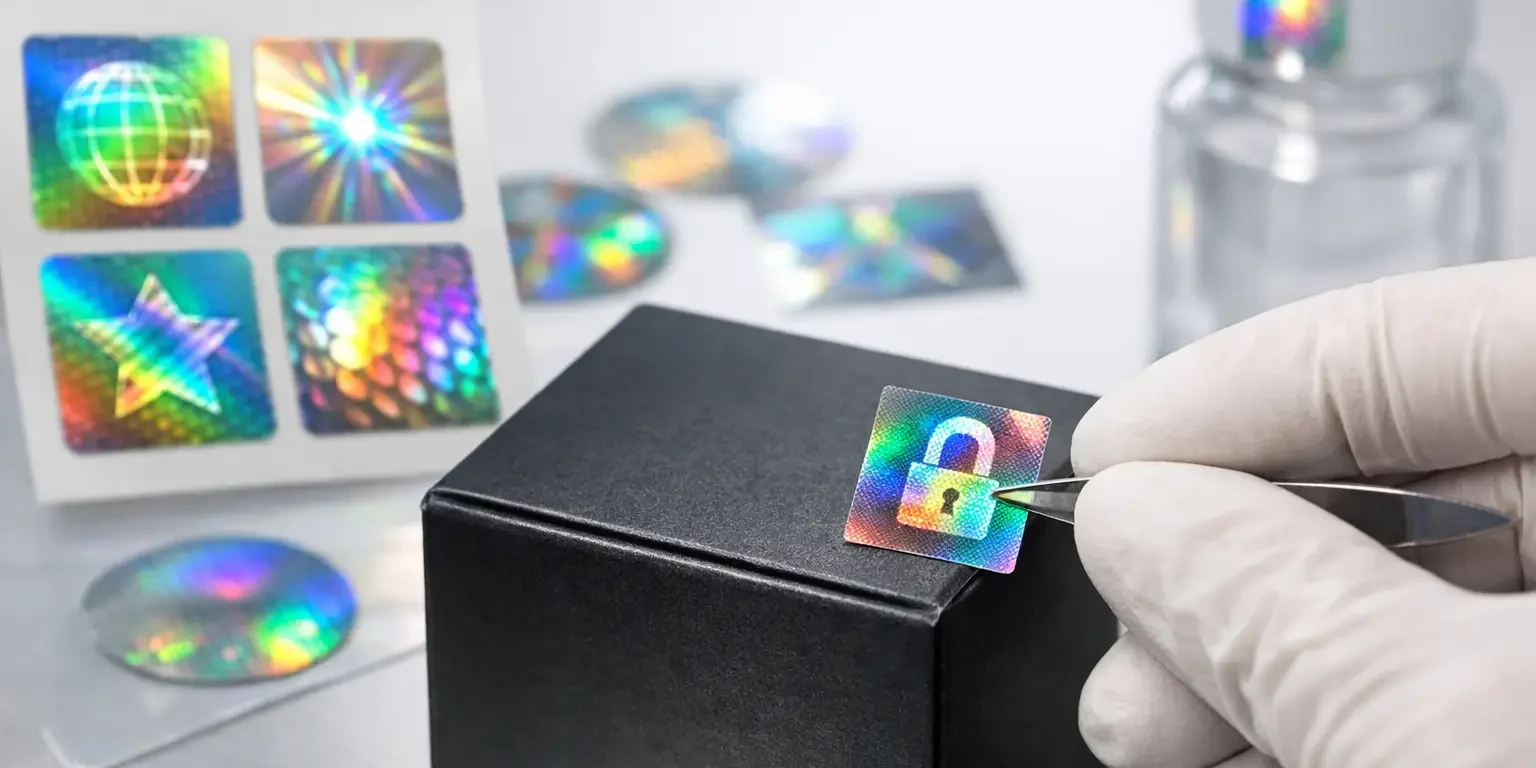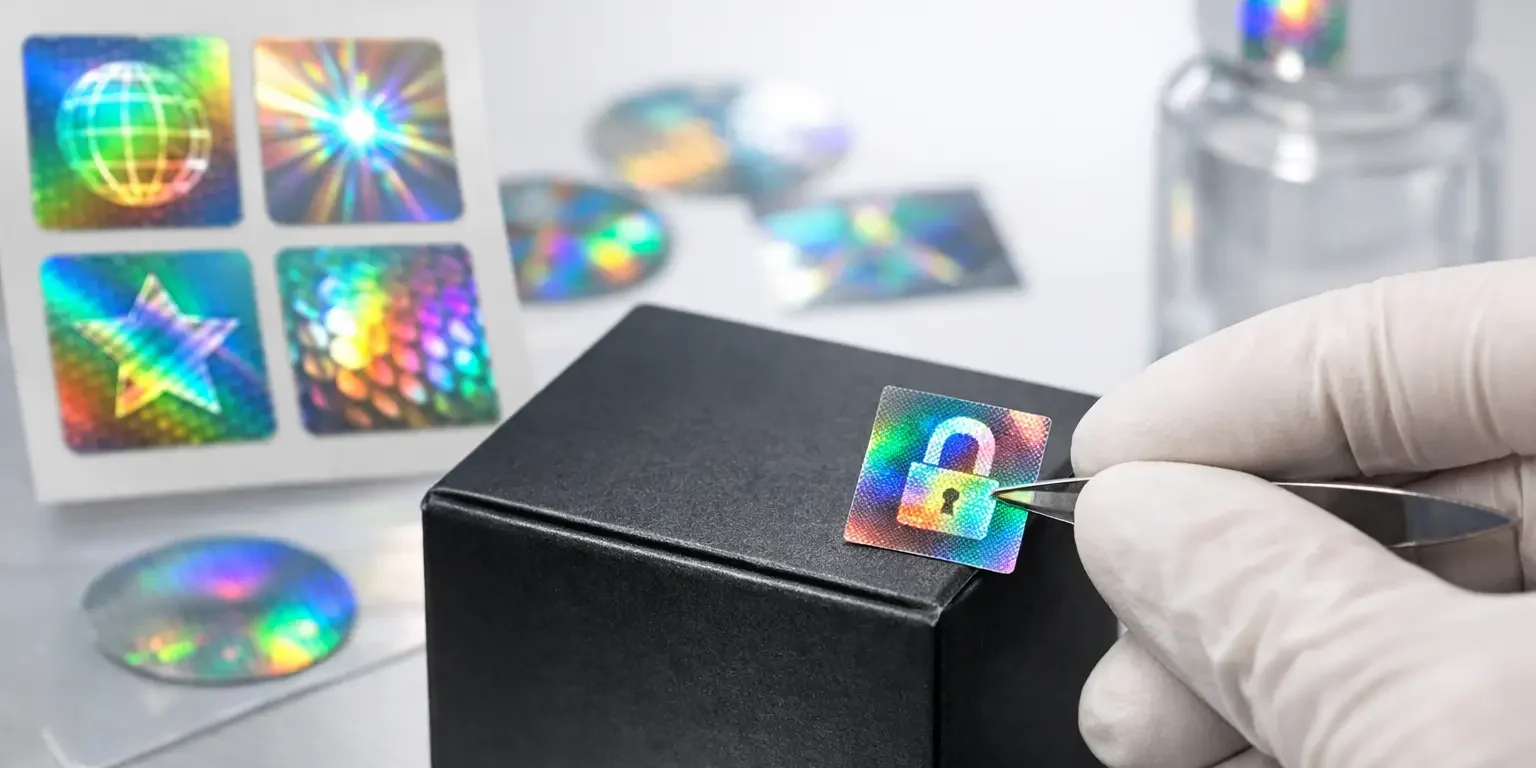
A counterfeit product does more than take a sale. It can put customers at risk, create warranty claims, damage retailer relationships and leave your genuine brand carrying the blame. That is why choosing between hologram suppliers should be treated as a product-security decision, not simply a packaging purchase.
The right label needs to do several jobs at once. It should make an authentic product easy to recognise, make unauthorised opening obvious and give your brand a professional finish. For some businesses, a highly visible holographic seal is enough. For others, particularly where safety, high-value goods or regulated products are involved, the label must also contain features that are difficult to copy and easy for authorised teams to check.
What good hologram suppliers should provide
A hologram is not one fixed product. It can be a simple stock sticker, a fully bespoke security seal or part of a broader authentication system. Good suppliers begin by asking where the label will be applied, what threat it needs to address and who needs to verify it.
A label applied across a carton flap, for example, may need to leave a visible void pattern when removed. One placed on a cosmetics jar may need to sit neatly on a curved surface without spoiling the presentation. A seal for electronics or automotive components may need to cope with handling, oils, temperature changes or long periods in storage. The material and adhesive matter just as much as the holographic image.
The best result is rarely the label with the most features. It is the one with the right features for the risk, product value and inspection process. Adding every available device can increase cost and complicate checks without giving proportionate protection. Equally, choosing a basic sticker for a frequently counterfeited product may create only the appearance of security.
Start with the problem you need to solve
Before requesting samples or prices, define the point of failure. Counterfeiting, product diversion and package interference can look similar from a distance, but they call for different solutions.
Counterfeiting is about proving that an item is genuine. A bespoke hologram carrying your logo, a distinctive background pattern and specialised optical effects makes unauthorised copying more difficult. Covert features, such as hidden text, images or UV-reactive details, give distributors, retailers or field teams a second way to authenticate stock.
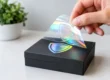
Tampering is about showing that a pack has been opened or interfered with. Destructible materials, honeycomb constructions and void labels are designed to break, fragment or leave a message behind when somebody attempts removal. This creates clear evidence that the seal cannot simply be lifted and reapplied.
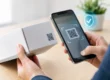
Diversion is different again. It occurs when genuine goods are sold through an unauthorised channel or in the wrong market. A hologram can support channel control, especially when paired with identifiable versions, batch information or serialisation. Where variable data, barcodes, asset labels or custom text are central to the requirement, a specialist supplier should be able to direct you to the appropriate production route rather than force an unsuitable label solution.
Consider who will check the label
The person checking the seal determines which security features are useful. A consumer needs a quick visual cue they can recognise without training. A warehouse operative may need a clear tamper indication at goods-in. A brand-protection investigator can use more discreet details, including UV devices or hidden images, because they have the means and knowledge to inspect them.
Layered security works well because different people can perform different checks. The visible holographic effect reassures the customer. A covert detail helps your authorised team distinguish a genuine label from a convincing imitation. Tamper evidence reveals whether the product or packaging has been disturbed. Each layer has a purpose.
Bespoke holograms versus stock labels
Stock hologram labels are useful when speed and cost are the priority. They offer a visible deterrent, can improve packaging presentation and may suit internal control, event items, lower-risk retail goods or short-term campaigns. They are ready to buy and do not require artwork development.
Their limitation is obvious: if anyone can purchase the same design, it cannot act as a unique proof of authenticity for your brand. Counterfeiters may also find it easier to obtain something that looks broadly similar.
Bespoke labels are created around your identity and security needs. Your logo, colours, text, shapes and patterns can be incorporated into the holographic design, along with overt and covert devices. This makes the label a recognisable part of the product, rather than an afterthought applied to it.
For growing brands, bespoke does not have to mean inaccessible. Low minimum order quantities allow businesses to introduce proper product protection before they are ordering at very high volumes. It is worth asking about minimums early, particularly if you have multiple product lines, seasonal packaging or a phased launch planned.
Security features worth discussing with suppliers
When speaking with hologram suppliers, ask what a feature will achieve in practice, not just whether it can be added. Plain-English explanations are a good sign that the supplier understands the commercial application as well as the production process.
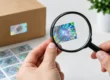
Visible holographic imagery provides the first check. The shifting light effect is difficult to reproduce with ordinary printing and gives packaging a premium, recognisable appearance. A custom holographic pattern, logo or repeated brand element makes copying more demanding.
Covert security features are intended for controlled inspection. UV inks and hidden images can be checked with the right light source, while concealed text can give authorised teams a quick confirmation point. Thermo-reactive or coin-reactive features add another physical test. These are particularly useful where staff need to inspect products in the field without relying on a complex process.
Tamper-evident constructions need careful matching to the surface and application. Void labels can leave behind a message or pattern. Destructible materials break apart on removal. Honeycomb labels create a visible disturbance. The right option depends on whether the seal is applied to cardboard, glass, plastic, metal or another substrate, and whether the product is exposed to moisture, heat or friction.
Scratch-off areas can protect a code or verification detail until the intended point of use. They are helpful for controlled promotions, limited releases or situations where a feature should not be visible before sale. However, scratch-off alone is not an anti-counterfeit strategy. It is strongest when used alongside a bespoke hologram and appropriate tamper evidence.
Questions to ask before placing an order
A productive supplier conversation should cover your product, packaging line and delivery needs. Ask for advice on material compatibility, particularly if labels will be applied to textured, curved, coated or low-energy surfaces. A label that looks excellent on a flat sample may behave differently on the actual pack.
Also ask how the supplier will manage the design process. You should know what artwork is required, whether a proof will be supplied, how design revisions are handled and what approval is needed before production begins. Clear proofs reduce the risk of a costly error, especially where small hidden details are part of the security design.
Turnaround matters, but it should be discussed honestly. Fast production is valuable when stock is running low or a launch date is fixed, yet a bespoke design may need time for development and approval. A dependable supplier will explain the stages clearly instead of making vague promises.
Price should be transparent too. Compare the whole requirement: design, tooling where applicable, materials, security features, quantities and delivery. The cheapest quote can become expensive if it leaves out tamper evidence, uses an unsuitable adhesive or does not include the support needed to get the label right. No catches is a reasonable expectation when you are protecting your reputation.
Build security into the packaging, not around it
The strongest hologram labels are considered early, alongside carton design, closure placement and product handling. A security seal placed where it must be broken to open the pack carries more value than one applied to an area that can be avoided. Likewise, a label positioned where it is easy to inspect is more likely to be checked by retailers and customers.
Think about the full journey from production line to customer. Will the label be applied by hand or machine? Must it survive transit in cold or damp conditions? Does it need to be visible on shelf, or mainly checked by trade partners? These practical questions shape the specification.
HologramLabel.co.uk helps UK businesses turn those questions into custom hologram labels, security seals and stock options without making the process unnecessarily technical. Bring the product, the packaging and the risk you are trying to reduce. From there, the right combination of design, authentication and tamper evidence becomes much easier to define.
A well-chosen hologram does not need to shout. It simply gives genuine products a clear identity, gives your team a reliable check and makes interference far harder to hide.