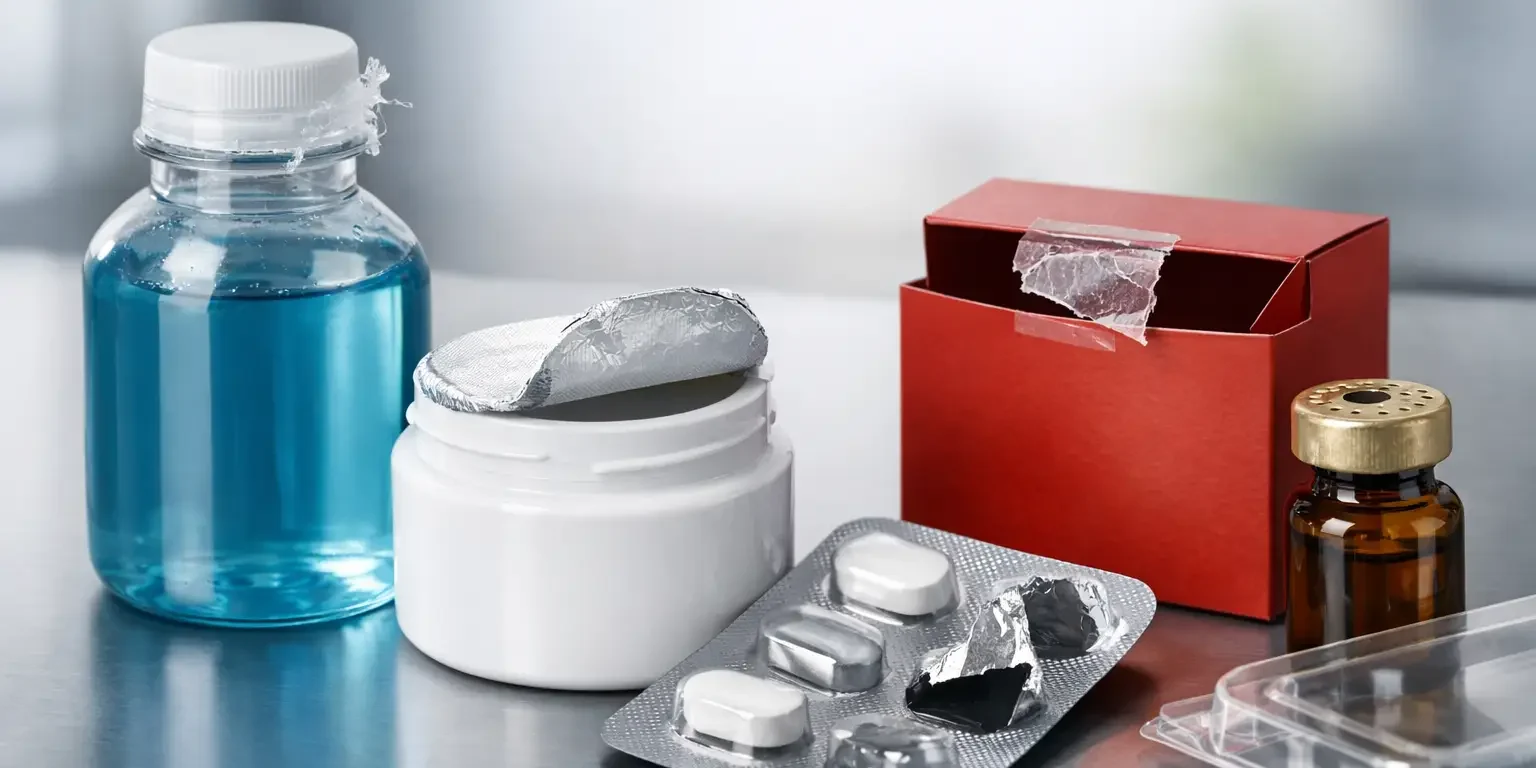
A customer notices a broken seal before they open the carton. That small moment can prevent a complaint, a safety incident or a costly question about whether the product is genuine. Choosing between tamper evidence types is therefore not simply a packaging decision. It is a practical way to protect product integrity, reassure buyers and give your team a visible indication that packaging may have been interfered with.
Tamper-evident labels do not make a product impossible to open. Their job is to make opening or removal obvious. The right choice depends on the pack material, the product’s value, the risk involved and what must happen after a seal is broken.
What tamper evidence is designed to do
Tamper evidence creates a visible, irreversible change when someone tries to remove, lift or open a label or seal. That change might be a word left behind on the surface, a label that tears into fragments, or a patterned material that breaks apart. It gives distributors, retailers and end users a clear reason to stop, check and report a product before use.
This distinction matters. Tamper evidence is not the same as authentication. A standard tamper seal can show that a pack has been opened, but it may not prove that the product originated from your business. A holographic design, hidden text, UV feature or other authentication device can help with that second question.
For higher-risk goods, the strongest approach usually combines both. The label makes interference apparent, while the holographic and covert elements make copying more difficult. This gives your brand a layered defence without turning ordinary packaging into a technical obstacle for customers.
Tamper evidence types and where they work best
Void labels
Void labels are among the most recognisable tamper-evident options. When the label is removed, it leaves a visible message or pattern, often reading VOID, OPENED or a custom equivalent, on the product surface, the label itself or both. A lifted label cannot simply be pressed back into place without leaving evidence.
They work well on cartons, boxes, electronic housings, bottles and smooth plastic or metal surfaces. Void materials can be especially useful where a seal must remain easy to inspect throughout distribution. A warehouse team can see the evidence quickly, and a customer does not need specialist knowledge to understand it.
The trade-off is surface compatibility. The adhesive and void construction need to suit the substrate. Rough cardboard, textured plastics, dusty surfaces and very low-energy plastics may require testing before production. A void label also needs careful positioning so the message is not obscured by a carton flap or product feature.
Destructible labels
Destructible labels are made to break when removal is attempted. Rather than lifting away in one piece, the material fractures into small fragments, making transfer and reapplication extremely difficult. This is a strong choice when you need the label to stay permanently attached to a component, enclosure or pack.
They are often used for electronics, automotive parts, industrial equipment, cosmetics and warranty applications. A destructible seal can bridge a case opening or be placed across a cap and bottle, showing whether access has been attempted.
Their main benefit is clear: there is no intact label for someone to reuse. However, they are not intended for products where a clean removal is required as part of normal servicing or returns. If authorised access is expected, a void label may provide a more controlled and readable outcome.
Honeycomb and patterned-fracture materials
Honeycomb tamper-evident materials break into a distinctive pattern when lifted. The pattern creates an immediate visual cue and makes it difficult to remove a seal in one piece. Like destructible labels, they are suitable for preventing unnoticed label transfer, but the broken pattern can offer a more deliberate visual appearance than random fragments.
This type can be a good fit for branded packaging where appearance matters as much as the security function. It signals that the seal is intentional, not an afterthought. For premium goods, collectibles and retail products, that visible detail can reinforce confidence at the point of purchase.
Seal labels across closures
Sometimes the most effective tamper evidence is not a specialist face material but the placement of the label. A security seal applied across a carton flap, jar lid, bottle cap, pouch opening or product case makes the opening route obvious. Once the pack is opened, the seal tears, stretches or breaks.
This approach is particularly useful when a buyer needs to see at a glance whether the primary packaging has been opened. Alcohol, cosmetics, supplements, pharmaceuticals and food-adjacent products can all benefit from a well-placed closure seal, subject to the relevant packaging and compliance requirements.
The limitation is that a simple seal may be easier to imitate than a bespoke security label. Adding a holographic pattern, a custom logo or hidden verification detail can make the seal harder to reproduce and easier for staff to recognise.
Shrink bands and breakable closures
Shrink bands and breakable caps are tamper-evident packaging features rather than adhesive labels, but they are worth considering alongside labels. A band around a bottle neck or container closure must be removed or broken before the product can be opened. They are familiar to consumers and visually straightforward.
They can be effective for high-volume bottled products, but they offer less opportunity for detailed branding or layered authentication than a custom hologram label. They may also need dedicated packing equipment. A tamper-evident label is often more flexible for short runs, varied pack sizes or brands that need security added without redesigning the whole packaging line.
Match the material to the real risk
The best choice is rarely the most complicated label. It is the one that creates meaningful evidence in the situation where your product is handled. Start by considering who needs to inspect the seal and when. A consumer buying a cosmetic product on a shelf needs an obvious visual cue. An engineer checking a control unit may need a durable destructible label that also protects a warranty point.
Next, assess the product surface and environment. Heat, moisture, oils, cold storage, abrasion and outdoor exposure can all affect adhesive performance. Labels used on curved containers require different planning from seals applied to flat cartons. A label that looks excellent in a sample pack but lifts during transit does not provide dependable protection.
Value and counterfeit risk should also guide the specification. For low-risk promotional goods, a simple branded closure seal may be enough. For pharmaceuticals, premium spirits, automotive parts or electronics, it can make sense to combine tamper evidence with overt holographic effects and covert features such as UV-visible details or hidden text. The goal is not to add every available device. It is to make copying and interference less worthwhile, while allowing genuine products to be checked quickly.
Design tamper evidence so people actually use it
A seal only helps if people understand what they are looking at. Make the tamper feature easy to find and make its purpose clear. A well-designed label can include a short instruction such as “Do not accept if seal is broken”, where appropriate for the product and market. Keep the wording readable and avoid placing vital evidence under folds, over sharp edges or in areas likely to be scuffed.
Branding has a role here. A bespoke holographic label can carry your logo, colours and pattern while performing as a void or destructible seal. This makes it easier for staff and customers to recognise the correct label, while helping your packaging look considered rather than overly industrial.
It is also worth planning for legitimate exceptions. Returns, repairs and quality inspections may require authorised opening. Decide whether the product should receive a replacement seal, a different service label or an inspection record after that process. Clear internal handling prevents a genuine product from appearing suspicious later in the supply chain.
Test before committing to a full run
Samples are valuable because tamper evidence is physical. Test labels on the actual packaging, not only on a similar material. Apply them in the same conditions used on your packing line, allow the adhesive to cure where needed, then try the likely forms of interference: lifting an edge, peeling slowly, applying heat or attempting to remove and reapply the label.
Check the result from the perspective of the person receiving the goods. Is the void message obvious? Does the destructible material break reliably? Can the seal be seen without turning the product over? Also test how it performs after normal transport, storage and handling. A security label must withstand legitimate use while revealing unauthorised interference.
At HologramLabel.co.uk, bespoke hologram seals can combine your required tamper material with branded and layered security features, helping you specify protection without unnecessary complexity. The useful starting point is simple: identify the opening route you need to protect, the surface you need to seal and the evidence your customer should see when something is wrong.