A counterfeit bottle of cosmetics, a substituted electronics part or a package opened before it reaches the customer can cost far more than the product itself. The choice between stock versus custom holograms determines how clearly your business can show authenticity, protect package integrity and make imitation harder. Neither route is automatically right. The sensible choice depends on the risk your products face, the message your packaging must carry and how quickly you need labels in hand.
What stock hologram labels are designed to do
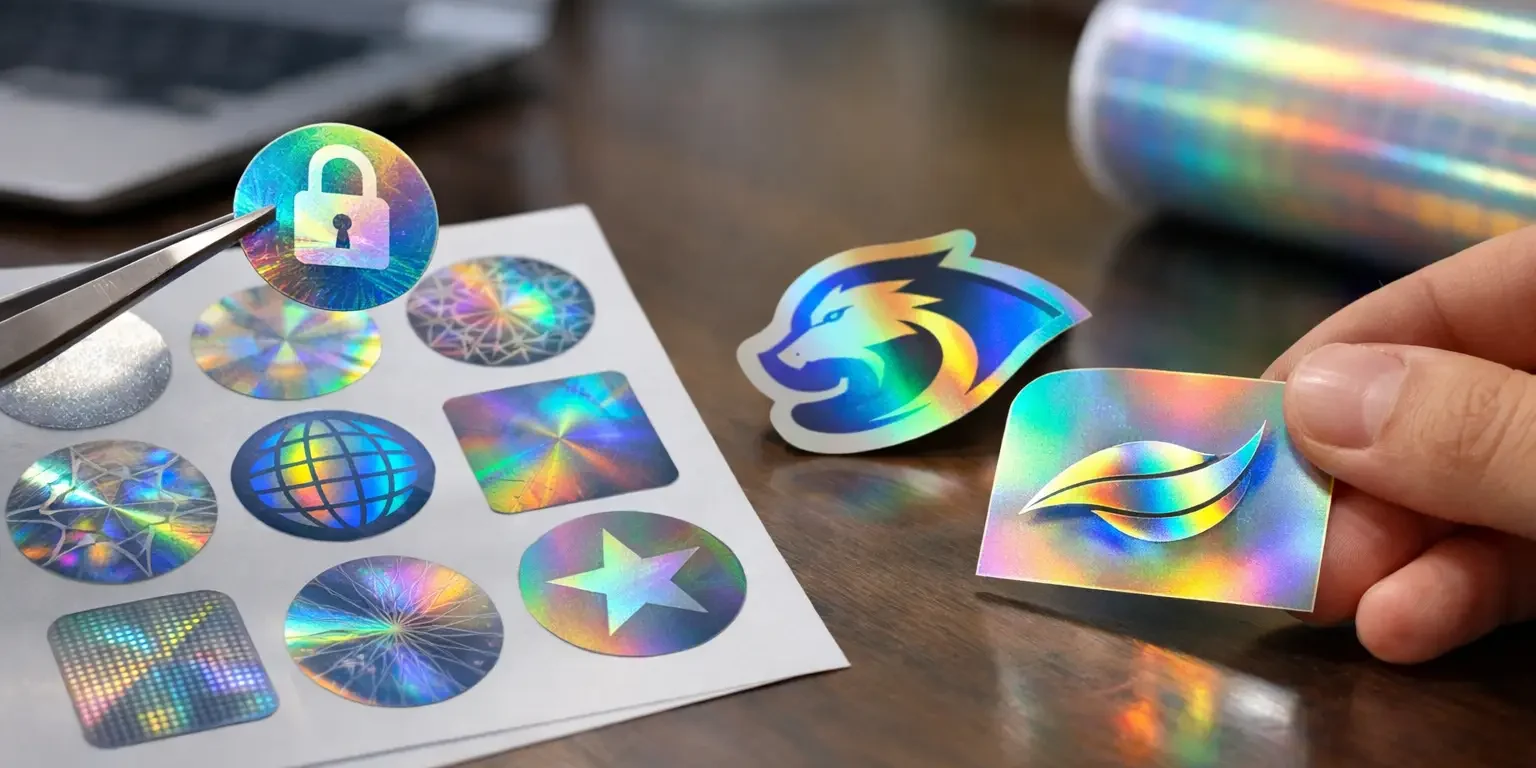
Stock holograms are ready-made labels produced in established designs and held for immediate purchase. They commonly carry general messages such as “Genuine”, “Original”, “Security Seal” or a recognisable holographic pattern. Many are supplied on tamper-evident materials, so the label breaks, leaves a void message or shows evidence of interference when somebody attempts to remove it.
For a business that needs a visible security measure without commissioning artwork, this is a practical starting point. A stock hologram gives staff, distributors and customers a quick visual cue that the pack should be checked. It also adds a premium, light-catching finish that can lift otherwise plain packaging.
Speed is the main advantage. If you have an urgent packaging run, replacement seals to apply or a limited requirement for a general-purpose security sticker, ready-to-buy labels reduce the time between identifying a problem and putting a control in place. They can also be a cost-conscious choice for short-term campaigns, internal asset marking or lower-risk products.
That said, stock designs are shared designs. A counterfeiter can buy or copy a similar-looking label, and a customer may have no simple way to link it specifically to your brand. The hologram remains useful as one layer of protection, but it is not a unique proof of origin.
When custom holograms earn their place
Custom holograms are made around your product, packaging and security requirements. They can incorporate your logo, brand name, shapes, colours and exclusive holographic artwork, creating a label that is visibly yours rather than a generic seal applied to thousands of unrelated products.
That distinction matters when brand reputation is exposed. A pharmaceutical supplier may need a clear visual check on a carton. A cosmetics brand may want its authentication label to complement a carefully designed premium pack. An automotive parts distributor may need a seal that makes unauthorised substitution apparent before a component is fitted. In each case, the label should work with the product, not simply sit on it.
Bespoke holograms also allow security features to be selected according to genuine risk. Overt features are designed to be seen, such as custom diffraction patterns, colour effects and recognisable logo imagery. Covert features provide an additional check for authorised teams, distributors or investigators. These can include UV-reactive details, hidden text or images, thermo-reactive elements and coin-reactive effects.
For products where opening itself presents a risk, the material is as important as the holographic design. Destructible labels fragment when removed. Void labels leave a visible message on the packaging or label face. Honeycomb materials reveal a patterned indication of tampering. The appropriate option depends on the surface, the expected conditions in storage and transit, and whether you need the pack to remain clearly compromised after interference.
A custom label is not necessarily about adding every available feature. Too many elements can complicate checking and add cost without creating a useful security advantage. The strongest approach is usually a considered combination: an easy public-facing visual cue, tamper evidence where appropriate and one or two features that are harder for counterfeiters to reproduce or identify.
Stock versus custom holograms: the commercial trade-off
The clearest difference is not simply price. It is the balance between immediate availability and tailored protection.
Stock labels generally suit businesses that need fast, accessible protection and can accept a design that is not exclusive. They work well where the label’s job is to deter casual interference, support a general quality message or provide a visible seal across a modest range of goods. They can also be a useful interim measure while a bespoke solution is being developed.
Custom holograms suit products with a meaningful counterfeit risk, a valuable brand identity or a supply chain where authentication checks need to be more dependable. Their design can become part of the packaging experience, while their security features create a higher barrier to copying. They are particularly valuable where a fake product could cause safety concerns, warranty claims, regulatory trouble or lasting damage to customer trust.
Budget should be assessed against the potential cost of failure. If a generic label is sufficient to show whether a box has been opened, it may be the right commercial decision. If imitation products are already appearing in the market, or if one counterfeit could harm a long-established reputation, spending more on an exclusive, tamper-evident design is often easier to justify.
Order quantity also deserves a realistic conversation. Growing brands sometimes assume bespoke holograms are reserved for very large production runs. Low minimum order quantities can make custom protection accessible earlier, allowing a business to secure a new range before counterfeiters establish a foothold. Equally, there is no value in ordering more labels than your production plan can use responsibly.
Start with the risk, not the finish
A hologram can look impressive, but appearance should not be the only buying criterion. Start by asking what you are trying to prevent. Is the concern that a product is copied? That packaging is opened and resealed? That genuine goods are diverted into an unauthorised channel? Or that customers need a quick way to distinguish legitimate stock from suspicious goods?
Then consider who will check the label. Consumers need a feature they can recognise quickly, such as a distinctive logo hologram or an obvious tamper indication. Warehouse teams may need a repeatable visual inspection point. Brand-protection investigators may need a discreet feature that is not explained publicly. One label can support each audience, but the checks should be clear and proportionate.
The packaging surface affects the answer too. Cardboard cartons, glass bottles, plastic tubs, metal components and flexible pouches all behave differently. A tamper-evident material that performs well on one surface may not be suitable for another, especially where moisture, heat, oils or abrasion are involved. Testing samples on the actual pack is a sensible part of the specification, not an unnecessary delay.
Questions to ask before ordering
Before choosing either option, establish whether the label is primarily decorative, tamper-evident, authentication-led or required to do all three. Confirm the label size and application position, the packaging material, expected environmental conditions and whether removal should damage the label, the pack or both.
For bespoke work, decide which brand elements must appear and which security checks should remain known only to authorised people. Be precise about how the label will be applied: by hand, during packing or on an automated line. A beautiful design that is awkward to apply consistently creates avoidable waste.
If your requirement includes unique serial numbers, barcodes, QR codes, variable text or asset identification, make that clear from the outset. These features often need a different production approach from a standard holographic security seal, so the right specialist service can be identified early.
A practical way to choose
Choose stock hologram labels when you need a fast, cost-effective and visible layer of protection, and exclusivity is not central to the job. They offer a straightforward way to introduce tamper evidence or improve pack presentation without a bespoke design process.
Choose custom holograms when your label must carry your identity, support more meaningful authentication or protect products where counterfeiting and interference carry real commercial consequences. The design process should feel collaborative rather than technical: you bring the product knowledge and brand ambition; the label specialist translates that into a workable security solution.
HologramLabel.co.uk can help businesses weigh those options without making the decision more complicated than it needs to be. The best label is the one that gives your customers confidence, gives your team a clear check and gives imitators a much harder job.