A medicine pack can look convincing long before anyone checks what is inside it. That is what makes counterfeit medicine protection a patient-safety issue as well as a commercial one. For manufacturers, brand owners and distributors, the objective is clear: make genuine packs easy to recognise, make interference obvious and make copying significantly harder and less worthwhile.
A holographic security label is not a substitute for good manufacturing controls, regulated traceability or secure distribution. It is, however, a highly visible and practical layer of protection at the point where staff, pharmacists, healthcare providers and patients meet the product. Used properly, it gives people a quick reason to pause before accepting a suspect pack.
Why counterfeit medicine protection begins with packaging
Counterfeit medicines may contain the wrong active ingredient, an inconsistent dose, contaminants or no active ingredient at all. Even where a fake product appears professionally packaged, the risk to the patient and to the reputation of the legitimate manufacturer can be severe.
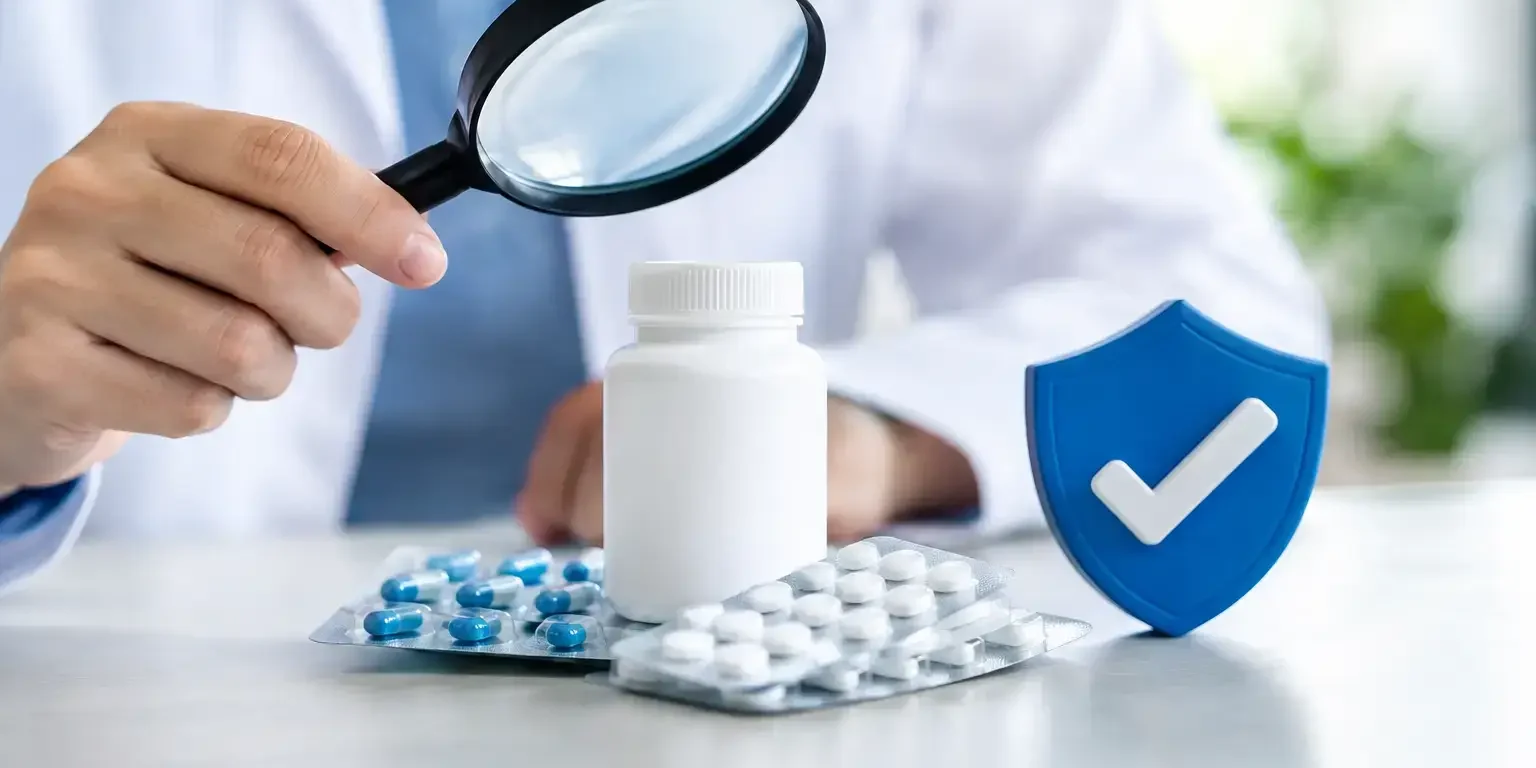
Packaging is often the first physical defence. Before a pack is opened, it can show whether the carton, bottle, blister pack or outer seal has been interfered with. It can also carry authentication features that are difficult to reproduce using ordinary print methods. That combination matters because counterfeiters rarely rely on one weakness. They exploit gaps across packaging, distribution, inspection and consumer awareness.
For a growing healthcare brand, the consequences extend beyond lost sales. A counterfeit incident can trigger product investigations, complaints, stock withdrawals and a hard-earned loss of confidence. Established manufacturers face the same pressures at a larger scale, particularly where products move through complex international supply chains or are at risk of diversion.
What a security label should achieve
The strongest label programmes do not rely on a single flashy feature. A visible hologram may deter casual copying, but a determined counterfeiter may try to imitate its appearance. Better protection comes from combining features that serve different people and different inspection conditions.
A practical medicine-packaging label should help to do four things:
- show a clear visual sign that the product is genuine;
- reveal whether the pack has been opened, resealed or substituted;
- give authorised teams discreet ways to verify authenticity; and
- reinforce a consistent, professional brand presentation.
The right balance depends on the medicine, route to market and likely threat. A low-volume specialist product may need a different approach from an over-the-counter product sold through a wide retail network. There is no value in specifying features that no one in the supply chain can check, or in adding complexity that makes packaging operations needlessly slow.
Holograms make imitation harder
A custom hologram carries a depth, movement and light response that conventional printing does not easily replicate. It gives warehouse teams, pharmacists and consumers a quick visual cue, particularly when it is designed around recognisable brand artwork rather than a generic effect.
For medicine packaging, bespoke artwork can include a company logo, distinctive patterns, microtext or carefully placed hidden imagery. The aim is not simply to make the pack look premium. It is to create a recognisable security device with details that are difficult for a counterfeiter to copy accurately.
Generic stock holograms can offer an affordable deterrent for some applications, especially where a business needs a prompt, visible seal. Yet they are not unique to one brand. For a medicine manufacturer looking to establish a long-term authentication standard, a bespoke hologram normally provides stronger brand ownership and more useful verification points.
Tamper evidence protects the moment of opening
Authenticity and package integrity are related, but they are not the same thing. A genuine label on a pack does not help if it can be lifted intact and applied to another product. That is why tamper-evident material is central to an effective solution.
Destructible labels break into small pieces when someone attempts to remove them. Void labels leave a visible message or pattern behind once lifted. Honeycomb materials provide another clear indication that a seal has been disturbed. Applied across a carton opening, bottle cap or closure point, these materials make unauthorised access much easier to spot.
The correct material depends on the surface and the journey of the product. Carton board, glass, plastic and coated substrates behave differently, while cold-chain conditions, moisture and abrasion can affect performance. Label placement also deserves proper thought. A seal should protect a meaningful opening point without obscuring essential medicine information, expiry details or statutory wording.
Build layers for different checks
Overt features are designed to be seen. A holographic image, colour shift or clear tamper effect can be checked in seconds without equipment. Covert features are intended for trained staff, investigators or supply-chain partners, reducing the chance that every security detail becomes obvious to a counterfeiter.
Useful options may include UV-reactive elements, concealed text or images, thermo-reactive details, coin-reactive features and scratch-off areas. These can be incorporated into a custom hologram label without turning the pack into a technical puzzle for the end user.
The best approach is usually layered. A pharmacist may need a fast visual check; a quality team may need a hidden feature for a closer inspection; and a tamper-evident construction may provide the immediate warning when a pack has been opened. Each layer has a purpose, and each should be simple enough for the intended person to use correctly.
Design for real supply-chain conditions
Security features only work when they remain legible and attached throughout production, packing, transport, storage and dispensing. A beautiful label that scuffs in transit or lifts in refrigerated conditions can create false concerns and operational waste.
Start by mapping the pack’s life. Consider where labels are applied, whether they are applied by hand or machine, what handling they receive and whether the product faces heat, cold, condensation or frequent friction. Also consider who needs to recognise the label. A hospital procurement team, a community pharmacy and a patient at home will not all inspect a pack in the same way.
Clear internal guidance is part of the process. Staff should know what a genuine label looks like, where it sits and what to do when a seal is damaged or a feature does not appear as expected. The label is a tool, not a complete anti-counterfeit policy. It works best alongside controlled suppliers, documented investigations, traceability measures and prompt reporting routes.
Avoid a false sense of security
More features do not automatically mean better protection. Adding several sophisticated devices can increase cost, complicate approval and make it harder to maintain a consistent standard across different pack formats. Conversely, a simple custom hologram paired with a well-chosen void or destructible seal may be exactly right for a clearly defined risk.
It also pays to avoid making public claims that reveal every verification detail. Show enough for legitimate users to recognise the product, but keep selected checks reserved for authorised personnel. Counterfeiters learn from packaging too.
Make security part of brand confidence
Patients should never have to become forensic experts before taking medicine. Good security packaging communicates reassurance quietly: this pack is intact, the brand takes authenticity seriously and there is a visible standard to check.
That reassurance has commercial value. Distributors are more confident handling products that have clear evidence of integrity. Retail and healthcare partners have a practical aid for spotting anomalies. Brand teams gain a security feature that can be integrated with their visual identity instead of looking like an afterthought.
At HologramLabel.co.uk, bespoke hologram labels can combine branded design, visible authentication and inclusive tamper-evident options without making the procurement process unnecessarily complicated. The right starting point is a conversation about the product, its pack material, its route to market and the risk you need to address.
A well-designed security seal will not solve every counterfeit threat on its own. It can, however, give the genuine product a clear, defensible identity at the exact moment someone needs confidence in what they are holding.