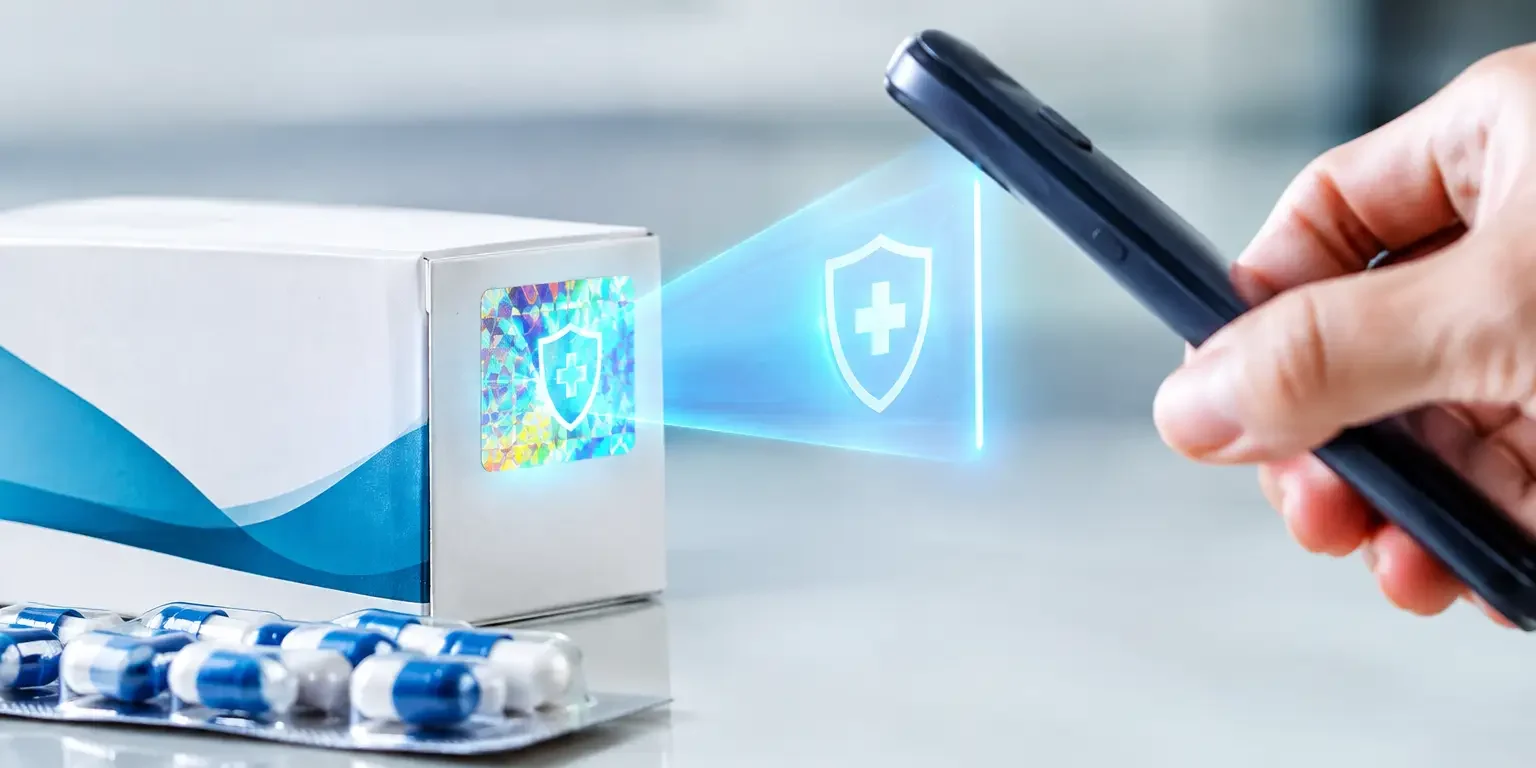
A pharmacy receives a delivery of high-value injectable medicines. Before stock reaches a patient, staff need confidence that each carton is genuine, has not been opened and has not been substituted in transit. A pharmaceutical hologram protection example makes that first check quick: a branded holographic seal across the carton closure changes appearance when tilted, breaks if the carton is opened, and includes a feature authorised staff can verify.
That simple label is not a substitute for formal medicines controls, regulated packaging requirements or supply-chain procedures. It is, however, a practical extra layer of protection. Used properly, it gives counterfeiters more to copy, distributors more to inspect and brand owners a clearer way to show that packaging integrity matters.
What this pharmaceutical hologram protection example looks like
Imagine a UK manufacturer supplying a specialist skincare treatment sold through clinics and approved online distributors. The product is valuable, compact and easy to imitate. Its outer carton is the obvious target: a counterfeiter can reproduce print, use a convincing bottle and sell through unauthorised channels before anyone looks closely.
The manufacturer applies a bespoke holographic security seal over the top flap of every carton. The seal carries the brand name within a custom diffraction pattern, so it flashes in different colours and movements under normal light. It also includes a small hidden word, visible only under UV light, and microtext that is difficult to reproduce accurately with ordinary print methods.
Most importantly, the label is made from destructible material. If somebody opens the carton, the seal fractures into small pieces and cannot be lifted and reapplied. A patient, pharmacist or clinic can see at once that the pack has been interfered with. The brand owner has combined three useful functions in one small area: visible authentication, a discreet professional check and tamper evidence.
This is not security for appearance alone. A standard shiny sticker may look premium, but if it can be removed intact or copied without difficulty, its value as a protective device is limited. The protection comes from choosing features that fit the real risk and making them part of a repeatable inspection process.
Why layers matter in pharmaceutical packaging
Counterfeiters do not need to defeat every security measure if a pack only relies on one obvious feature. They may copy a logo, imitate a holographic finish or reuse labels removed from genuine cartons. Layered protection raises the effort, cost and specialist knowledge required to create a convincing fake.
For a medicine or healthcare product, the layers should serve different people at different points in the supply chain. A patient needs an easy visual sign that the carton remains sealed. A wholesaler or clinic may need a clear check that can be completed during goods-in. A brand protection or quality team may need a covert feature that helps distinguish a suspected counterfeit from a genuine pack without revealing every detail publicly.
A well-planned hologram label can support all three. The overt holographic design offers a clear visual cue. Tamper-evident material reveals opening. Covert devices, such as UV-reactive text, hidden imagery or a specific pattern, provide a controlled second-level check.
It depends on the product and the threat. A low-cost over-the-counter item sold at large volume may need a simple, highly visible tamper seal that is economical to apply. A high-value treatment with a history of diversion may justify more complex layered features. Security should be proportionate, not needlessly complicated.
The visible check: clear enough to use
In the example above, the carton seal is placed where opening will damage it. That sounds obvious, yet label position is often the difference between useful tamper evidence and decoration. If a label sits away from the opening point, the carton may be accessed without disturbing it.
The visual design must also be recognisable. A custom logo, repeating pattern or distinctive image within the hologram helps trained staff know what they should be seeing. Consumers do not need to understand diffraction technology. They need a straightforward message on the pack, such as checking that the seal is present, intact and shows the expected movement in the light.
The professional check: a feature not shown on the shelf
A UV word or image can give authorised teams a second confirmation point. The detail should be documented internally and shared carefully with legitimate distribution partners. If every security feature is explained publicly, it becomes a counterfeiter’s specification sheet.
Microtext and concealed imagery can add further difficulty, but they should not be the only test. A feature that needs specialist inspection is useful for investigation and goods-in checks, not for a busy customer deciding whether a pack is safe to use. Good label design balances visibility with control.
The evidence of opening: make re-use difficult
Destructible films, void materials and honeycomb structures are particularly valuable where an original label could otherwise be transferred to a fake carton. Once lifted, a void label can leave a visible message or pattern behind. A destructible seal breaks apart. Both make a clean reapplication far harder.
There are trade-offs. Some materials suit smooth, dry cartons better than textured, coated or curved surfaces. Cold-chain conditions, friction during transport and pack-opening force all need consideration. Testing on actual production packs is not an optional extra; it is how a label becomes reliable in use.
Designing the label around the real route to market
The strongest design starts with questions, rather than a list of fashionable features. Where is the product most exposed: during distribution, at a clinic, in an online marketplace or after the carton has been opened? Who needs to authenticate it? What type of pack is being sealed? And what would a counterfeit or diverted pack look like in practice?
For example, a product moving through authorised wholesalers may benefit from a prominent closure seal and a covert inspection mark used at receiving points. A direct-to-consumer healthcare product may need clearer on-pack guidance because the end user is more likely to be the first person to notice a problem. If resale and diversion are the main concern, variable serialisation and traceability may also be required alongside the hologram label.
Hologram labels are highly effective as a physical security layer, but they do not replace systems designed to record unique pack data. Where barcodes, serial numbers, batch-linked information or variable text are needed, these should be planned as part of the wider packaging security programme. The aim is not to make one label do every job. It is to ensure each control supports the others.
Practical points before ordering a pharmaceutical security seal
Start with the carton, bottle, pouch or outer shipper the label will protect. Measure the application area and identify whether the surface is glossy, matt, coated, rough or exposed to moisture. Consider whether labels will be applied by hand or on a production line, as this can affect size, shape, adhesive choice and reel format.
Then decide which feature is for whom. An overt hologram may carry the brand identity and visual authentication. A UV element can be reserved for trained staff. A void or destructible construction provides tamper evidence. Adding every available device is rarely necessary, and it can make artwork harder to read or raise unit cost without improving the relevant protection.
It is also wise to agree an inspection routine before labels are supplied. Receiving teams should know where the seal is located, what an intact pack looks like and what to do if a label is missing, damaged or suspicious. A security feature only earns its place when someone knows how to use it.
Bespoke holograms are especially useful when a generic stock design would be easy for an imitator to source. At HologramLabel.co.uk, custom designs can combine your logo, chosen artwork and suitable tamper-evident material without making the process difficult for your team. Low minimum quantities can also make a considered first run more accessible for emerging brands and specialist product lines.
When a hologram is the wrong answer on its own
A holographic seal is not a claim that a product is safe, compliant or clinically suitable. It cannot identify a product’s contents, correct poor storage conditions or replace the checks required under medicines regulation. Nor can a label prevent every form of diversion if genuine packs are obtained and resold through unauthorised routes.
That is why the best programmes combine physical packaging security with trusted suppliers, controlled distribution, quality procedures and appropriate traceability. If a suspected counterfeit is found, a clear escalation process matters more than a clever visual feature alone.
For many pharmaceutical and healthcare brands, though, the carton closure is still a valuable point of control. A carefully designed holographic tamper seal gives genuine products a recognisable signature and makes interference much harder to hide. Start with the risk your pack actually faces, test the label on the real material and build a security layer that your people can check with confidence.