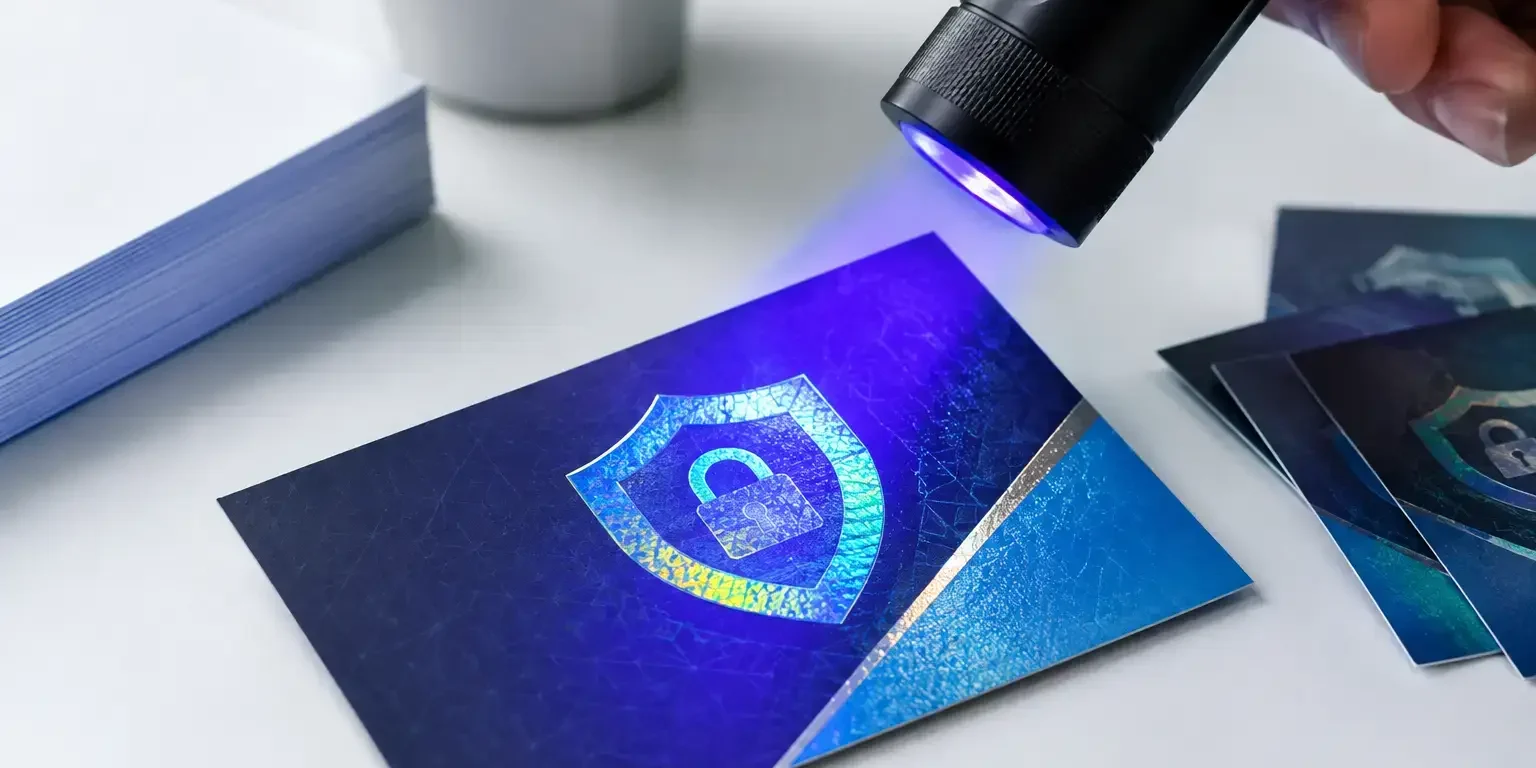
Counterfeiters rely on buyers, retailers and inspectors being unable to spot a difference quickly. UV security printing gives authorised people a simple extra check: under ultraviolet light, a hidden mark, pattern or message appears. The challenge is not deciding whether UV features are useful. It is deciding how to choose UV security printing that genuinely suits your product, packaging and risk level.
For some businesses, a discreet UV logo is the right starting point. For others, UV ink needs to sit alongside holographic imagery, tamper evidence and covert detail that is much harder to copy. The best choice depends on where the product travels, who needs to verify it and what a counterfeit could cost your business.
Start with the problem you need UV security printing to solve
UV printing is a verification feature, not a one-size-fits-all answer to counterfeiting. Before discussing artwork or label materials, identify the threat you are dealing with.
Are counterfeit goods reaching customers through online marketplaces? Is product diversion a concern, where genuine stock appears in an unauthorised channel? Do you need to show that a carton, bottle or device has not been opened or substituted? Each situation calls for a different security-label design.
A cosmetics brand selling through approved retail partners may need a UV mark that staff can check during routine goods-in inspections. A manufacturer of electronic components may need a more discreet feature to help field engineers distinguish original parts from copies. Pharmaceutical, alcohol and high-value collectible products may require layered protection because the safety, compliance and reputational consequences are higher.
Be specific about the result you want. A label designed only to deter casual copying will look different from one intended to support investigations across a distribution network.
Choose UV security printing around the authentication journey
The most useful question is: who will check the feature, and where? UV security is only effective when the right people can verify it without unnecessary delay.
If warehouse teams, retail staff or service engineers need to authenticate products, the UV response should be clear under a suitable UV torch. A simple fluorescent logo, colour shift or recognisable icon can work well. Give authorised users a reference image and clear instructions so they know what to look for.
If the feature is for brand-protection teams, investigators or selected distributors, you can make it less obvious. Hidden text, fine detail and UV-only graphics add a valuable second layer because a counterfeit label may look convincing in normal light while failing inspection under UV.
There is a trade-off. A highly visible UV feature is easy to train people to check, but it also tells counterfeiters that the feature exists. A covert mark is less likely to be noticed and copied, but requires a controlled verification process. Many products benefit from both: an overt holographic effect for immediate recognition, plus a UV element for confirmation.
Think about the checking equipment
Do not assume every UV light produces the same result. The wavelength, distance from the label and ambient light can affect visibility. Agree how the mark will be checked before production, including the torch or inspection lamp your team will use.
This avoids a common problem: a feature that looks excellent in a controlled sample review but is difficult to see on a busy warehouse floor or in daylight. A practical supplier should test the proposed design and material combination, then explain any limitations in plain English.
Select the right label material and tamper evidence
UV ink performs differently depending on the surface beneath it. Glossy films, paper labels, textured packaging, metallic foils and dark colours can all change how a UV feature appears. The label must also survive the conditions your product faces, whether that means cold storage, moisture, abrasion, oils or frequent handling.
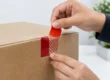
Security should not stop at authentication. If packaging interference is a risk, pair UV printing with a tamper-evident construction. Destructible materials break apart when someone tries to remove them. Void labels leave a visible message or pattern behind. Honeycomb materials make removal and reapplication difficult. These options help show that a seal has been disturbed, even before the UV feature is checked.
The right choice depends on what you are protecting. A removable asset label has different requirements from a bottle-neck seal or a warranty label spanning a product and its outer carton. Explain the application surface, label size and expected environment early. It saves time, avoids unsuitable material choices and keeps costs honest.
Decide how many security layers are justified
A single UV mark can be a sensible, cost-conscious starting point for lower-risk products. However, it should not be treated as impossible to copy. Determined counterfeiters can obtain UV inks and inspect a genuine label. What makes a security label harder to reproduce is the combination of features, production knowledge and material behaviour.
Useful layers can include a bespoke holographic design, microtext, hidden images, UV-only printing, thermo-reactive detail, scratch-off areas and tamper-evident stock. A custom layout incorporating your logo, product cues and unique patterning is more difficult to imitate than a generic security sticker.
There is no prize for specifying every available feature. Too many elements can crowd a small label, complicate quality control or add cost without improving day-to-day verification. Choose layers that answer a real risk and can be checked by the people you trust.
For instance, a branded hologram with UV hidden text and a destructible adhesive may be a strong choice for premium consumer goods. An industrial component label might need a small hologram, a covert UV identifier and a material that resists heat or chemicals. The label should fit the product, not the other way round.
Make the UV design difficult to guess
A generic star, block of fluorescent colour or simple initials are easy to recognise, but they are also easy for an imitator to anticipate. A better approach is to build UV content into the wider label design.
This could mean a UV version of part of your logo, a product-specific motif, hidden wording placed within a holographic pattern or a detail that aligns precisely with visible artwork. The feature should be distinctive enough that an authorised checker can make a confident decision, while avoiding information that makes copying straightforward.
Keep verification instructions separate from the public-facing pack design where possible. Your staff and approved partners may need to know the exact UV colour, location and message. Customers do not necessarily need that level of detail. Controlled knowledge is part of the protection.
Review samples under real conditions before ordering
A digital proof cannot show how UV ink will behave on the finished material. Ask to review physical samples, particularly if you are combining a UV feature with holographic film, a coloured substrate or tamper-evident material.
Check the label in normal light first. It should still support your brand presentation and remain legible. Then inspect it under the agreed UV source. Look for clean fluorescence, clear hidden content and consistent placement. Finally, test it on the actual packaging where possible. Curves, seams, textured surfaces and dispensing equipment can all affect the finished result.
Include the people who will use the checks. Procurement may approve cost and specification, but a warehouse manager, quality lead or service team can identify whether the verification process is realistic. A feature that takes 30 seconds to find is unlikely to be used consistently at scale.
Balance price, minimum order quantity and long-term value
Security labels are a commercial decision, so the cheapest quote is not always the lowest-cost option. A generic UV label may cost less initially, but it can provide little distinction and limited deterrence. Conversely, an over-engineered label may absorb budget that would be better spent on controlled distribution, staff training or stronger packaging.
Ask for transparent pricing based on the material, size, number of colours, security features and quantity you actually need. Low minimum order quantities are particularly useful when launching a product, testing a new packaging format or protecting a limited edition. You should be able to start at a sensible level and scale without changing the core authentication approach.
At HologramLabel.co.uk, bespoke hologram labels can combine UV features with tamper evidence and branded design, so the protection works as part of the pack rather than as an afterthought. Where serial numbers, barcodes or variable text are central to the project, a specialist variable-data solution may be more appropriate alongside the security label.
Work with a supplier that asks the right questions
A good supplier will not simply ask for a logo and quantity. They should want to understand your product, application surface, supply chain, threat level, required lifespan and who will authenticate the label. That conversation turns a decorative UV effect into a practical security measure.
You should also expect clear advice on what UV printing can and cannot achieve. No label eliminates counterfeiting on its own. The aim is to make copying less attractive, make interference visible and give your team a dependable way to identify genuine goods.
Bring your product challenge, however straightforward or ambitious it may seem. The best UV security printing is the version your people can check confidently, your packaging can carry properly and counterfeiters cannot reproduce cheaply.