A security label only works when it stays where it is meant to stay. Knowing how to apply tamper-proof labels correctly is therefore just as valuable as choosing the right holographic design or covert feature. A poorly applied seal can lift at the edges, fail to reveal its tamper message, or create doubt when a customer receives the product.
For product owners, distributors and packaging teams, the aim is simple: create a clear, permanent visual signal that the pack has not been opened, substituted or interfered with. Good application turns a holographic label into a practical part of your product-security process rather than a finishing touch added at the last minute.
Start with the right tamper-evident material
Not all tamper-proof labels behave in the same way after removal. The right choice depends on the product surface, the type of pack and what you need the customer or inspector to see.
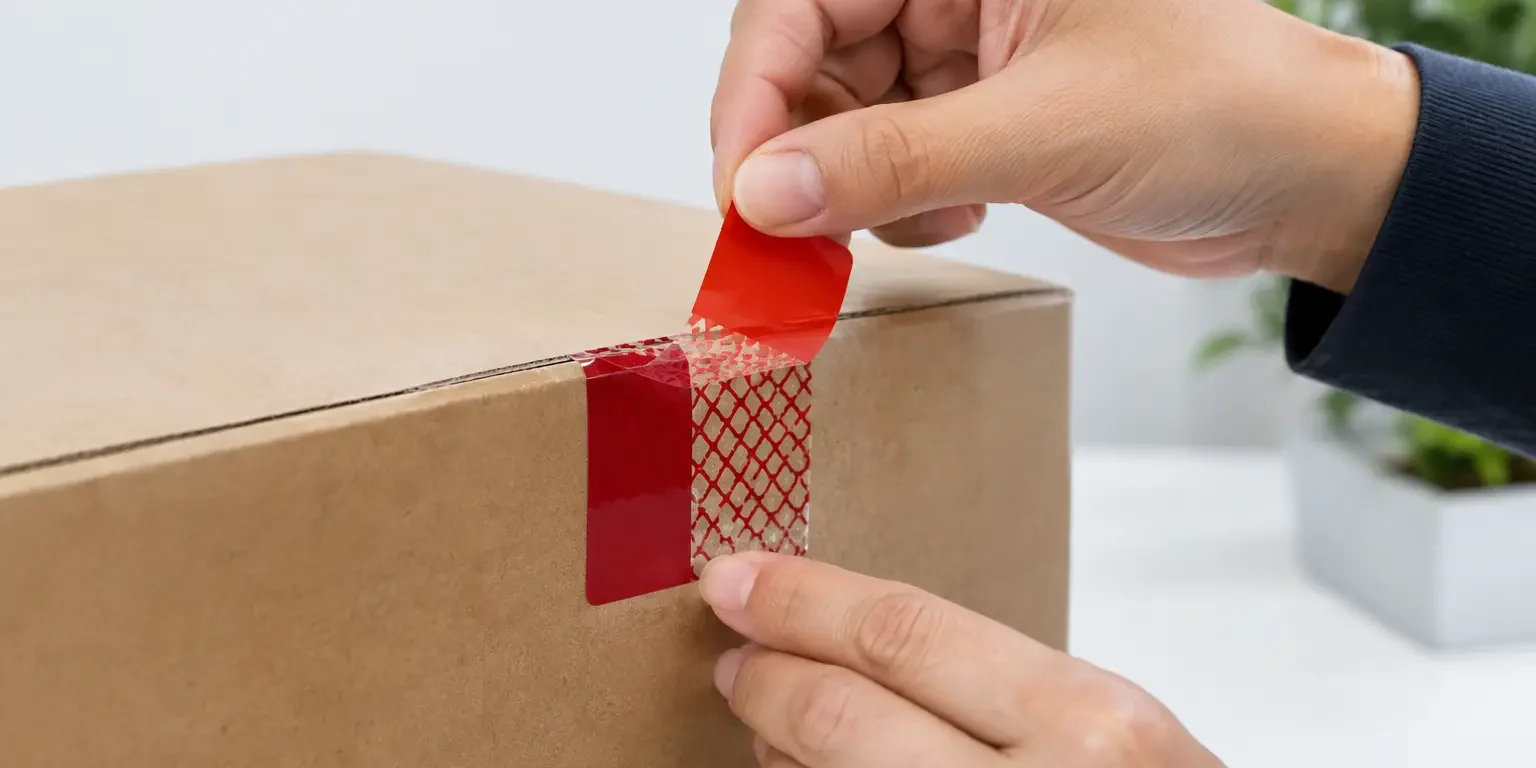
A void label leaves a visible word, pattern or message on the pack or label face when someone attempts to peel it away. This suits cartons, bottles, electronics packaging and many sealed enclosures where a clear indication of interference is needed. Destructible material breaks into small pieces when removal is attempted, making it difficult to lift the label in one piece and reapply it elsewhere. Honeycomb materials create a patterned effect on disturbance and can offer a highly visible warning.
The surface matters just as much as the security feature. Smooth, clean cardboard, coated cartons, glass, metal and certain plastics can all work very well, but adhesives react differently to each. Textured cardboard, recycled packaging, low-energy plastics and curved surfaces may need a more specific material or adhesive. If the label must hold in chilled storage, high heat, humidity, oil or outdoor conditions, say so at the design stage. That is not a complication – it is how you avoid paying for a security seal that is wrong for its working environment.
Prepare the product surface before application
Tamper-evident adhesive needs a clean and stable surface. Dust, grease, condensation, release coatings and loose fibres all reduce the bond between label and packaging. Even a premium hologram can fail prematurely if it is applied over contamination.
Keep the application area dry and free from product residue. For non-porous packs such as glass, metal or rigid plastic, wipe the area with a suitable cleaning method approved for your packaging and allow it to dry fully. With cartons and paperboard, check for dust and avoid applying over damaged print, creases or areas where the board is already lifting.
Temperature also affects results. Adhesives generally perform best when labels and products are applied within the recommended temperature range. A label placed onto a cold bottle straight from refrigerated storage may not bond as intended, while excessive heat can make accurate placement harder. If your production line operates in difficult conditions, run a sample test first rather than relying on appearance alone.
Check compatibility on real packaging
A small trial can save a costly production issue. Apply sample labels to the actual pack, not a similar-looking substitute, then leave them long enough for the adhesive to settle. Test the pack through normal handling, storage and transport conditions.
Where possible, include a controlled tamper test. Attempt to lift a corner or remove the seal in the way an opportunist might. You are checking that the chosen material shows evidence of interference clearly, while the packaging itself remains suitable for sale. The best result is not always the most aggressive adhesive. On a delicate carton, for example, an overly strong label may damage the pack in a way that is confusing rather than useful. The goal is unmistakable evidence, not unnecessary destruction.
Choose a position that proves the pack was opened
Placement is central to tamper evidence. A label should bridge a point that must be disturbed to access the product: the opening flap of a carton, the lid and body of a jar, a closure and bottle neck, or the join of an electronics enclosure.
Avoid placing a seal where it can be removed with a part of the outer packaging that does not affect access to the item. A label applied only to the centre of a carton flap, for example, may look secure but allow an end panel to be opened. Look at the full opening sequence and identify the point a person cannot bypass.
The label should also be easy to inspect. Consumers, warehouse teams and retailers need to see whether it is intact without turning the product upside down or removing it from a display. On premium goods, the placement can complement the pack design. A custom hologram bearing your logo can reinforce authenticity while still performing a serious security role.
For curved containers, avoid sharp bends, seams, ridges and deep recesses where possible. The flatter the application area, the more consistent the adhesive contact. If a label must cross a curve, use a size and shape designed for it, and test it under real handling conditions.
How to apply tamper-proof labels by hand
For short runs, samples or specialist products, hand application can give excellent results when staff follow a consistent method. Handle labels by the edges and avoid touching the adhesive, as skin oils can reduce its grip.
First, line up the label without removing the backing fully. Confirm that it crosses the intended opening point and sits squarely with the pack artwork. Peel back a small section of the release liner, press that edge into position, then remove the liner gradually while smoothing the label down from the centre outwards. This reduces the chance of trapping air or creating wrinkles.
Apply firm, even pressure across the whole label, especially at edges and over any pack join. A simple hand roller can help create consistent contact on larger labels or higher volumes. Do not stretch the material while applying it. Stretching can distort a holographic pattern, weaken the seal at an edge and make later inspection less reliable.
Once applied, inspect the label immediately. It should lie flat, have no loose corners and show no obvious bubbles, creases or folds. If a label is misaligned, do not peel it back and attempt to reposition it. Replace it with a new label and treat the removed one as spoiled stock. A partially lifted tamper seal may no longer give dependable evidence of interference.
Build checks into production, not just dispatch
For larger orders, label application should be part of the documented packing process. Whether labels are applied by hand or machine, operators need a clear position guide, an approved sample and a straightforward pass-or-fail check.
A practical quality check includes confirming that the correct label is on the correct product, the hologram is visible, the seal bridges the required opening, and all edges are fully adhered. Check products at the start of a run, after machine adjustments, whenever packaging stock changes and at sensible intervals during production. If a fault appears, isolate the affected batch rather than assuming every pack is acceptable.
Keep records of material type, product batch, application date and any test results. This is particularly useful for regulated, high-value or safety-critical goods. It provides evidence that package security was considered and applied consistently, while helping your team trace an issue if one is reported later.
Common application problems and what they mean
Edges lifting usually point to dust, moisture, an unsuitable surface, insufficient application pressure or a label placed over a curve. Wrinkles can result from applying too quickly or stretching the label. Air bubbles often come from pressing down the outer edges first instead of working from the centre.
If a void message does not appear clearly during a test, do not assume the label is defective. The adhesive may need more dwell time, the substrate may not be compatible, or the removal force may be different from the test method. Review the label material and the pack together. Security labels are a system: the hologram, adhesive, package construction and application process all have to work as one.
Make tamper evidence part of the customer experience
The best tamper seal gives reassurance before the customer has to think about it. It looks intentional, professional and difficult to imitate. A well-designed holographic label can carry your branding, include overt visual effects and incorporate security details that are harder for counterfeiters to copy.
HologramLabel.co.uk can help translate your product, packaging and risk concerns into a label specification that is practical to apply as well as difficult to defeat. From low-volume bespoke work to established packaging programmes, the right questions at the outset make the process straightforward.
Give your labels the same attention you give the product inside. When the seal is cleanly positioned, firmly bonded and impossible to remove without showing it, customers receive a quiet but convincing message: this pack has been protected properly.