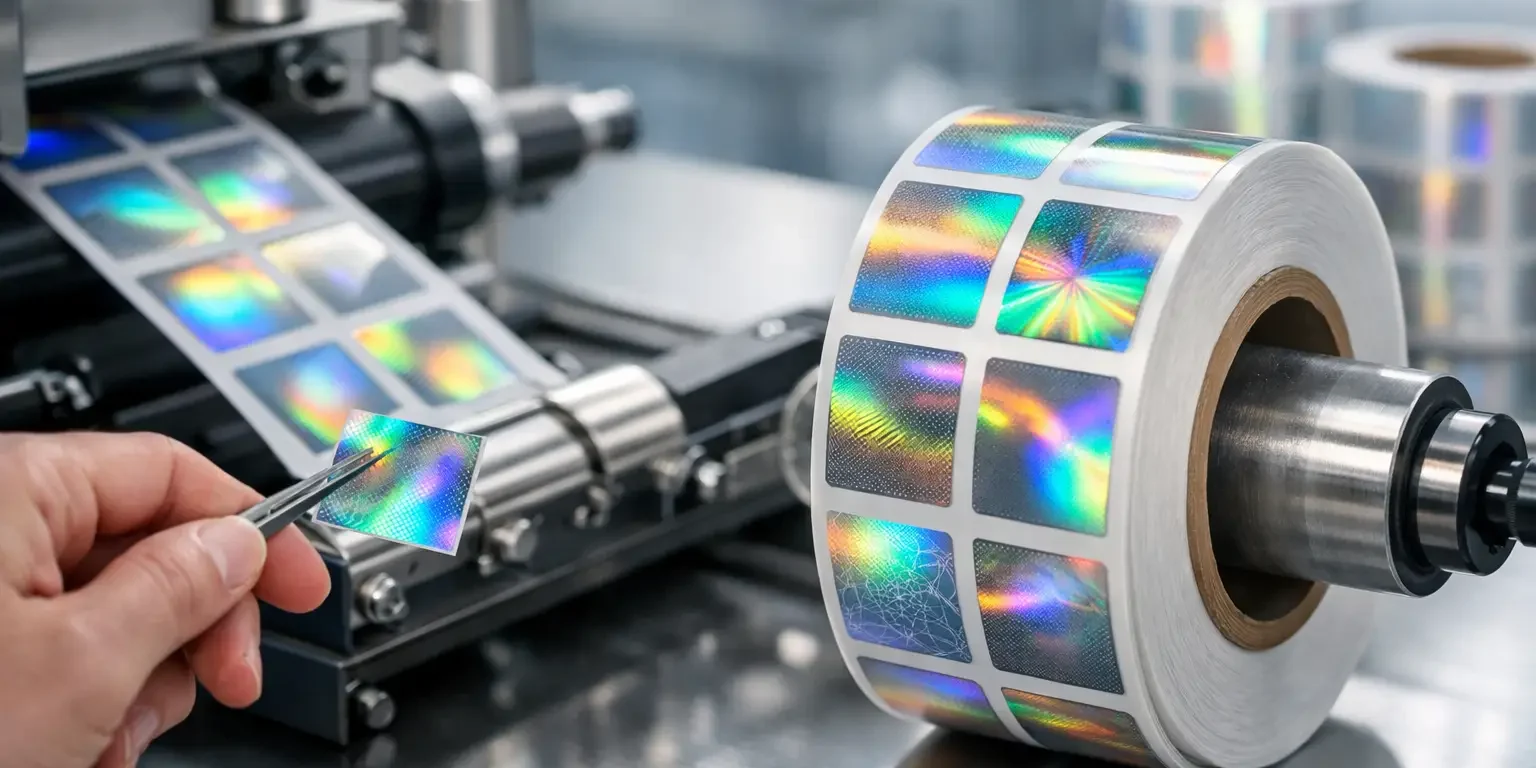
A delayed security label can delay a product launch, leave a packaging line waiting or force a brand to send goods out with less protection than planned. Fast turnaround hologram labels are designed to prevent that pressure becoming a compromise. The right label should still look credible, suit the pack, deter copying and make interference obvious – even when your deadline is close.
For UK manufacturers, distributors and brand owners, speed matters because the commercial risk does not pause. Counterfeiters, grey-market sellers and opportunistic tampering can affect established product ranges as readily as a new launch. A well-planned hologram label order gives you a practical layer of protection without turning procurement into a lengthy technical project.
What fast turnaround should actually mean
Fast does not simply mean printing a shiny sticker and sending it out. A useful turnaround process starts by identifying what the label needs to achieve: visual authentication, tamper evidence, packaging enhancement, or a combination of all three. It then matches the requirement to an appropriate holographic construction and production route.
For some applications, ready-to-buy stock hologram labels may be the quickest answer. They provide an immediate visible deterrent and are useful where a generic security seal is sufficient. For a branded consumer product, a bespoke hologram is often the stronger choice because it makes the security feature part of the product identity rather than an add-on that could appear on anything.
A fast bespoke service should make the decisions clear, not ask you to become a label-production specialist. You can bring a logo, a colour direction, a packaging mock-up or simply the problem you need to solve. Translating that into a practical label specification is the supplier’s job.
Fast turnaround hologram labels need the right brief
The quickest route to a label that performs properly is a focused brief at the outset. That does not need to be complicated. It should cover the product, the surface the label will be applied to, the approximate label size, the quantities required and the date by which you need delivery.
It is also worth considering where your risk sits. A cosmetics brand may be particularly concerned about product substitution and presentation at retail. An electronics business may need a seal that shows if a casing has been opened. A parts supplier may want installers and customers to recognise genuine components at a glance. Each need points towards a different balance of holographic effect, adhesive performance and security features.
Artwork readiness can affect lead time too. A clean logo file and clear brand colours allow the design stage to move quickly. However, an experienced design service can still help when artwork is incomplete. The goal is not to rush an unsuitable proof through approval. It is to remove unnecessary back-and-forth while keeping the final label recognisably yours.
Security features are not all equal
A basic holographic pattern is visible and attractive, but it is only one level of defence. Bespoke labels can include overt features that are easy for staff and customers to check, along with covert details that are harder for counterfeiters to identify or reproduce.
Hidden text or images, UV-reactive elements, thermo-reactive effects and coin-reactive features can give authorised teams simple ways to verify a genuine item. A scratch-off area may be useful when a feature needs to remain concealed until inspection. The sensible choice depends on who will check the label and where that check will happen. A feature requiring special equipment is valuable for internal verification, but it will not help a consumer standing in a shop aisle.
Tamper evidence should be built into the decision
Authentication confirms what a product is. Tamper evidence helps show whether its packaging has been opened, removed or interfered with. Where product integrity matters, the two work better together.
Void, destructible and honeycomb materials are designed to react when someone attempts to remove the label. Depending on the material selected, the label may break apart, leave a visible message or leave a patterned residue. This gives warehouses, retailers, installers and end users a clear signal that the seal should not be ignored.
The material must suit the application surface. A label applied to smooth coated card may behave differently from one used on curved plastic, painted metal or textured packaging. Temperature, moisture, oils and handling conditions can matter as well. Asking these questions early protects both turnaround time and performance after delivery.
There is a trade-off to manage. Highly aggressive adhesives and destructive constructions can offer strong evidence of removal, but they may not be right for every finish or product. A good supplier will explain that openly and recommend a practical route rather than treating every label as identical.
Where speed can be gained without cutting corners
The most reliable way to shorten a label project is to make early choices that are fit for purpose. Standard shapes, sensible dimensions and established materials can often move more quickly than an entirely new construction. That does not mean your hologram has to look generic. Your logo, wording, layout and visual security pattern can still create a distinctive branded result.
Quantities also matter. Low minimum order quantities make it easier for growing brands to protect a limited run, trial a new pack format or cover a seasonal product without ordering far more than they need. Larger orders may provide different production efficiencies, so it is worth discussing expected future demand as well as the immediate requirement.
Approval is another important point. The proof stage is where spelling, logo placement, sizing and security details should be checked carefully. One prompt, informed approval is faster than several rushed revisions. If more than one person needs to sign off packaging, agree that process before the proof arrives.
For HologramLabel.co.uk customers, this is where a full bespoke design service helps keep the project moving. You do not need to arrive with a technical label specification. Bring the product challenge and the desired look, then work through the options with a Scotland-based specialist team.
When a standard hologram is enough, and when it is not
There are situations where a stock hologram label is a sensible commercial decision. It can be suitable for general sealing, short-term promotions, internal controls or products where a visible deterrent is the main objective. It can also be useful while a bespoke label is being developed for a longer-term range.
A bespoke hologram is normally preferable when your brand name carries significant value, imitation has been a problem or customers need an easy way to distinguish genuine stock. Incorporating your own logo, colours or identifiable imagery makes unauthorised substitution more difficult and creates a more professional finish on the pack.
If you require individual serial numbers, variable information, barcodes, asset identification or changing text, make that clear at the beginning. These requirements may call for a related variable-data label solution rather than a conventional fixed-design hologram. Clarifying this early avoids specifying the wrong product and losing time later.
Questions worth asking before you place an urgent order
Before committing, ask what the stated turnaround includes. Is it from artwork approval, from payment, or from the first enquiry? Check whether delivery time is separate from production time, particularly when working towards a launch or dispatch date.
You should also ask how the label will behave if removal is attempted, whether the adhesive suits your substrate, and whether the proposed security features can be checked by the people who need to use them. Price matters, but cheap labels that do not adhere correctly or do not signal tampering can create a more expensive problem further down the line.
The clearest suppliers will be direct about what is achievable. Some bespoke effects and complex constructions need more development time; that is not a failure of service, but a reality of producing security labels properly. Fast, honest advice is more valuable than an unrealistic promise.
A close deadline is often the moment when product protection is treated as optional. It should be the moment to choose protection that is straightforward, credible and designed for the real risks around your product. Start the conversation with the deadline, the pack and the threat in mind, and there is every chance your label will arrive ready to do more than look impressive.