A broken seal can tell a customer that a product may have been opened. It cannot always tell them whether the product is genuine, where it came from or whether the packaging has been substituted. That distinction sits at the centre of tamper labels versus shrink bands. Both can provide visible evidence of interference, but they protect products in different ways and create very different practical demands for production, packing and brand presentation.
For UK manufacturers and brand owners, the right choice depends on the product, the point of risk and the level of reassurance customers need. A simple jar of supplements, a high-value electronic component and a premium spirit bottle may all need tamper evidence, yet the most effective format will not be the same.
Tamper labels versus shrink bands: the core difference
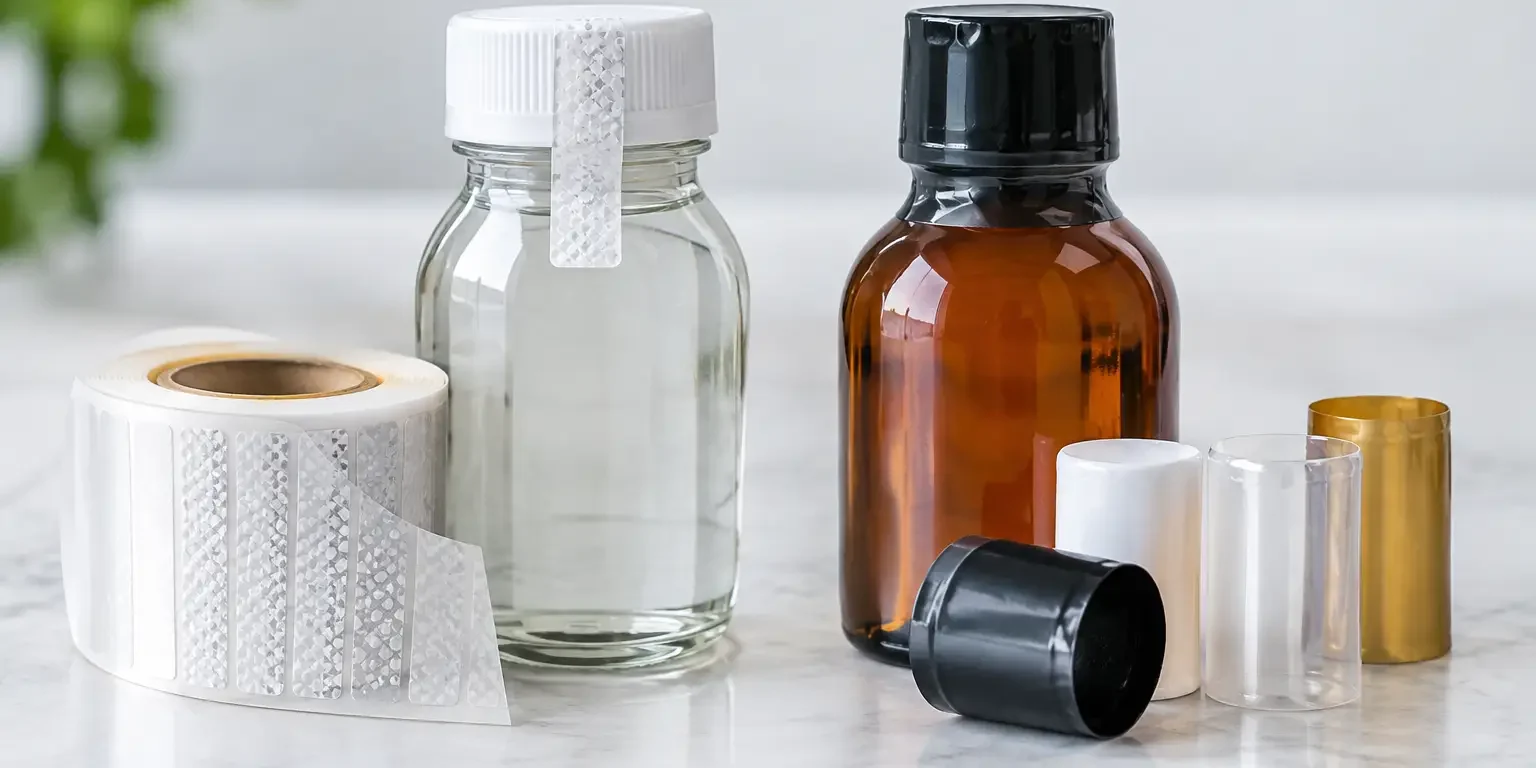
A tamper label is an adhesive security seal applied across a closure, carton flap, case opening or product housing. Once lifted, torn or removed, it changes permanently. Depending on the material chosen, it may break apart, reveal a VOID message, leave a patterned residue or show a honeycomb effect. It makes opening visible without requiring the product to be wrapped.
A shrink band is a sleeve or narrow band of heat-shrink film fitted around a cap, neck, lid or container. Heat is applied so the film contracts tightly around the packaging. To access the product, the band must be torn or cut away.
Both approaches can make unauthorised opening easier to spot. The difference is that shrink bands are primarily a packaging closure solution, while tamper labels can combine closure protection with brand authentication and traceable visual identity. A bespoke holographic seal can be difficult to imitate before anyone even tries to remove it.
When shrink bands are the sensible choice
Shrink bands work particularly well where the package shape supports them. Bottles, jars and tubs with a defined cap or lid are natural candidates. A band around the cap and neck gives shoppers an immediate, familiar sign that the closure has not been disturbed.
They are common in food, drink, cosmetics and health products because they can cover a broad area around the opening. On a retail shelf, a correctly fitted band is easy to see and simple for consumers to understand. It also allows the main label artwork to remain untouched.
For high-volume production lines, shrink bands can be economical when the filling and packing operation already has appropriate sleeving and heat-shrink equipment. The process can be fast and consistent at scale, but it is not entirely without cost. Film specification, storage, machine set-up, heat application and quality checks all need to be controlled. Too little heat can leave a loose, untidy band; too much can distort the film, damage sensitive packaging or affect the product itself.
Shrink bands also have limitations as a security measure. Plain bands are relatively easy to source and can be replicated. They show that a pack has been opened, but do little to prove who made it. Printed or holographic shrink materials can improve this position, although they still require the right equipment and a stable application process.
Where tamper labels offer more protection
Tamper labels are more adaptable because they can be engineered around the product rather than the other way round. A small seal can secure a carton flap, protect a screw head, bridge the lid of a cosmetic jar or show interference on an electronics enclosure. A larger label can secure transit cases and industrial equipment. There is no need for a round neck, a regular container shape or a heat tunnel.
The strongest option is often a tamper-evident hologram label. Holographic imagery gives customers, distributors and inspection teams a quick visual cue, while the tamper material provides physical evidence if removal has been attempted. Custom artwork can incorporate a logo, specific pattern or brand colours, making a generic replacement far less convincing.
Security can be layered to suit the risk. Visible features may include a bespoke holographic design and colour shifts. Covert features can include UV details, hidden text or images, thermo-reactive elements and coin-reactive effects. Destructible films, VOID materials and residue-transfer adhesives can then ensure that a removed label cannot simply be reapplied.
This does not mean every product requires every feature. Adding layers raises the barrier to counterfeiting, but the best specification is the one that addresses a real risk without adding unnecessary cost or complexity. A branded destructible seal may be enough for a low-volume spare part, while a premium product sold through multiple distributors may justify a more sophisticated authentication design.
The value of placement
Placement matters as much as material. A tamper label must bridge the point a person needs to open, access or alter. On a carton, that may mean sealing the top flap and side seam. On a bottle, it may mean running from cap to shoulder. On electronics, the label should cover the casing join or fastener that allows access to internal components.
Poor placement creates false reassurance. A seal on a non-critical area can remain intact while the pack is opened elsewhere. Before ordering, consider precisely how a product could be interfered with, refilled, substituted or diverted. That is the practical question that should shape the label design.
Comparing cost, operations and presentation
Unit price alone rarely gives a fair comparison. Shrink bands can be cost-effective for very high volumes, especially where application machinery is already in place. However, businesses introducing shrink bands for the first time should account for operational changes, heat-shrink equipment, line speed, rejects and the space needed for stock and processing.
Tamper labels are applied using manual, semi-automatic or automatic methods depending on volume and format. For smaller runs, specialist products and changing packaging designs, this flexibility can be commercially useful. There is no heat process to manage, and labels can be supplied in a format suited to the chosen application method.
Presentation is another deciding factor. A clear shrink band is discreet, but it can look functional rather than premium. It may also obscure cap decoration or leave a loose edge that catches in handling. A well-designed holographic tamper seal can become part of the brand experience, signalling that the product is protected and worth protecting. For cosmetics, collectibles, automotive parts and premium retail goods, that visual confidence can be valuable.
Environmental considerations deserve a practical review too. Shrink bands add a separate film component that customers need to remove. Labels also add material, adhesive and release liner during production. Neither route should be selected on assumptions alone. Review the available material choices, your packaging substrate, local recycling guidance and whether a smaller, targeted seal can achieve the required result.
How to choose the right tamper-evident format
Start with the threat rather than the format. If the primary concern is that a bottle cap could be opened before purchase, a shrink band may be a clear and familiar answer. If the concern includes counterfeit stock, refilling, warranty fraud or unauthorised access to a component, a custom tamper label will usually offer more scope.
Then consider the customer journey. Does the buyer need to see tamper evidence from a distance on a shelf? Will they expect to remove a seal cleanly at home? Does a distributor need a quick way to identify legitimate goods in a warehouse? The answer may point towards a visible hologram, a specific destruction pattern or a combined approach.
In some cases, using both is justified. A shrink band can protect a bottle closure, while a holographic VOID label seals the outer carton or carries an authentication feature. This can be useful for products with a higher retail value or a known counterfeit risk. It should not be automatic, however. Two layers only help when each protects a separate vulnerability.
Questions to settle before specifying labels or bands
A useful brief should define the packaging material, closure type, application method, operating temperature and required shelf life. It should also explain whether the seal must leave evidence on removal, whether it needs to carry branding, and who needs to verify it: consumers, retailers, service teams or investigators.
If variable serial numbers, barcodes, asset identification or individualised text are part of the requirement, these should be planned early. They may require a specialist variable-data solution alongside the tamper seal. Separating authentication, tamper evidence and tracking requirements at the start avoids a label that looks impressive but does not support the way your business actually works.
Make tamper evidence part of the product promise
Tamper evidence works best when it is intentional, visible and difficult to bypass. Shrink bands offer a familiar closure check for the right containers. Tamper labels offer greater freedom to secure awkward pack formats, strengthen brand recognition and build anti-counterfeit features into a small but highly visible component.
HologramLabel.co.uk can help turn a packaging risk into a practical bespoke seal, from straightforward destructible labels to layered holographic security designs. Bring the product, packaging and concern to the conversation – the right solution starts with understanding what needs protecting.