A seal that changes colour when warmed is difficult to ignore. That is the practical strength of thermo-reactive security labels: they give staff, distributors and customers a quick visible signal that a product or package has been checked, exposed to heat or handled in a way that matters.
For brands facing counterfeiting, unauthorised opening or concerns around storage conditions, this can add a useful layer of protection without making verification complicated. The label does not ask somebody to download an app or use specialist equipment. It responds to a simple real-world action, making it particularly effective where a fast visual check is valuable.
What are thermo-reactive security labels?
Thermo-reactive security labels use temperature-sensitive inks or materials that change appearance when heat is applied. Depending on the specification, the change may be temporary, with the original colour returning once the label cools, or permanent, leaving evidence that a temperature threshold has been reached.
A reversible label can create an interactive authentication check. For example, a customer may warm a small panel with a fingertip and see a hidden image, message or colour appear. Once the label returns to room temperature, the feature disappears again. This gives genuine products a memorable, easy-to-demonstrate verification point.
An irreversible version has a different job. It can show that a package, shipment or sensitive product has experienced excessive heat. This may be relevant for products where transport and storage conditions affect quality, safety or saleability. The label becomes a visible record of an event, rather than simply a decorative effect.
The distinction matters. A temperature indicator is not automatically an anti-counterfeiting solution, and an authentication feature does not necessarily monitor product condition. The right choice depends on the risk you need to manage.
Why visible temperature response is useful
Counterfeiters benefit when a security device is easy to copy at a glance. A standard printed sticker may look convincing in a product image or on a busy shop shelf. A feature that changes when touched or warmed introduces behaviour that is harder to reproduce using ordinary print methods.
That does not mean a thermo-reactive feature should carry the entire security burden. Determined counterfeiters can attempt to imitate visible effects. Its real value comes from combining a clear public-facing check with other security measures that are harder to replicate or inspect.
For a brand owner, the benefits are commercial as well as technical. A visible interactive feature can help customers recognise what genuine packaging should do. It gives sales teams, warehouse staff and retail partners a simple instruction: apply gentle warmth and look for the expected response. That clarity is especially helpful when products move through several distributors before reaching the end user.
It can also make a security seal feel more intentional. Rather than looking like an afterthought, a carefully designed label can carry your logo, brand colours and holographic artwork while performing a genuine protective function.
Where thermo-reactive labels make sense
The strongest applications are those where users have a reason to inspect a label. Premium cosmetics, spirits, electronics, automotive components, collectibles and high-value retail products can all benefit from an accessible authenticity cue. The feature may be placed on an outer carton, a bottle cap seal, a warranty pack or the product itself, subject to the material and surface involved.
For pharmaceuticals and certain specialist goods, temperature response may support handling processes, but it should never be treated as a substitute for validated temperature monitoring where compliance requires one. A simple label can show that a threshold has been crossed; it may not provide a complete time-and-temperature history. Procurement and quality teams should define exactly what evidence is needed before selecting the label.
The same principle applies to food, medical and chemical applications. Adhesives, inks and face materials must be suitable for the product environment. Refrigeration, condensation, curved containers, textured surfaces, oil exposure and outdoor handling can all affect performance. A good security-label project starts with the real conditions the label will face, not only the artwork.
Pair the feature with tamper evidence
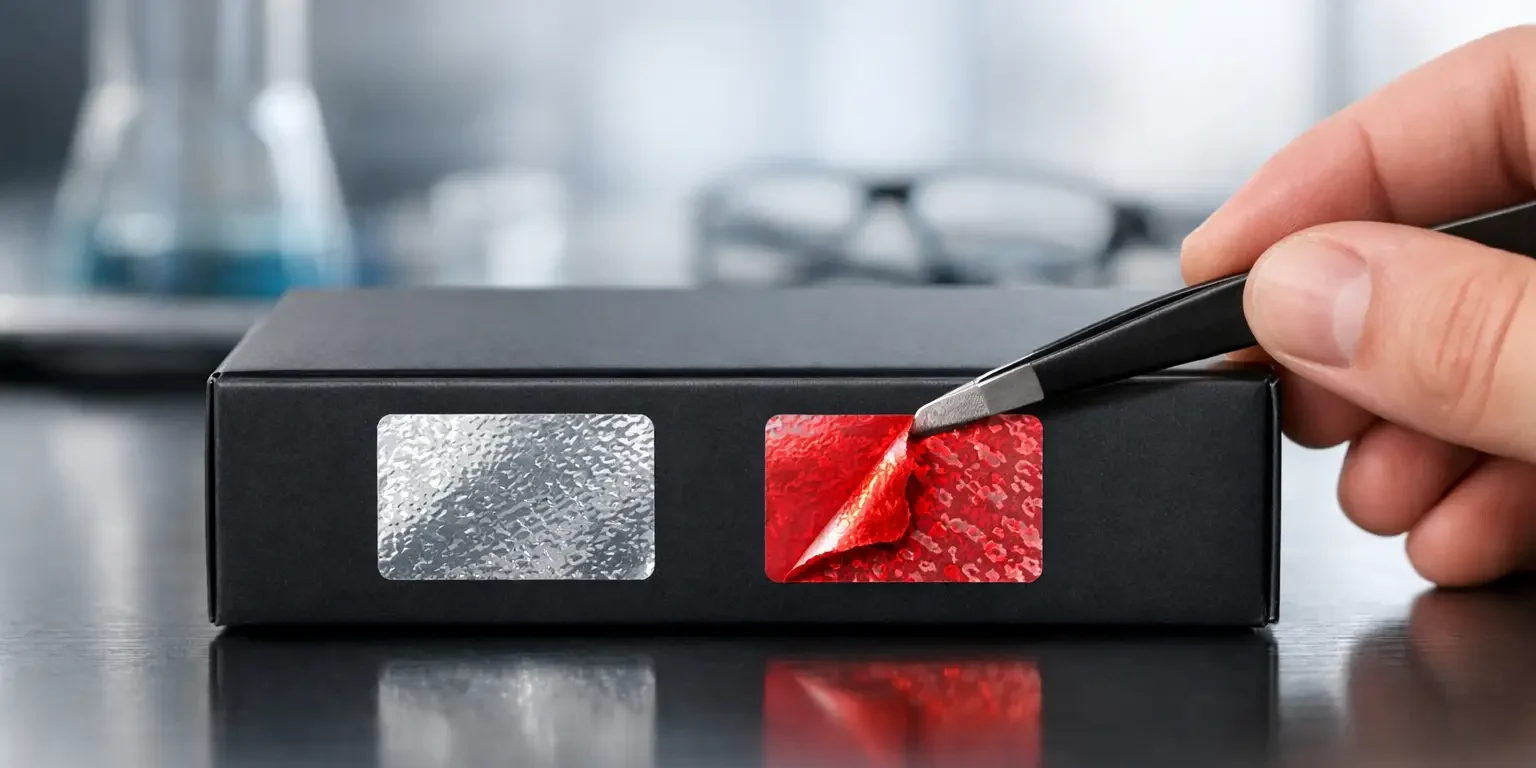
A thermo-reactive panel tells a useful story about temperature or authenticity. Tamper-evident construction tells a different story: whether the label has been removed, lifted or interfered with. When the two work together, a package becomes considerably more difficult to substitute or reseal without leaving evidence.
A destructible material breaks apart when removal is attempted. A void label can leave a visible message or pattern on the surface beneath. Honeycomb materials create their own distinctive evidence of interference. Each option has a place, and the best choice depends on the packaging surface, the expected removal method and how much evidence you need to remain on the product.
For example, a premium bottle may use a holographic seal bridging the cap and bottle, with a thermo-reactive authentication area built into the design. If the seal is broken, the opening is obvious. If it remains intact, the recipient can still carry out the temperature check. The two features are complementary rather than interchangeable.
It is also sensible to consider where the label sits in the customer journey. A hidden thermo-reactive response may be ideal for trained staff, while a highly visible feature can reassure consumers. In some cases, brands choose both: an overt effect for fast checks and a discreet feature for authorised inspection.
Designing a label people can actually verify
Security is only useful when the intended user can recognise it. A complicated check may be technically impressive yet ignored by busy receiving teams or customers. The aim is to create a clear response and communicate, where appropriate, what genuine behaviour looks like.
The thermo-reactive area can reveal a logo, symbol, text or a colour shift. A simple design is often stronger than an overly detailed one. If the expected effect is obvious, it is easier to spot when a label is missing, inactive or suspiciously different.
Placement deserves equal attention. A feature hidden under a fold, positioned on a sharply curved surface or placed where fingers cannot easily reach may frustrate the user. Equally, putting every security detail in plain view can give counterfeiters too much information. This is why layered design works well: keep the public check straightforward, then add less obvious protective features behind it.
Holographic patterns, microtext, UV-reactive elements, concealed images and custom security artwork can all strengthen the overall label. No single device makes a product impossible to copy. A combination creates more work, more uncertainty and more cost for anyone attempting to reproduce it.
Questions to settle before ordering
A bespoke label is most effective when the specification follows the risk, rather than starting with a preferred material. Before production, establish whether you need a reversible touch response, a permanent heat-exposure indication, or both across different products.
You should also consider the activation temperature. A label that reacts too easily may change during normal handling. One that requires too much heat may be inconvenient for ordinary users to verify. The right threshold depends on the intended action, climate, storage environment and surface temperature of the packaged product.
Think through the substrate and application process as well. Paperboard cartons, glass, coated plastics and metal surfaces do not behave alike. Labels applied by hand may allow different formats from those used on automated packaging lines. If labels will be applied in a cold production area or stored before use, that information should form part of the brief.
Finally, decide what happens after a questionable label is found. A warehouse team needs a simple procedure for quarantine, escalation and replacement. A security device works best when it supports a clear operational response rather than merely raising doubt.
A practical layer in a wider protection plan
Thermo-reactive labels are not a gimmick when they are specified for a clear purpose. They are a visible, accessible way to help prove that packaging is genuine, has remained intact or has not encountered a temperature event that should trigger concern.
For many brands, the most effective approach is to incorporate the feature into a bespoke holographic, tamper-evident label rather than treating it as a standalone sticker. That gives you room to protect the product, reinforce recognition and present a professional finish at the same time.
HologramLabel.co.uk can help turn that requirement into a practical label specification, from the response you want users to see through to the tamper-evident material beneath it. Bring the product, packaging and risk you need to address, and the label can be designed to do a job that is clear to your customers and difficult for others to imitate.