Counterfeit vehicle parts do not simply create a warranty problem. A copied brake component, airbag, filter or electronic module can put drivers at risk, undermine a distributor’s credibility and leave the genuine manufacturer handling the fallout. The top automotive anti-counterfeit seals help businesses make authenticity visible, make interference obvious and give legitimate products a clearer identity from production through to fitting.
For automotive manufacturers, parts brands and distributors, the right seal is rarely just a shiny sticker. It is a practical part of a wider protection plan. It needs to suit the product, the packaging, the supply chain and the people expected to check it – from warehouse teams and trade counters to garages and end users.
What top automotive anti-counterfeit seals need to achieve
An effective automotive security seal should answer three basic questions quickly: is this product genuine, has the pack or component been opened, and can the item be traced or checked if there is a concern?
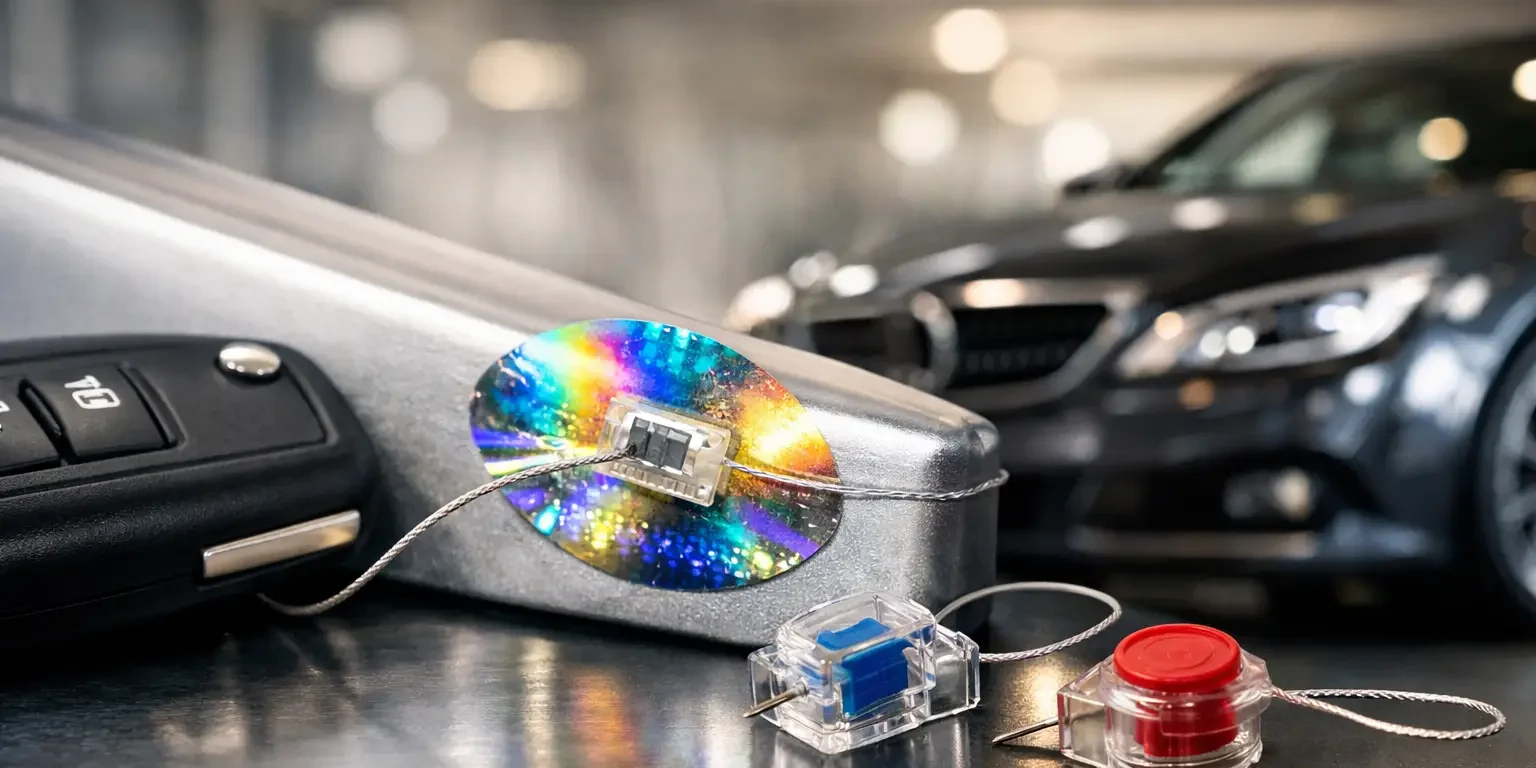
Holographic effects are valuable because they are difficult to reproduce convincingly with ordinary print. A custom hologram can carry a company logo, distinctive pattern, colour detail or an optical image that is recognisable at a glance. This provides a useful first level of authentication for buyers, technicians and inspectors.
However, visual impact alone is not enough where counterfeit risk is high. The strongest approach combines overt features that people can see with covert features that are known only to authorised staff. Tamper evidence then adds a further layer by showing whether a seal has been lifted, transferred or removed from its original position.
The balance depends on the product. A premium replacement part sold through a controlled dealer network may need discreet brand authentication and a refined finish. A safety-critical part moving through multiple distributors may need a more obvious tamper-evident solution. There is no single seal material or security device that is right for every automotive application.
The most useful seal types for automotive products
Custom holographic security labels
Custom holographic labels are a strong all-round choice for branded automotive packaging, warranty cards, parts boxes and selected component surfaces. They can incorporate a logo or bespoke design, making them harder to substitute with a generic stock sticker. They also add a premium, professional finish without losing their security purpose.
The hologram gives distributors and customers an immediate visual cue, while additional features can raise the difficulty and cost of copying. Hidden text, micro-detail, UV-reactive elements and colour-shifting effects can all be designed into a label where appropriate. The goal is not to make checking complicated. It is to give genuine product a recognisable feature that counterfeiters struggle to match.
Custom holograms work particularly well when a brand needs consistent recognition across product ranges. A small label on a spark plug box and a larger seal on diagnostic equipment can share the same security identity while using sizes and adhesives suited to each application.
Void tamper-evident seals
Void seals are designed to leave a visible message or pattern when removed. On a carton, case, electronic control unit or protected access point, the label can reveal wording such as VOID or an evidence pattern that makes reapplication difficult.
This is useful where counterfeiters may attempt to open genuine packaging, replace the contents and reseal it. It can also help to show whether a product has been accessed after it left the manufacturer or authorised distributor.
Void materials require careful selection. Packaging texture, curved surfaces, storage temperatures and exposure to oil or dust can affect adhesion. A seal that performs perfectly on a smooth coated box may not be suitable for an uneven metal housing. Testing on the real substrate is a sensible step before a full production run.
Destructible and honeycomb seals
Destructible labels break apart when removal is attempted, while honeycomb tamper-evident materials leave behind a distinctive pattern. Both are useful when the seal must not be transferred from a genuine item to a counterfeit one.
These materials can be effective on high-value parts, service kits, specialist tools and equipment housings. They make it clear that removal has been attempted, but they are less suited to applications where the label may need to be removed cleanly as part of normal servicing. Again, the intended life of the product matters.
Scratch-off and covert authentication features
Scratch-off areas can conceal a code, message or authentication detail until the correct point in the customer journey. They are useful when a brand wants to keep a verification element protected from casual copying or photography.
Covert features such as UV images or hidden text add another level for trained staff, trade partners or field investigators. A garage may only need to recognise the main holographic design, while a regional manager checking a suspect consignment can use a UV light to confirm an additional feature.
For complex supply chains, variable codes, serial numbers and barcodes may also be required. These applications need accurate data handling and traceability planning, so businesses requiring variable information should work with a specialist provider equipped for that part of the project.
How to choose the right automotive security seal
Start with the risk, not the label. Ask what is most likely to happen to the product: copied packaging, unauthorised substitution, refilling, diverted goods, opened cartons or transferred labels. The answer will shape the security specification far more effectively than choosing a material based on appearance alone.
Next, consider where the seal will be applied. Automotive products encounter heat, cold, moisture, warehouse handling, grease and abrasion. A seal for a clean retail box does not face the same conditions as a label applied to an under-bonnet component or workshop device. Adhesive choice, face material and label size must all reflect the actual environment.
It also helps to decide who needs to authenticate the item. If the first check is made by a busy parts counter, visible holographic detail and clear tamper evidence should do most of the work. If a quality team or investigator needs a deeper check, covert features can support them without making the label cluttered.
Finally, protect the commercial case. Not every product needs the most complex specification. Applying advanced multi-layer security to a low-value consumable may add cost without proportionate benefit. Conversely, cutting corners on seals for safety-critical or high-margin products can be a false economy. The right solution should be difficult enough to copy, practical enough to apply and affordable enough to use consistently.
Make the seal part of a wider brand-protection plan
Security seals are most effective when they are supported by clear internal processes. Sales teams, distributors and approved garages should know what genuine packaging looks like, where seals are placed and what to do if a label appears damaged or inconsistent.
Keep the message simple. For example, an authorised partner might be told to check that the hologram design is present, intact and positioned correctly, then escalate any item showing a void pattern or poor-quality imitation. A complicated verification process will often be skipped under pressure.
Design consistency also matters. Counterfeiters benefit when packaging changes frequently or security labels vary without explanation. A stable visual identity, combined with controlled updates to hidden features, helps legitimate supply-chain partners spot anomalies more confidently.
At HologramLabel.co.uk, bespoke holographic seals can combine brand-led design with tamper-evident materials and layered authentication features. The practical starting point is a conversation about the part, pack, risk and application surface. Bring the ambitious ideas – translating them into a workable security label is our job.
A well-chosen seal will not stop every attempted counterfeit on its own. What it can do is make copying less attractive, interference easier to spot and genuine automotive products easier to trust at the moment that trust matters most.