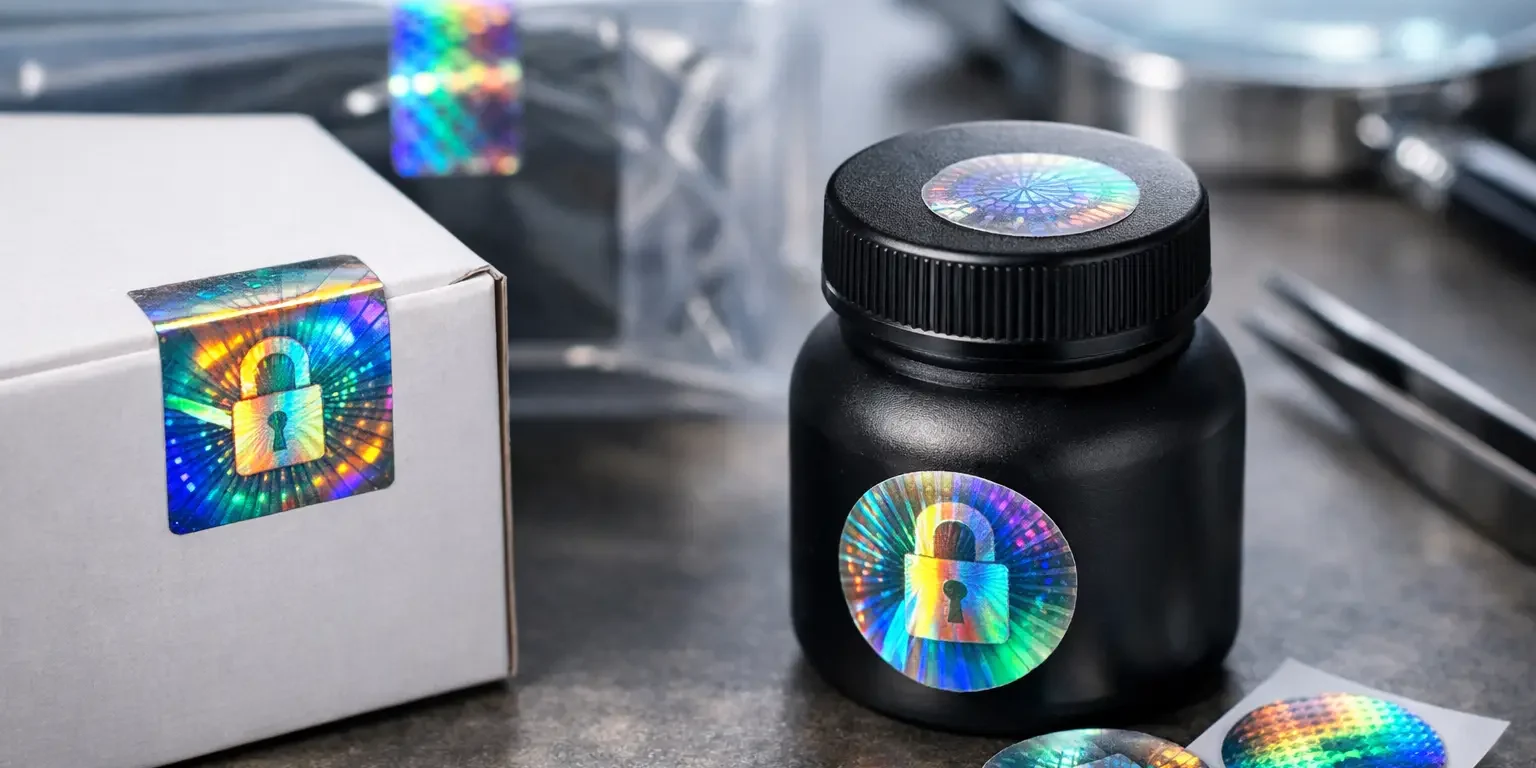
A seal that looks impressive but peels away cleanly is not protecting much. Equally, a highly technical label that nobody in your supply chain can check may add cost without solving the real risk. To choose hologram security seals well, start with the point at which your product, packaging or reputation is most exposed – then build the right level of protection around it.
For some businesses, that means making copied goods easier to spot. For others, the priority is showing whether a carton, bottle, enclosure or warranty item has been opened. The strongest choice is rarely the label with the longest feature list. It is the seal that gives genuine protection, is practical to apply and supports the way customers recognise your brand.
Start with the risk you need to control
Hologram security seals can perform several jobs at once: they can authenticate a product, deter casual counterfeiters, make interference visible and add a premium branded finish. Those benefits overlap, but they are not identical. A business protecting a high-value electronic component has different concerns from a cosmetics brand trying to prevent grey-market substitution or a distributor protecting warranty coverage.
Ask where the failure could happen. Is a counterfeiter recreating your outer packaging? Are products being opened and refilled? Could genuine stock be diverted into an unauthorised channel? Is there a risk that an item is exchanged after sale? The answers affect both the material and the security features worth specifying.
A simple visual hologram may be enough where the main aim is to discourage opportunistic copying and reassure customers at a glance. Where a copied product could cause safety, compliance or serious reputational problems, it makes sense to combine visible holographic effects with harder-to-detect features and clear tamper evidence.
Choose hologram security seals to suit the application
The product surface and application method matter as much as the hologram design. A label needs to adhere reliably to the material it is protecting, whether that is coated card, plastic, glass, metal or a textured component. Consider heat, moisture, oils, handling and transit too. A seal on a chilled bottle or an industrial part may need a different adhesive approach from one used on a presentation box.
Think carefully about what should happen if somebody tries to remove it. A tamper-evident seal can leave a visible VOID message, break into destructible fragments or leave behind a honeycomb pattern. Each option makes removal or replacement apparent, but each has a different appearance and level of residue.
VOID materials are often a strong choice for cartons, electronics and warranty applications because the message provides an immediate, understandable warning. Destructible material is useful where the label must be impossible to lift in one piece. Honeycomb effects can provide a clear indication that the seal has been disturbed. There is no universal best option – the right material depends on the surface, the desired customer experience and how obvious you need evidence of opening to be.
It is worth testing seals on the actual pack before committing to production. A label that works perfectly on a sample board may behave differently on a curved lid, recycled carton, low-energy plastic or surface with a varnish coating. A practical test can prevent an expensive avoidable issue later.
Decide what should be visible and what should stay hidden
Overt security features are those a customer, retailer or warehouse team can check without equipment. A custom holographic pattern, branded logo, shifting image or distinctive visual effect can make legitimate goods easier to recognise. These features also help make a seal feel like part of the packaging rather than an afterthought.
Covert features give nominated people a second level of authentication. Hidden text or images, UV-reactive details, thermo-reactive elements and coin-reactive features are difficult for a casual counterfeiter to identify, let alone reproduce accurately. They are especially useful when products move through several hands before reaching the end user.
The best balance depends on who needs to verify the product. If customers need confidence at the point of purchase, make the visible effect clear and recognisable. If distributors, field engineers or investigators need to distinguish genuine labels from imitations, add a discreet verification feature and give those teams simple checking instructions.
More security is not automatically better. Too many features can make the design busy, increase unit costs and complicate staff training. A layered approach works best when every feature has a purpose: one for public recognition, one for tamper indication and one for controlled authentication, for example.
Make authentication practical for real people
A security feature only has value when the people expected to use it understand what they are looking for. Keep verification clear. Your team might check a UV element under a small lamp, while customers are told to look for a particular holographic logo and intact seal.
Avoid relying on a design detail that can only be recognised by the person who approved the artwork. Document the expected appearance, use consistent placement on products and brief relevant warehouse, quality and customer-service colleagues. This helps turn the label into an active protection measure rather than a decorative purchase.
Balance security with brand presentation
Security seals are part of the customer’s first impression. On premium cosmetics, spirits, collectibles or consumer electronics, a custom hologram can reinforce quality and authenticity before the pack is opened. On industrial products or pharmaceutical packaging, the presentation may need to be more restrained, with legibility and clear tamper evidence taking priority.
Your logo, brand colours and pattern can be incorporated into a bespoke hologram design. This does more than make the seal attractive. A design created for your business is much harder to substitute than a generic stock hologram used by many unrelated products.
Placement deserves proper thought. A seal across a closure can show opening immediately, but may be unsuitable if it obscures instructions or essential compliance information. A label on an outer carton is easier to apply but cannot protect the product once it has been removed from that carton. Sometimes two smaller labels in separate locations provide better control than one large seal.
Also consider the production reality. Fine artwork, small text and detailed imagery must remain clear at the final label size. Bring ambitious ideas, but allow the hologram supplier to advise on what will reproduce consistently. That is not a limit on creativity – it is how a good concept becomes a dependable security device.
Plan the order around your operation, not just the unit price
Procurement decisions often focus on the cost per label. That figure matters, but it is only one part of the commercial picture. A low-priced generic seal may offer limited differentiation, while an over-specified design may be unnecessary for a low-risk product line. The aim is proportionate protection with no surprises in lead time, application or wastage.
Low minimum order quantities can make bespoke holograms viable for growing brands, seasonal lines and trial launches. They also allow you to test a design before rolling it out across a full range. For established high-volume products, consider how frequently artwork, packaging or security requirements may change. Ordering a huge quantity can reduce the immediate unit cost but leave you with obsolete stock after a brand refresh or regulatory change.
Be clear about whether you need fixed artwork only, or whether each label must carry variable information such as serial numbers, barcodes, asset references or individual text. Hologram security seals are excellent for visual authentication and tamper evidence, while variable data requirements may call for a complementary specialist label solution. Identifying this at the outset prevents a gap between your anti-counterfeit plan and your traceability process.
Questions to settle before approving artwork
Before production, agree the product surface, label dimensions, placement, adhesive requirement and the intended tamper result. Confirm which security features are visible to customers and which are reserved for internal checks. You should also establish who signs off artwork, who applies the seals, and how genuine and suspect labels will be handled once products are in the market.
This is also the time to check whether the label complements existing packaging controls. A hologram seal can be highly effective, but it cannot compensate for a packaging process that leaves openings unprotected or allows inconsistent application. The security of the finished pack is what matters, not the label in isolation.
A good supplier should make these decisions straightforward, explaining the options in plain English and helping you match design, material and security level to the risk. HologramLabel.co.uk can support bespoke concepts from an initial idea through to a practical, production-ready seal, without forcing buyers to become label-production experts.
The right seal gives customers a simple signal: this product is genuine, protected and presented by a business that takes responsibility for its name. Start with the risk, test the application and choose features your people can genuinely use. That is how a small label can do meaningful work for your brand.