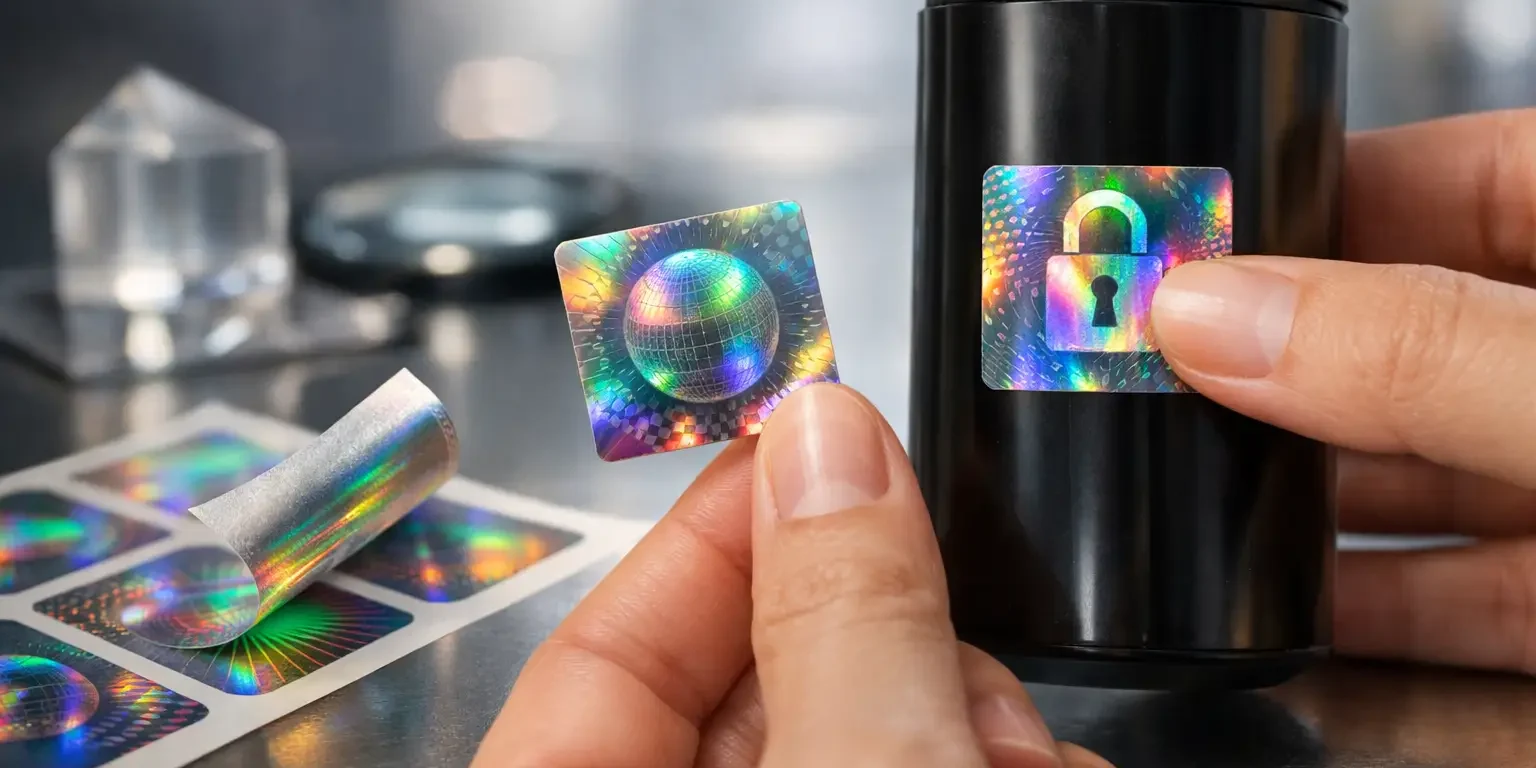
A counterfeit product does more than steal a sale. It can damage customer confidence, create safety concerns and leave your genuine product looking unreliable by association. Custom hologram labels give businesses a practical, highly visible way to show that a product or pack is genuine, while making interference far easier to spot.
For brands selling anything from cosmetics and electronics to vehicle parts, spirits and collectables, a security label should not be an afterthought. It should be part of the product experience: recognisable to customers, difficult for imitators to reproduce and appropriate for the way the item is packed, handled and sold.
What custom hologram labels need to do
A hologram catches the eye because its image changes with the angle of light. That distinctive movement makes it useful as a quick first check of authenticity. But appearance alone is not enough for products facing a real counterfeiting risk. A stock hologram may look attractive, yet it is also available to anyone who can buy it.
Bespoke hologram labels are different. They can incorporate your logo, name, artwork, colour and a pattern created specifically for your business. This gives customers, distributors and internal teams a clearer visual reference point. More importantly, it means a counterfeiter cannot simply source the same generic sticker and apply it to an imitation product.
The strongest labels combine three jobs. They reinforce the brand, provide a way to authenticate the product and show whether packaging has been opened or altered. The right balance depends on your product, the value at risk and how the label will be checked in the real world.
A premium skincare brand, for example, may need a refined holographic mark that supports its packaging design while discouraging grey-market substitution. An industrial component supplier may place greater emphasis on a destructible seal that proves a casing has not been opened. Neither approach is automatically better. The best option is the one that addresses the genuine point of vulnerability.
Build security in layers, not in isolation
Counterfeiters look for the easiest route. A single visible device may deter opportunists, but determined imitation often calls for layers that are harder to identify and reproduce. That does not mean making the label unnecessarily complicated. It means choosing features that make sense for the people checking it.
Visible features for an immediate check
Custom holographic imagery, branded patterns and colour effects give staff and customers an instant point of recognition. These overt features are useful at retail counters, during goods-in checks and when a consumer first opens a pack. If a product has a well-known hologram placement and appearance, an incorrect or missing label can quickly raise a question.
Visible elements work best when they are consistent. Decide where the label sits, what it should look like and which parts of the design must always be present. This creates a simple inspection routine across your supply chain.
Covert features for trained verification
Some security devices are designed to be checked only by authorised people. UV-reactive features, hidden text, concealed images and coin-reactive effects add a second level of confirmation that is not obvious on first inspection.
These features are especially useful where products pass through distributors, service centres or field teams who can be given clear checking instructions. A UV mark, for instance, is straightforward to verify with the correct light but much less likely to be noticed by somebody trying to copy the label from a photograph or sample.
Covert devices should be selected with care. If your team will not have access to the tool or knowledge needed to inspect them, the feature may provide less operational value than expected. Security only works when there is a realistic process for using it.
Tamper evidence that tells a clear story
A label can also act as a seal. Void materials leave a visible message or pattern when removed. Destructible materials break apart rather than lifting cleanly. Honeycomb structures can reveal interference through a distinctive residue or change in appearance.
The material must suit the surface and the journey. A label applied to a carton seal has different demands from one applied to a curved bottle, painted metal component or textured plastic enclosure. Temperature, moisture, oils, friction and storage conditions can all affect performance.
It is also worth being precise about what tamper evidence does. It helps show that a label or pack has been disturbed. It does not prevent every attempt to open a product, and it cannot replace secure closure design where safety is critical. Used properly, however, it provides an immediate visual warning that something needs investigation.
Start with the threat, not the finish
Holographic labels can be striking, and that is part of their value. Yet choosing a security label purely because it looks impressive can lead to unnecessary cost or a solution that misses the problem. Start by asking what you are trying to stop.
Are counterfeit products being sold under your name? Is genuine stock being diverted into an unauthorised market? Are packs being opened, refilled or substituted? Do you need a seal that reassures the end customer, or an authentication device for a distributor to inspect? The answers will shape the design, material and security features.
Next, consider the product itself. Small items may have very limited label space, so the hologram needs to deliver a clear result at a compact size. Large equipment may allow for a more prominent seal, but it may also be exposed to harsh handling, weather or cleaning chemicals. Labels for premium retail packaging often need a polished finish; labels for industrial goods may need adhesion and durability to take priority.
Finally, think about the likely counterfeiter. For a low-value product, a branded holographic seal with tamper evidence may be a sensible, commercially proportionate defence. For high-value goods, regulated products or items with a history of fraud, a more layered approach is often justified.
Design for people who will actually use it
A good security label is not only difficult to copy. It is easy for the right person to recognise. If your customer has to read a technical manual to tell whether the label looks right, you have lost much of the benefit of a visible hologram.
Keep the first check simple. The logo, reflective effect, placement and overall design should create a familiar signal. Then provide a second check for staff where the risk warrants it. This might be a hidden image, UV element or other controlled feature.
Your packaging team should also be involved early. They can confirm how labels will be applied, whether by hand or machine, and whether the chosen location will remain clean and accessible. A security seal that wrinkles, bridges a difficult edge or is hidden by another packaging element can undermine an otherwise excellent design.
HologramLabel.co.uk helps businesses turn these practical requirements into bespoke label designs without expecting buyers to become security-printing specialists. Bring the product, packaging and concern to the conversation. The technical detail is our job.
Avoid common mistakes before production begins
The most frequent problem is treating security, packaging and procurement as separate decisions. The label may be approved for its appearance but not tested on the final substrate. Or a procurement specification may focus on unit price without considering the cost of a counterfeit claim, recall or damaged customer relationship.
Another mistake is adding too many features without a clear checking plan. More devices do not always mean better protection. Each feature should have a purpose, an intended user and a simple way to verify it.
It is also sensible to avoid designs that depend on tiny details customers cannot see. Fine hidden text can be valuable as a controlled security feature, but it should not be the only thing proving a label is genuine. Use obvious branding for the first line of defence and reserve more subtle elements for deeper checks.
Where product-level tracking is required, such as unique serial numbers, variable data, barcodes or bespoke text, this should be planned alongside the label programme. These requirements may call for a specialist variable-data solution rather than a standard hologram-only approach.
A practical investment in trust
Custom hologram labels are not a magic barrier against every form of fraud. They are a practical part of a wider brand-protection approach that may also include controlled distribution, secure packaging, staff training and clear reporting procedures.
Their value lies in making authenticity visible, making tampering harder to hide and giving your business a label that is unmistakably yours. Start with the risk you need to reduce, choose security features your teams can verify, and make sure the material is right for the product. When those decisions are made together, a small label can carry a great deal of confidence.