A counterfeit can look convincing long enough to win a sale, reach a customer and damage the reputation you have spent years building. That is why counterfeit prevention results should be measured in more than the number of fake products found. For UK product owners, the meaningful result is a clearer ability to identify genuine stock, expose interference and make copying your packaging far less worthwhile.
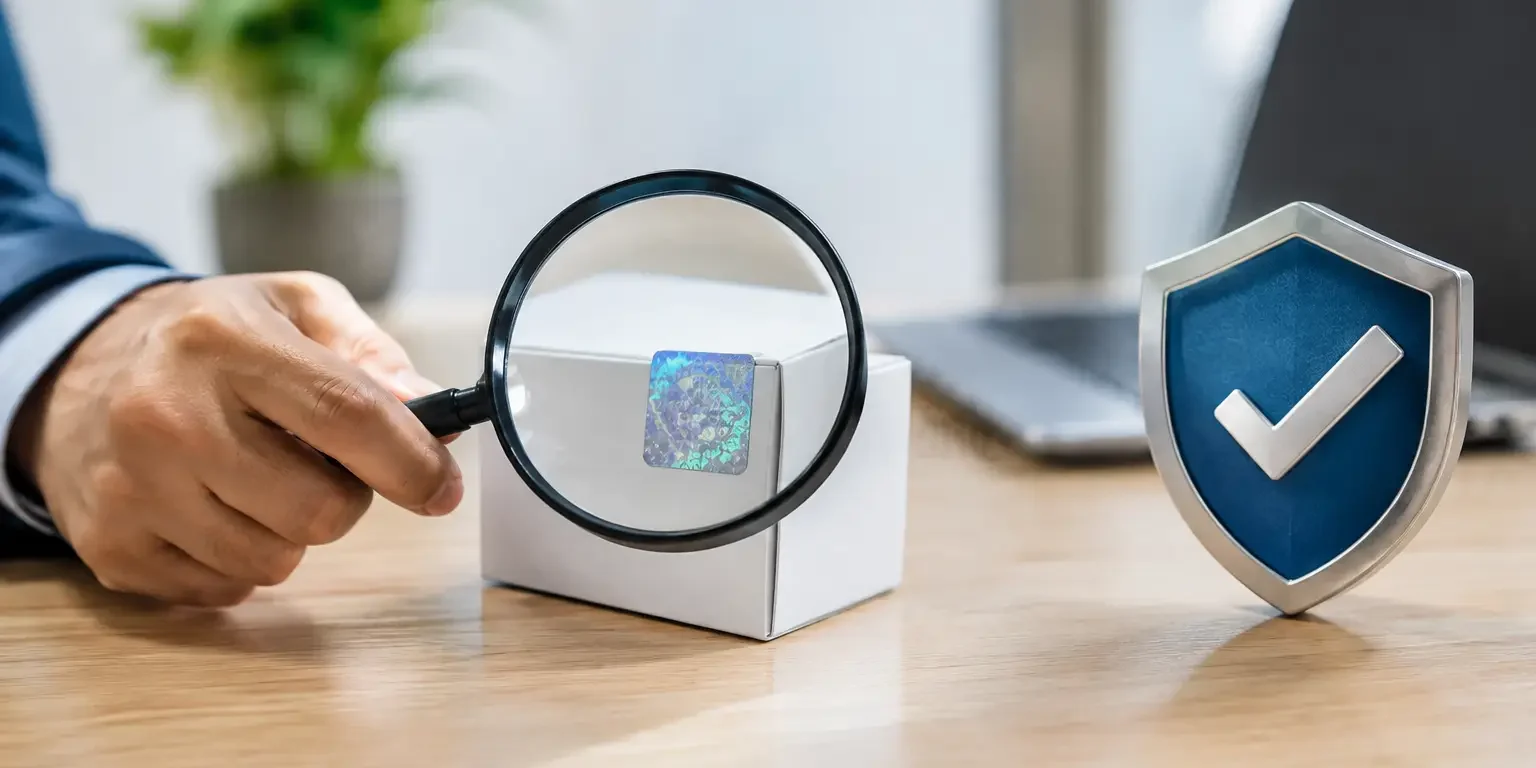
Holographic security labels can play a practical role in that defence. They give distributors, retailers, inspectors and customers a visible reference point for authenticity while adding security details that are difficult to reproduce accurately. When the label also provides tamper evidence, it can show whether a pack has been opened, substituted or diverted.
What good counterfeit prevention results look like
The first result is deterrence. Counterfeiters usually look for the fastest route to a product that appears legitimate at a glance. A bespoke hologram with a distinctive design, controlled production and layered features raises the time, skill and cost required to imitate it. It does not make counterfeiting impossible, but it changes the economics in your favour.
The second is faster checking. A security measure only works well if people can use it in real conditions. A warehouse team should be able to spot an expected holographic pattern and tamper-evident seal during goods-in checks. A retail buyer should be able to compare a product against an approved sample. A customer should see a clear sign that the pack is genuine and unopened without needing specialist equipment.
The third is better evidence when something goes wrong. If a label leaves a void message, breaks into fragments or reveals a honeycomb pattern on removal, it creates a visible record of interference. This can support investigations into unauthorised returns, substitution and grey-market diversion. It also gives teams a firmer basis for deciding whether stock should be quarantined.
Finally, good results protect confidence. A counterfeit safety-critical part, cosmetic product or bottle of alcohol can cause immediate harm. Even where the item itself is low risk, a poor-quality fake tells customers that your brand cannot protect its own products. Visible security should therefore be treated as part of the customer experience, not merely a procurement line item.
Start with the risk, not the label
The right solution depends on what is being copied and where the weakness sits. A small electronics accessory sold through multiple online channels faces different risks from pharmaceutical packaging held in controlled distribution. An automotive component may need a durable authentication mark, while a premium cosmetic brand may place more weight on presentation, pack integrity and customer reassurance.
Begin by mapping the journey from manufacture to end user. Consider where products can be substituted, where outer packaging can be opened, and which people need to make an authenticity decision. Also examine whether the main problem is counterfeit manufacture, unauthorised resale, fraudulent returns or a combination of all three.
This matters because a very advanced hidden feature is of limited value if the people checking goods cannot access the method for verifying it. Equally, a simple stock hologram may be an excellent visible deterrent for lower-risk goods, but it may not provide enough distinction for a brand already being targeted by organised counterfeiters. Security should be proportionate to the threat and straightforward to operate.
Build layers that serve different checks
The strongest practical approach usually combines overt, covert and tamper-evident features. Overt features are those visible to anyone, such as a distinctive holographic pattern, branded logo or colour effects. They help customers and front-line teams make an immediate visual check.
Covert features are intended for trained staff or authorised partners. UV elements, hidden text, concealed images, thermo-reactive effects and coin-reactive details can provide a second level of confirmation. They are useful because a counterfeiter may copy the broad look of a label while missing the detail that proves it is genuine.
Tamper-evident materials address a different question: not simply, “Is this label authentic?”, but “Has this package remained intact?” Void, destructible and honeycomb materials can reveal attempted removal or opening. On products susceptible to refilling, swapping or return fraud, this distinction is commercially significant.
There is a trade-off. More features can increase the difficulty of copying, but they should not turn inspection into a complicated exercise. A clear hierarchy works well: one or two checks that are easy to see, followed by controlled features for investigations or high-value checks.
How to measure counterfeit prevention results
Counting seizures or complaints alone can be misleading. A fall in reported fakes may mean the deterrent is working, but it could also mean that reporting has become harder or less visible. Use several indicators and compare them against a baseline from before the labels were introduced.
Start with incidents at key points in the supply chain. Track rejected deliveries, suspicious products identified at goods-in, compromised packs, unauthorised returns and retailer queries. Record the product line, location, supplier and issue type. Patterns often reveal whether the risk is concentrated in a particular channel rather than spread across the whole business.
Next, measure the quality of verification. Ask whether warehouse, field sales and retail teams can identify the expected security features consistently. Short, practical training and an approved reference sample are more useful than a long technical manual. If a feature is regularly overlooked or misunderstood, revise the design or the checking process.
Customer feedback is another useful signal. Monitor complaints about packaging, suspected fakes and products that arrive with damaged seals. Where appropriate, customer service teams can ask for photographs of the label and the packaging condition. This is not a substitute for formal investigation, but it can provide early warning of a new copying method or weak point.
Financial measures should also be included. Look at the cost of returns, chargebacks, replacement products, investigation time and lost sales from unauthorised channels. The aim is not to claim that every pound saved came from a hologram. It is to establish whether the overall cost of protection is justified by fewer incidents, faster resolution and improved control.
Set a realistic review period
Counterfeit prevention is rarely proven in a fortnight. Allow enough time for labelled stock to move through the supply chain and for teams to become familiar with the checks. For a fast-moving retail product, three to six months may reveal useful trends. For industrial components or products with long sales cycles, the review period may need to be longer.
Review the outcome with the people closest to the process: operations, procurement, brand management, quality and customer service. Their experience will show whether the label is performing as intended on the production line, in transit and at the point of sale. A label that looks excellent in a proof but peels poorly from a particular surface, for example, needs practical adjustment.
Make the label part of a working process
A security label is not a complete anti-counterfeiting strategy on its own. It works best alongside supplier controls, approved packaging specifications, traceable purchasing practices and clear escalation routes for suspicious stock. If a distributor identifies a questionable product, they should know who to contact and what evidence to retain.
Consistency is equally important. Using the same agreed label position, packaging artwork and inspection guidance across approved production runs makes anomalies easier to spot. Frequent, unmanaged changes can make genuine products look unfamiliar and give counterfeiters cover.
For businesses that need bespoke protection without an unnecessarily complex buying process, HologramLabel.co.uk can combine branded holographic design with tamper-evident materials and selected covert details. The goal is not to add features for their own sake. It is to create a label your business can specify, apply and check with confidence.
The best next step is to take one product line with a clear exposure point and define what success would look like six months from now. It may be fewer compromised returns, quicker checks at goods-in or greater confidence for a retailer. Start there, then build security that gives your people a practical reason to trust what they are handling.