A counterfeit can look convincing on a shelf, in a warehouse or in an online marketplace photograph. Scratch-off authentication labels give customers, distributors and internal teams a simple way to check whether a product is genuine, using a concealed code or feature that is revealed only when needed.
For brands facing imitation, diversion or unauthorised resale, the value is not in the silver panel alone. It is in creating a verification step that is hard to copy, easy to explain and properly matched to the way your products move through the supply chain.
What scratch-off authentication labels do
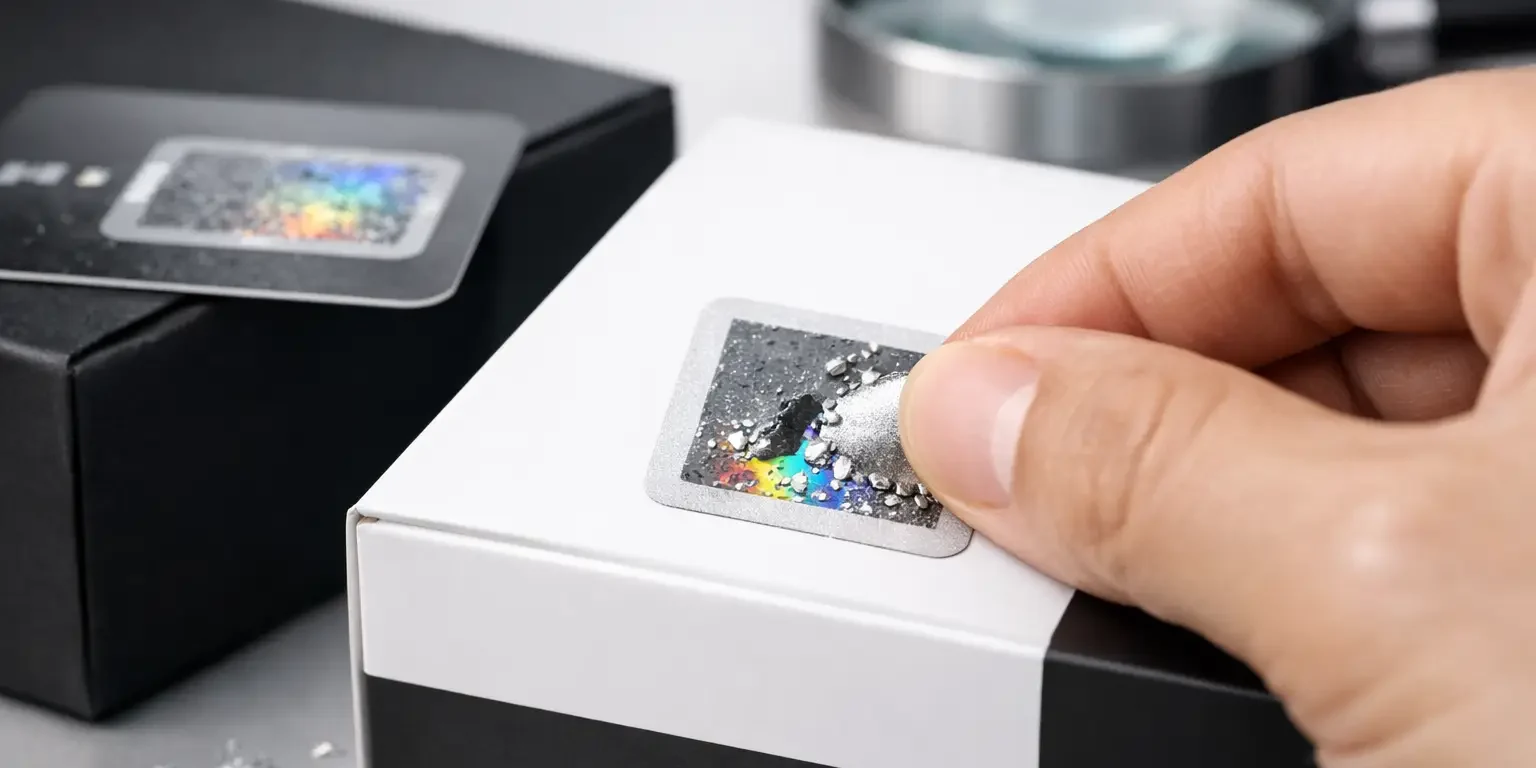
A scratch-off label covers an authentication detail with an opaque coating. The user scratches the panel with a coin or fingernail to reveal what sits underneath. That might be a unique code, a short verification message, hidden text, a printed image or a security feature designed for a trained inspector.
The principle is familiar because customers have seen scratch panels on gift cards, promotional packs and prepaid vouchers. For product protection, however, the application needs more thought. The concealed information should give the person checking it a meaningful answer: is this product genuine, has this code already been used, or should the pack be referred for further inspection?
A well-designed label makes authentication visible without displaying every security detail before purchase. This is particularly useful where counterfeiters can study packaging closely and reproduce obvious printed elements.
Why concealment strengthens product protection
Visible holographic effects, brand marks and special patterns can make copying more difficult. A scratch-off area adds another layer by holding back part of the evidence. A counterfeiter may imitate the appearance of a label, but reproducing a correctly structured concealed feature across a product range is a different challenge.
There is also a practical commercial advantage. A concealed code can help distinguish a genuine product from a lookalike at the point of purchase, during warranty registration or when a distributor receives stock. For premium cosmetics, automotive parts, electronics, alcohol, collectibles and pharmaceutical-related products, that extra check can support confidence at exactly the moment doubt arises.
It does depend on the intended user. A consumer needs a clear, low-effort instruction and an easy verification route. A warehouse operative or field engineer may need a simpler visual pass or fail signal. A brand-protection team may require a unique reference that can be cross-checked against a controlled record. The label should be built around that real-world journey, not around a feature list.
Scratch-off authentication labels are not all the same
The right specification starts with the threat you need to address. If the concern is casual imitation, a branded holographic label with a scratch-off panel may provide a strong, cost-conscious deterrent. If products are regularly diverted, refilled or substituted, the construction may need to include tamper evidence and unique identification as well.
Fixed hidden information
Some labels reveal the same hidden message every time. This can be an effective option for a simple authenticity prompt, a campaign, a controlled distribution channel or a product line where a visual check is sufficient. It is generally more straightforward to produce, but it offers less traceability because the revealed detail can eventually become known.
Variable codes and serialised checks
A unique code gives each label its own identity. This makes it possible to identify repeated use, investigate suspicious stock and support product-level checking. The code can be printed beneath the scratch area, with the label design incorporating holographic and tamper-evident elements around it.
Variable data needs careful management. Codes must be legible, securely handled and checked against the right system or record. Businesses needing serial numbers, barcodes, asset-label data or custom variable text can arrange this through the specialist partner service linked to HologramLabel.co.uk. That keeps the security label design and the data requirements properly aligned.
Covert or specialist features
For higher-risk products, a scratch panel can sit alongside features that are not immediately obvious. UV-reactive details, hidden wording, microtext, coin-reactive effects and custom holographic imagery can give different people different ways to authenticate the same item.
This layered approach matters because no single feature should carry the full burden of protection. The more valuable, safety-critical or frequently copied the product, the stronger the case for combining overt, covert and tamper-evident measures.
Do not confuse authentication with tamper evidence
A scratch-off coating is designed to hide information until it is removed. It does not automatically show whether a carton, bottle, component or pouch has been opened. If packaging interference is a concern, the label material and placement need to do more.
A destructible label can break into fragments when someone tries to lift it. A void label can leave a visible message behind after removal. Honeycomb materials can show a distinctive pattern if disturbed. Positioned across a closure, these materials can give clear evidence that a pack has been opened or a label has been moved.
Combining a scratch panel with a tamper-evident construction is often the more sensible choice. The first protects the hidden authentication detail; the second helps protect the integrity of the pack. They solve related but different problems.
Design for the moment someone needs to check
Authentication labels fail when they are technically clever but impractical. A tiny scratch panel on a dusty industrial component may be difficult to use. A code hidden on the underside of a large retail pack may never be seen. A glossy label that clashes with brand packaging can prompt people to remove it before it reaches the end customer.
Think about the product, its surface and its route to market. Labels for a small cosmetic jar need a different format from labels for machinery, spirits bottles or automotive parts. Curved surfaces, textured cartons, exposure to heat, oils or moisture, and expected handling all influence the adhesive and material choice.
Placement should also be intentional. Put the label where a genuine user can find it, but where casual copying or label swapping is less convenient. When tamper evidence is required, position it across the point of opening rather than merely on the side of the pack.
The visual design should feel like part of the product, not an afterthought. Your logo, colours and packaging style can be incorporated into a bespoke hologram label, while the holographic effect signals that the label has a security role. Good design improves recognition, but it should never reveal every safeguard at first glance.
Make verification clear without helping counterfeiters
A short instruction such as “Scratch to reveal your authenticity code” is often enough for a customer-facing pack. The next action must be equally clear. If the person cannot tell what to do with the revealed code, the security process stops at the label.
Avoid printing detailed descriptions of every hidden feature. Counterfeiters read packaging too. It is better to explain the checking action, provide clear internal guidance to distributors and inspectors, and keep the most sensitive authentication criteria controlled.
There is a balance here. Too little information may confuse genuine customers; too much can make a counterfeiter’s job easier. The appropriate level depends on the product value, the buyer’s familiarity with the brand and whether checking is intended for the public, trade partners or authorised staff only.
Questions to settle before ordering
Before approving artwork, establish what the label must prove and who will check it. Decide whether the hidden detail will be fixed or unique, whether the label needs to cross a closure, and whether users will authenticate products in shops, warehouses, workshops or at home.
You should also consider the likely attack. Are you mainly discouraging opportunistic copying? Trying to identify grey-market distribution? Protecting consumers from unsafe substitution? Or investigating a known counterfeit problem? Each situation calls for a different combination of holographic finish, hidden features, adhesive and data control.
Low order quantities can make it practical to test a design on a limited product run before rolling it out more widely. That is often a sensible route for growing brands: assess how the label performs on the pack, whether customers understand it and whether operational teams can act on suspicious findings.
A security label should make a counterfeit harder to sell, a tampered pack harder to hide and a genuine product easier to trust. Bring the real packaging challenge, however ambitious it may seem, to a specialist team early. The best scratch-off authentication label is the one your customers can use confidently and counterfeiters cannot reproduce credibly.