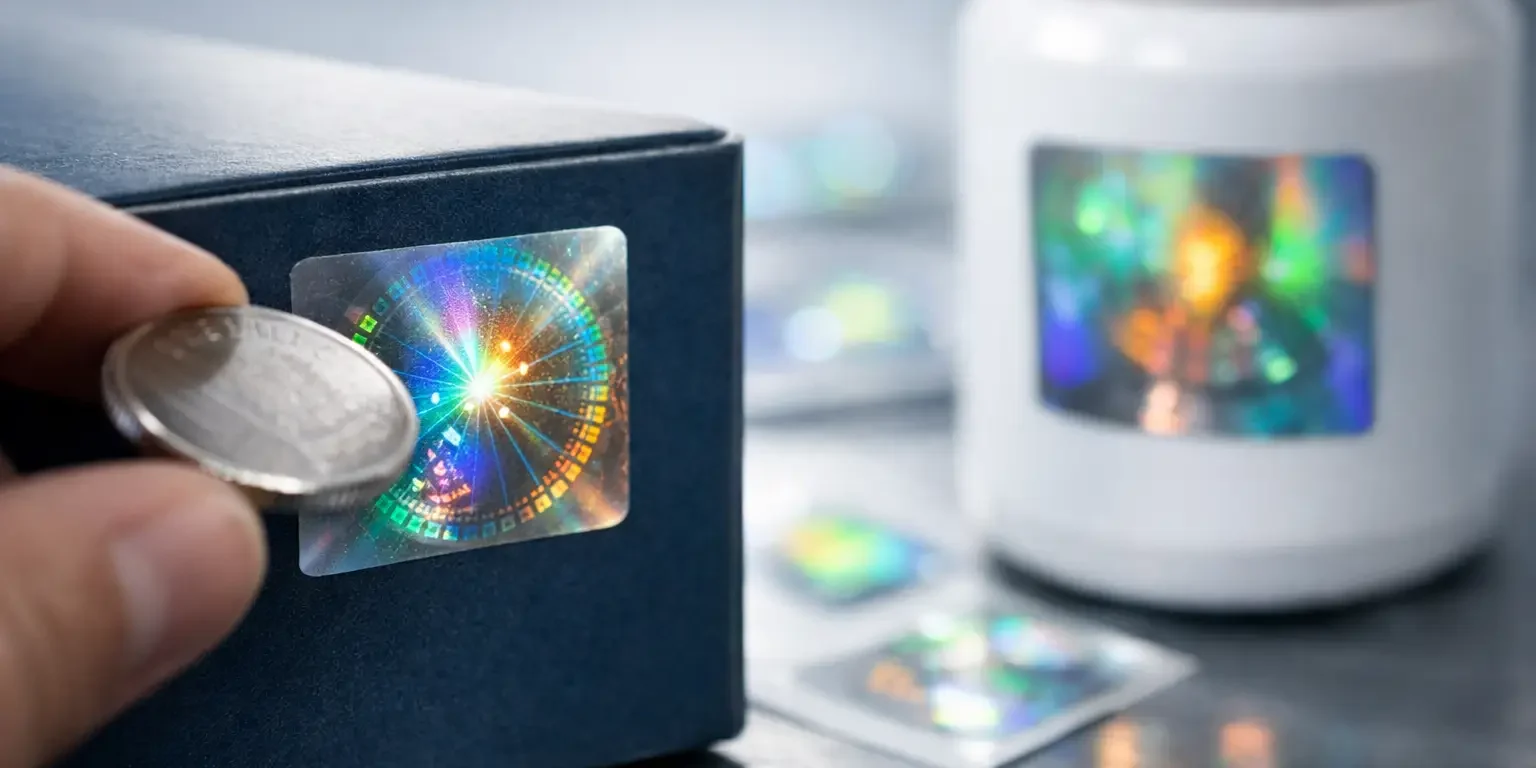
A distributor receives a pallet of supposedly genuine goods. The outer cartons look right, the print quality is convincing and the delivery paperwork appears in order. A quick coin check on the seal gives the team a practical extra test before stock reaches customers. That is where coin-reactive hologram labels earn their place: they turn a familiar object into a simple authentication tool.
For brands facing counterfeits, unauthorised substitution or packaging interference, a label needs to do more than look attractive. It should give staff, retailers and customers a clear reason to pause when something does not check out. Coin-reactive holograms provide a visible security action that is difficult to copy accurately and straightforward to explain.
What makes a hologram label coin-reactive?
A coin-reactive label includes a designed security area that responds when it is rubbed with a coin. The action reveals or changes a visual effect built into the holographic surface, allowing the person checking the item to confirm a feature that is not obvious at first glance.
The value is in the interaction. A standard printed security mark can be photographed, scanned or imitated with increasingly convincing results. A coin-reactive element asks the checker to carry out a specific physical test. Counterfeiters may reproduce the broad look of a hologram, but recreating the exact material response, detail and finish is a much harder proposition.
This does not mean a coin-reactive feature should be treated as the only line of defence. Its best role is as one layer within a label designed around the risk to your product. A high-value cosmetic item, for example, may need a branded holographic design and tamper evidence. A controlled industrial component may need those features alongside a serialised track-and-trace solution supplied through a specialist partner. The right combination depends on who will check the label, where that check happens and what a fraudulent product could cost your business.
Why coin-reactive hologram labels work in the real world
Security features only help if people can use them. A hidden device that requires specialist equipment may suit a forensic investigation, but it cannot assist a warehouse operative checking incoming goods or a retailer questioning a suspicious return. Coin reactivity sits in the middle ground: more sophisticated than an ordinary visual mark, yet accessible without training courses or dedicated readers.
A clear instruction such as “rub here with a coin to verify” can be incorporated into the wider label design where appropriate. Your team can then give distributors and retailers a consistent method for checking stock. The test is quick, familiar and does not rely on a smartphone signal, app access or a database lookup.
The feature also creates a useful point of difference for consumers. For products prone to copying, such as fragrances, electronics accessories, spirits, collectibles and automotive parts, an interactive label can reinforce that the brand has invested in authenticity. It should never make unrealistic promises, but it does show customers that product protection has been considered properly.
A visible deterrent before a problem develops
Counterfeiters generally look for the easiest product to imitate and move through the supply chain. A bespoke hologram design with a coin-reactive device increases the effort required to make a passable copy. It also makes the genuine label harder to replace with a generic sticker.
That deterrent has commercial value even where no counterfeit is found. It helps protect reseller confidence, reduces the chance of disputed returns and supports the reputation you have built around quality. In regulated or safety-sensitive sectors, it can also contribute to more disciplined goods-receiving checks.
Pair the security feature with the right material
The holographic effect is only one part of the specification. Where a label is placed and what should happen when somebody tries to remove it are equally important.
If you need evidence that packaging has been opened, a destructible, void or honeycomb tamper-evident material can be used. These materials are designed to break apart or leave a visible message or pattern when removal is attempted. This makes it much harder for somebody to lift a genuine seal and apply it to another item without leaving signs of interference.
For a carton that must look premium on shelf, the label may need a clean, polished finish while still showing the coin-reactive area clearly. For oil-exposed components, cold-chain packaging or uneven surfaces, adhesive selection and material testing become more significant. There is no single stock answer for every application – a label that performs well on a dry cardboard box may not suit a curved plastic bottle or a textured metal part.
It is sensible to provide samples of the packaging or product surface during the design process. This allows the label to be considered as part of the finished item rather than as an afterthought.
Design for recognition, not just decoration
A generic hologram can look impressive, but a bespoke label is far more useful for protecting a brand. Your logo, product name, colours and distinctive visual patterns can be integrated into the holographic artwork so that a genuine label is recognisable at a glance.
The strongest designs balance overt and less obvious features. The overt elements are those a customer or member of staff can see immediately: holographic movement, branded imagery and the coin-reactive zone. Covert elements, such as UV details, hidden text or concealed images, give authorised teams additional ways to investigate a suspect item.
Too many features can make a small label crowded and difficult to check. Too few can leave the design looking generic. The practical question is not how many security devices can fit on the label, but which ones create useful checks for the people who handle your product. That is why a clear brief matters. Explain the product, application surface, likely counterfeiting risk, desired label size and whether the seal must show evidence of opening.
Plan the checking process before labels are produced
A label is only as effective as the process behind it. Before approving artwork, decide who is expected to perform the coin check. It may be your packing team before dispatch, a distributor on receipt, retail staff during returns or a customer after purchase. Each audience needs a simple, consistent instruction.
Keep reference samples of genuine labels in a controlled location and provide images or short written guidance to authorised partners. Explain what normal coin-reactive behaviour looks like, how gently the feature should be tested and what steps to take if it does not respond as expected. A failed check does not automatically prove a product is counterfeit, particularly if a label has been damaged in transit, but it should trigger a closer review.
For higher-risk products, use the coin-reactive feature as the first check rather than the final decision. Staff can then escalate a concern to a second security device, purchase records, batch information or your internal quality team. This layered approach avoids placing too much reliance on any one feature.
Questions to settle with your label supplier
A productive conversation starts with your commercial objective. Are you trying to reduce copied products, prevent packaging reuse, reassure end users or identify diversion in the supply chain? These goals may overlap, but they affect the design and material choices.
You should also discuss how the label will be applied. Hand application, automatic application lines and application to difficult surfaces can each influence size, adhesive and finish. If you are ordering for a new launch, share your deadline early. A specialist supplier can guide the artwork and production choices without forcing you through unnecessary technical detail.
At HologramLabel.co.uk, bespoke hologram labels can combine coin-reactive effects with branded artwork and tamper-evident materials, with support from a Scotland-based team. Low minimum order quantities make it possible for growing brands to introduce a more credible security measure without committing to an excessive first run.
Make the check part of the customer experience
The best security label is not one that customers ignore. It is one that gives legitimate buyers a quick, reassuring way to confirm they have received the product they expected. A well-designed coin-reactive hologram can make that moment feel considered rather than complicated.
Start with the risk you need to reduce, then build a label that your staff and customers can genuinely use. Bring the product, packaging and any ambitious design ideas to the conversation – turning them into a practical, hard-to-copy security label is the specialist part of the job.