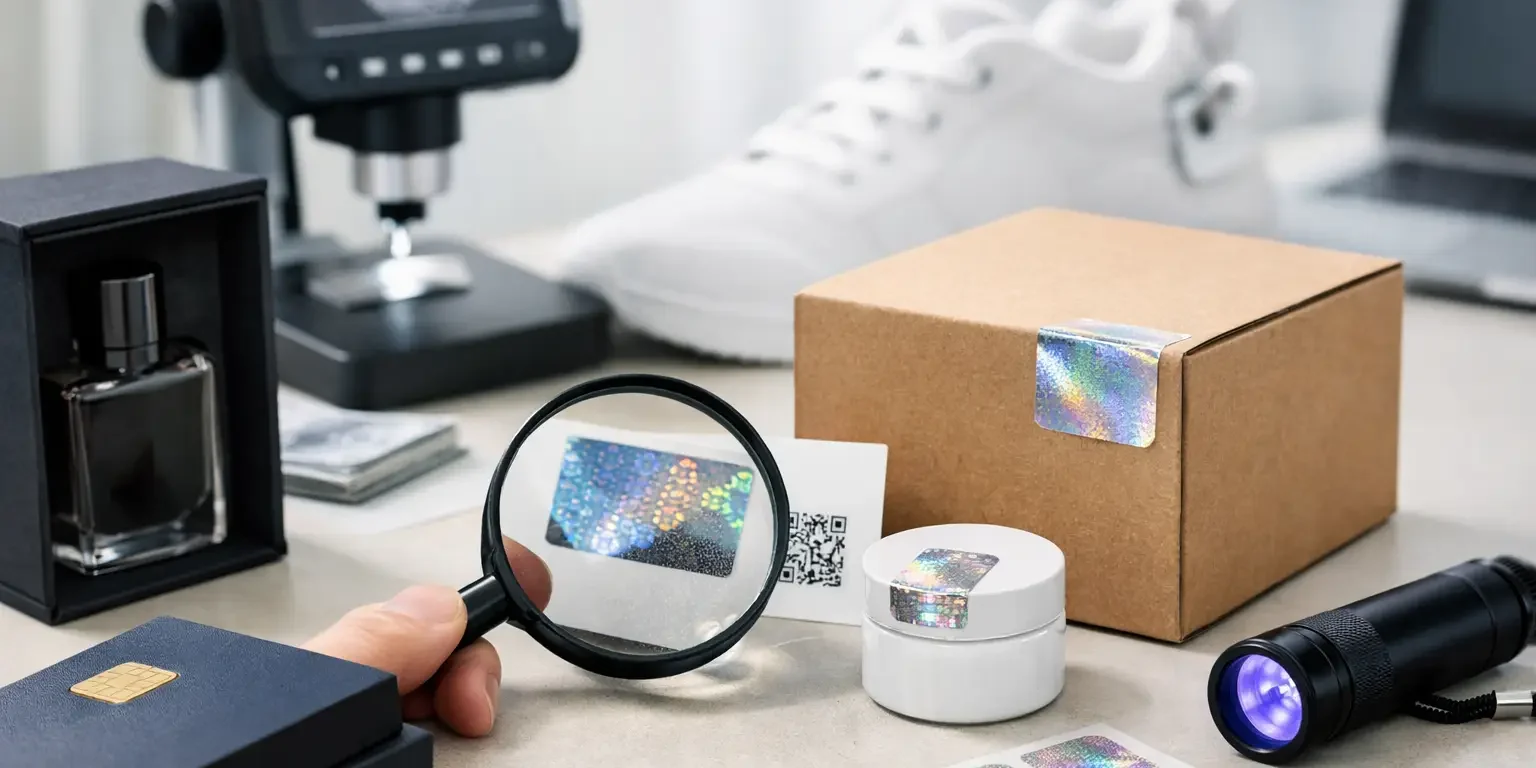
A counterfeit does not need to look perfect to cause damage. If it reaches a distributor, retailer or customer in packaging that appears credible, your brand may still carry the cost of complaints, safety concerns, returns and lost confidence. This anti-counterfeit packaging guide explains how UK businesses can build practical protection into product packaging, without turning a security project into an unnecessary technical headache.
The right approach is rarely one feature applied everywhere. A premium cosmetic jar, an automotive part and a case of spirits face different risks, travel through different channels and need different checks. Good security packaging starts by understanding where imitation, interference or unauthorised diversion is most likely to happen.
Start with the risk, not the label
Before choosing a hologram or seal, define what you are trying to prevent. Counterfeiters may copy the product itself, refill genuine containers, replace contents, tamper with outer packaging or divert stock into markets where it should not be sold. The same product can face more than one of these threats.
Consider the value of each unit, the potential safety impact and how easily a buyer can recognise the genuine article. A low-cost retail item may need a visible feature that reassures customers at the point of purchase. A pharmaceutical, specialist electronic component or collectible may justify additional covert checks for trained staff and distributors.
It also helps to map the product journey. Ask where packaging is filled, where it is stored, who handles it, whether it crosses borders and where buyers make their authenticity judgement. A security label placed under an outer carton is of little help if the risk occurs after the carton has been removed.
Build layers that are difficult to copy
Effective anti-counterfeit packaging is layered. A counterfeiter may imitate one visible element, but copying several features accurately, consistently and at scale is far more difficult. Layers also allow different people to perform different checks: consumers can inspect the obvious feature, while your team can verify details that are not publicly explained.
Use holograms as a clear first line of defence
Custom hologram labels provide an immediate visual signal that a product is protected. Their shifting light effects are familiar to buyers, yet a properly produced bespoke hologram is much harder to reproduce than a printed silver sticker.
For the strongest result, avoid relying on a generic design alone. Incorporating your logo, brand name, pattern or a distinctive image makes the label part of your packaging identity. It also gives retailers and customers a simple visual reference. A label that looks clearly specific to your brand is more useful than one that could appear on almost any product.
Holograms work particularly well where packaging needs both protection and a premium finish. Cosmetics, alcohol, electronics, automotive products and collectible goods often benefit from a label that reinforces quality while signalling authenticity.
Make opening evidence of interference
Authentication answers, “Is this genuine?” Tamper evidence answers, “Has this pack been opened or altered?” Many products require both.
A tamper-evident seal can bridge a carton flap, lid, closure or other point of access. When someone attempts to remove it, the material can break apart, reveal a void message or leave a honeycomb pattern behind. This makes interference visible rather than allowing a seal to be lifted and reapplied cleanly.
The material matters. Destructible labels are useful when a label should fragment on removal. Void and honeycomb materials are useful where you want clear evidence left on the product or packaging. The best choice depends on the surface, storage conditions and whether the label must remain legible after an attempted removal. Test samples on the real pack, not only on a flat production sample, because textured surfaces, coatings, curves and cold-chain conditions can affect adhesion.
Add a feature that is not obvious to everyone
Visible security helps customers spot a problem, but overt features alone can be studied and imitated. Covert devices create a second level of verification that counterfeiters may not know to look for.
Options can include UV-reactive details, hidden text or images, thermo-reactive elements and coin-reactive effects. A warehouse team might check a UV mark with a simple light source; a sales representative could confirm a hidden image during a retailer visit. The feature itself should be easy for authorised people to verify, but its exact location and appearance should not be widely published.
There is a trade-off here. The more complex the check, the more training and equipment it may require. For many growing brands, a custom hologram combined with tamper evidence and one straightforward covert feature is a sensible balance between security, cost and day-to-day usability.
Choose the right label position
A strong label in the wrong place can leave an easy route around your protection. Position seals where opening, refilling or substituting the product requires breaking the label. On a carton, this may mean spanning the opening flap. On a bottle, it may mean bridging the cap and neck. On an electronic device or component, it may mean covering a screw, access panel or join line.
Think about normal use as well. A seal should not frustrate a legitimate customer or make recycling unnecessarily difficult. It needs to survive handling, transport and expected temperature changes, while still giving clear evidence if someone tries to remove it. This is why packaging samples and an understanding of your application are more valuable than selecting a material from a photograph.
Match security to your supply chain
Packaging security is not only about what a consumer sees. It should support practical decisions throughout the supply chain.
For example, distributors need a quick way to reject suspicious stock. Retail teams need a simple explanation of what to check. Customer service teams need a process for handling reports, including photographs, batch details and where the product was bought. If your team cannot act on the information a label provides, the feature may look impressive without delivering its full commercial value.
Where individual traceability is required, variable serial numbers, barcodes or custom text can add another level of control. These are especially useful for asset management, controlled distribution and investigation of diverted stock. HologramLabel.co.uk works alongside Security-Label.co.uk for projects requiring variable data and related security-label services, helping businesses bring these requirements together clearly.
Avoid the common mistakes
The most frequent mistake is treating a security label as a decorative afterthought. If the label does not have a defined role, placement, verification method and response process, it is unlikely to deter a determined imitator.
Another is making every detail public. Tell customers enough to recognise your genuine packaging, but do not publish the full specification of concealed marks or inspection steps. Keep that information with authorised staff, selected distribution partners and trusted investigators.
Finally, do not assume more features always mean better protection. Too many effects can complicate production, confuse checks and add cost without addressing the real weak point. Security should be proportionate to the product risk and capable of being checked in the real world.
A practical anti-counterfeit packaging guide for specification
When briefing a supplier, provide the product type, packaging material, label size, application position, expected storage conditions and the problem you want to solve. Explain whether the priority is counterfeiting, tampering, diversion, brand presentation or a combination of these. This gives the design and production team the context needed to recommend suitable holographic and tamper-evident options.
Ask to see how the proposed label will behave once applied. Will it tear? Will it leave a visible message? Can a retailer verify the overt design without specialist equipment? Is there a discreet feature for internal checks? A good specification answers these questions before a full production run.
Low minimum order quantities can make bespoke protection accessible for new product launches and smaller ranges, while larger programmes can standardise security across a portfolio. The point is not to buy the most complicated label available. It is to create a recognisable, difficult-to-copy and practical part of your packaging system.
Your packaging is often the first physical proof that a product belongs to your brand. Give it a job beyond looking good: make it show buyers what genuine quality looks like, and make interference harder to hide.