A carton that looks genuine can still conceal a serious problem. Counterfeit, diverted or interfered-with medicines can reach pharmacies, clinics and patients through gaps in the supply chain, while a poorly chosen security label may give a false sense of protection. The best pharmaceutical authentication labels make it easier to identify an original pack, show whether it has been opened and give your team a practical way to investigate suspect stock.
For pharmaceutical manufacturers, distributors and brand owners, the right choice is rarely a single feature. It is a considered combination of visible deterrence, tamper evidence and authentication that fits the product, pack format and inspection process. The aim is simple: make copying difficult, interference obvious and genuine product recognisable without making packaging procurement unnecessarily complicated.
What makes a pharmaceutical label effective?
A useful pharmaceutical security label must work in the real conditions of your supply chain. It may be applied to a folding carton, bottle, vial box, pouch or outer case; stored in chilled conditions; handled repeatedly; and inspected under warehouse lighting, at a pharmacy counter or by an investigator. A feature that looks impressive on a sample but fails to adhere, tears unpredictably or cannot be checked quickly is not doing its job.
Authentication also has two audiences. The first is the person making a quick judgement: a pharmacist, wholesaler, patient or field representative. They need an obvious sign that is hard to imitate. The second is your authorised team, who may need a more controlled test when a pack is questioned. This is why layered security is normally stronger than relying on a hologram effect alone.
The label must also support rather than obstruct compliance and pack communication. It should not cover mandatory information, weaken legibility, compromise barcode scanning or introduce confusion around batch and expiry details. Where regulated artwork is tightly controlled, early discussion between packaging, quality and brand teams avoids costly changes later.
The best pharmaceutical authentication labels use layers
There is no universal best label for every medicine. A low-volume specialist treatment with a high unit value has different risks from an over-the-counter product sold at scale. However, the strongest solutions usually combine several distinct types of protection.
Overt holographic features for fast recognition
A custom hologram provides a highly visible cue that a pack is genuine. Light-responsive movement, depth and bespoke patterns are difficult to reproduce convincingly with ordinary printing. Your logo, product name or a recognisable brand device can be incorporated into the design, helping staff and customers spot the correct security mark at a glance.
This is particularly valuable where products may be purchased through multiple channels or handled by people who are not security specialists. A familiar holographic mark gives them a clear first check. Yet overt features should be treated as a deterrent and a triage tool, not as the entire authentication strategy. Sophisticated counterfeiters can imitate the appearance of a generic hologram, even if they cannot duplicate the original construction.
Tamper-evident materials that show interference
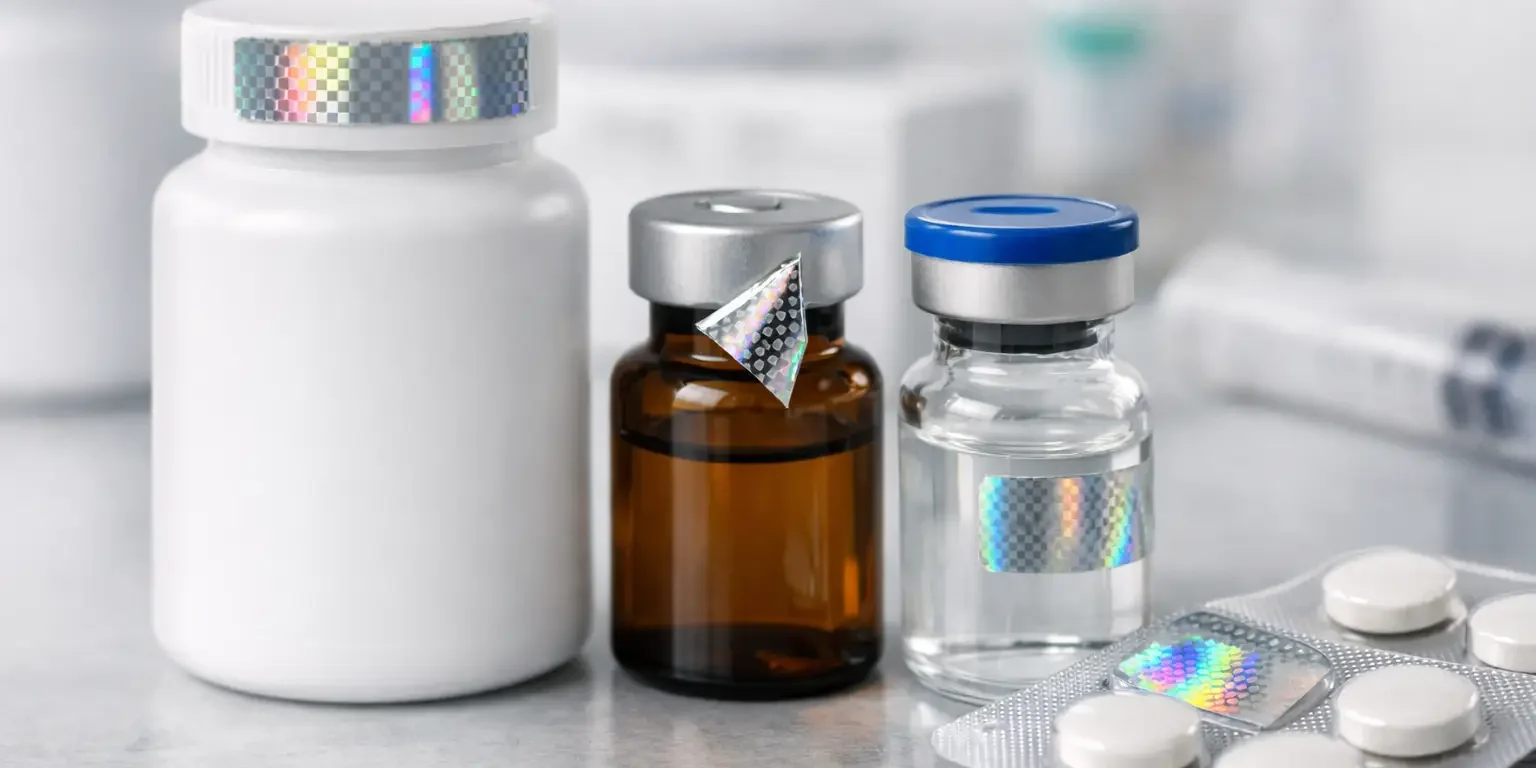
For medicines, package integrity is as important as identity. A tamper-evident hologram label can bridge a carton flap, closure or opening point so that opening the pack changes the label permanently. Destructible materials break apart when lifted, while void and honeycomb materials leave a visible message or pattern on the pack and label.
The right material depends on the surface and the expected route of interference. A destructible label may suit a smooth carton where removal must be impossible without obvious damage. A void label can be useful when you need a clearly readable indication that a seal has been lifted. Adhesion testing matters here. Coated board, textured packaging, cold-chain storage and curved surfaces can all affect performance.
Tamper evidence is not a substitute for authentication, but it answers a different and vital question: has this specific pack been opened or relabelled? Used together, holographic recognition and tamper indication give a more credible defence.
Covert features for authorised checks
Hidden security devices raise the difficulty and cost of counterfeiting. UV-reactive text or images, concealed microtext and hidden design elements can be verified by trained personnel using a simple agreed method. They are not intended to be obvious to every consumer. Their value lies in giving your team a reliable second-level check when a pack, supplier or return is in doubt.
Covert features should be selected with the verification process in mind. If warehouse teams need to check returns, a UV feature may be practical because the equipment is affordable and the result is quick. If only a small quality or investigations team will perform the check, a more restricted feature may be appropriate. Keep the checking instructions controlled and make sure responsible staff know what a genuine result looks like.
Reactive and specialist features for higher-risk products
Thermo-reactive elements and coin-reactive features can provide an additional physical test that is difficult to explain or copy from a photograph. Scratch-off areas can conceal a code or inspection detail until needed. These options can be effective for high-value products, limited distribution lines and packs that face frequent diversion or online resale.
There is a trade-off. More features can increase security, but they can also add unit cost, checking steps and artwork complexity. The most effective specification is not the one with the longest feature list. It is the one that addresses the actual threat without slowing packing operations or leaving users uncertain about how to verify a label.
How to choose the right label for your medicine
Start with a threat assessment rather than a material preference. Ask where counterfeiting, diversion or interference could occur; who needs to inspect packs; and what a successful attack would cost in patient safety, reputation and revenue. A locally distributed prescription medicine may need a different approach from a premium supplement sold through retailers and online marketplaces.
Next, consider the product’s journey. Does the label need to survive refrigerated handling, humidity, abrasion or long storage? Is it applied by hand or at speed on a packing line? Will it seal a flap, wrap around a closure or sit on a flat panel? These details determine the adhesive, face material, size and placement.
Then define how authentication will happen. For a quick frontline check, choose a clear overt holographic design with a recognisable movement or image. For investigations and controlled returns, add a covert feature with documented checking instructions. If opening is a concern, specify tamper-evident construction. That combination is often more useful than a visually complicated design with no agreed process behind it.
Variable serial numbers, barcodes and track-and-trace information may also be part of the wider protection plan. These are valuable when the data is generated, recorded and checked consistently, but a code alone does not stop a copied pack from carrying a copied or inactive number. Pairing data-led controls with a physical security label gives inspectors something they can assess immediately. Where variable data is required, it should be planned alongside the label specification so layout, print quality and scanning requirements work together.
Design choices that protect the brand as well as the pack
Pharmaceutical packaging needs to inspire confidence, not look cluttered or improvised. A bespoke hologram can carry your logo, colours and visual identity while still behaving as a serious security device. That matters when labels appear on patient-facing packs, where a generic sticker may look like an afterthought and invite questions rather than reassurance.
Placement deserves the same care as the artwork. A seal across the opening communicates tamper evidence clearly. A label placed away from the opening may be better for brand authentication but will not prove pack integrity. On small cartons, a compact design with one highly recognisable overt feature and one hidden check can be more effective than trying to fit every possible device into a tiny area.
It is also sensible to plan for evolution. Counterfeiters adapt, products change and a feature that was distinctive five years ago may become familiar. Bespoke artwork enables periodic changes to patterns, hidden content and feature combinations, helping your label remain recognisable to authorised users without giving fraudsters a permanent target.
Practical questions to ask before ordering
Before approving a specification, ask for samples on comparable packaging and test them under realistic handling conditions. Check adhesion, removal behaviour, appearance under normal lighting and the ease of verifying every feature. Include operations staff in that review, not only brand or procurement teams, because they understand application speeds and pack-line limitations.
Be clear about quantities and lead times too. Security should be accessible to growing brands as well as large pharmaceutical groups, so low minimum orders can be useful for a new product launch, a controlled trial or a limited market release. Honest pricing and a clear explanation of what each feature contributes make it easier to spend where it genuinely reduces risk.
HologramLabel.co.uk can help turn a risk profile, pack sample and brand idea into a bespoke security label that is practical to apply and difficult to copy. Bring the ambitious ideas and the packaging constraints – the technical decisions can be made straightforwardly.
The best result is a label your team can explain in one sentence, verify in seconds and trust when a questionable pack appears. That is a far better standard than choosing the most decorative sticker on the page.