A damaged carton is not always a security incident. A cleanly removed seal, a substituted product or a pack that can be opened and reclosed without evidence is different. A packaging integrity assessment gives your business a practical way to tell the difference, identify where protection is falling short and decide what action is proportionate to the risk.
For product owners, procurement teams and brand managers, the point is not to add a security feature simply because it looks sophisticated. It is to make unauthorised access, interference and substitution harder to carry out and easier to detect. Done well, the assessment protects consumers, supports distributors and gives your team clear evidence for packaging decisions.
What a packaging integrity assessment should establish
Packaging integrity is the package’s ability to arrive as intended: closed, undamaged, identifiable and free from unauthorised interference. It includes the physical pack, its closure, any outer transit packaging and the security devices that show whether it has been opened.
The assessment should answer four commercial questions. Can someone access the product without leaving obvious evidence? Could a counterfeit or diverted item be placed into genuine-looking packaging? Will staff, distributors and customers know what a genuine sealed product should look like? And can the pack withstand normal handling, storage and transport without generating false tamper warnings?
That last question matters. A seal that fails in legitimate use creates waste, complaints and uncertainty. A seal that looks impressive but can be lifted and reapplied offers little real protection. The right solution depends on the product, its route to market and the consequences of a compromised pack.
Integrity, authenticity and quality are related but different
These terms are often grouped together, but they solve different problems. Packaging quality concerns whether the carton, bottle, pouch or closure performs as specified. Integrity concerns whether the product remains protected and unopened. Authenticity concerns whether the product is genuinely yours.
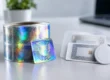
A holographic tamper-evident label can support both integrity and authenticity. It may leave a void message, honeycomb pattern or destructible residue if removed, while its holographic design and hidden features help users distinguish it from an ordinary sticker. However, it cannot correct a weak bottle cap, poor adhesive selection or inadequate warehouse controls. Assessment needs to consider the whole pack, not just one label.
Start with the risks that matter to your product
Begin by mapping where the product can be handled outside your direct control. This may include contract packing, warehousing, distribution centres, wholesalers, retail shelves, returns handling and online fulfilment. High-value electronics, cosmetics, alcohol, pharmaceuticals, collectibles and automotive components often face different risks, but all can be affected by interference or substitution.
Consider both deliberate and accidental failure. A premium skincare product might be opened and sampled before resale. An industrial spare part could be swapped for a lower-grade alternative. A bottle might leak during transport, causing a seal to detach and making genuine stock appear suspicious. Each scenario calls for a different response.
Risk should guide the investment. A low-value product in a short, controlled supply chain may need a clear tamper-evident closure and a well-designed security seal. A high-value product moving through multiple distributors may justify bespoke holography, covert UV details, hidden text or imagery, and a tamper-evident material that cannot be transferred intact.
Assess the package at the points where it can fail
A useful packaging integrity assessment looks at the real pack in real conditions, rather than approving a drawing or an isolated label sample. Review the primary pack first, then examine the secondary packaging and the route through the supply chain.
Pay particular attention to closures, seams, perforations, shrink bands, cartons and any point where the product can be accessed. Ask whether the product can be removed without tearing, breaking or visibly disturbing something. If the answer is yes, the tamper evidence may be in the wrong place or may not be strong enough.
Security labels should be assessed on the actual surface they will be applied to. Adhesion changes between coated cartons, textured board, glass, painted metal and plastic. Curves, recessed areas, dust, oils and low temperatures can all affect performance. A label that bonds perfectly to a flat sample board may behave very differently on a chilled bottle or a rough moulded component.
The following checks provide a sensible starting point for a practical review:
- Inspect whether seals cover the true opening route, rather than merely decorating the outside of the pack.
- Test attempted lifting, cutting, peeling and reapplication using the materials and tools a bad actor could reasonably access.
- Check that any void, destructible or honeycomb evidence is clear enough for staff and customers to recognise.
- Review packs after vibration, stacking, temperature changes and normal handling to identify accidental failure.
- Compare genuine packs side by side with any known counterfeit, returned or damaged examples.
Document what happens, including photographs, batch details and application conditions. This creates a baseline for suppliers and gives your operations team something concrete to review if a complaint or suspected counterfeit appears later.
Choose tamper evidence that makes sense to users
A security feature only works if the people handling the product understand what they are seeing. Clear, visible evidence is usually the first line of defence. A label that breaks apart on removal or leaves a permanent void message gives an immediate signal that the pack may have been opened.
Material choice is central. Destructible labels are designed to fragment when removal is attempted, making transfer difficult. Void materials reveal an irreversible message or pattern on the product, label or both. Honeycomb-style materials offer a distinctive break pattern. The best option depends on the substrate, the removal risk and whether residue on the pack is acceptable.
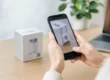
Visual holographic effects add another recognisable layer. They can make a product more difficult to copy convincingly while enhancing the appearance of premium packaging. For stronger checks, bespoke designs can incorporate company logos, specific patterns, colour effects or hidden text and images. UV-reactive, thermo-reactive and coin-reactive features can provide further authentication points for trained staff or distributors.
There is a trade-off between sophistication and usability. If every delivery requires a specialist torch, detailed instructions and five minutes of inspection per unit, routine checks may not happen. For many products, the most effective arrangement is a visible tamper feature for everyone, supported by one or two covert checks for authorised teams.
Test the design before committing to production
Do not assume that a security label performs as intended because the material specification looks right. Request samples and apply them in the same way your packaging line, co-packer or warehouse team will apply them. Test after the normal dwell time, as some adhesives need time to achieve their intended bond.
Then test the pack under realistic stress. Consider hot and cold storage, humidity, vibration, scuffing, compression and repeated handling. If goods are sold online, test the parcel journey as well as the retail shelf. If packs are likely to be returned, assess what evidence remains after a customer has handled, opened or attempted to reseal the item.
It is also worth testing human interpretation. Show staff a genuine sealed pack, a correctly opened pack and a deliberately compromised pack. Can they spot the difference quickly? Can customer service explain the evidence without technical language? A feature that is technically effective but poorly understood can still leave your business exposed.
Turn assessment findings into a workable control plan
The assessment becomes valuable when it leads to clear ownership. Define what a valid seal should look like, where it should be positioned and what counts as a rejection. Record approved artwork, material type, application instructions and sample photographs so that different sites and suppliers work to the same standard.
Set out what happens when an issue is found. Stock with a broken seal may need to be quarantined, photographed and traced to a delivery, batch or location. A pattern of failures may indicate a packaging-line issue, poor storage conditions or deliberate interference. The response should be proportionate, but it should never depend on guesswork.
Review the plan when your packaging changes, a new distributor is appointed, a product enters a new market or counterfeit activity is reported. Security is not a one-off procurement exercise. Criminals look for the easiest route, and packaging processes change over time.
For brands that need both practical tamper evidence and a more distinctive authentication layer, HologramLabel.co.uk can help translate an assessment into bespoke holographic security labels without making the specification needlessly complicated. Bring the product, the pack and the risk scenario to the discussion – the most useful security feature is the one that genuinely fits how your goods are made, moved and checked.