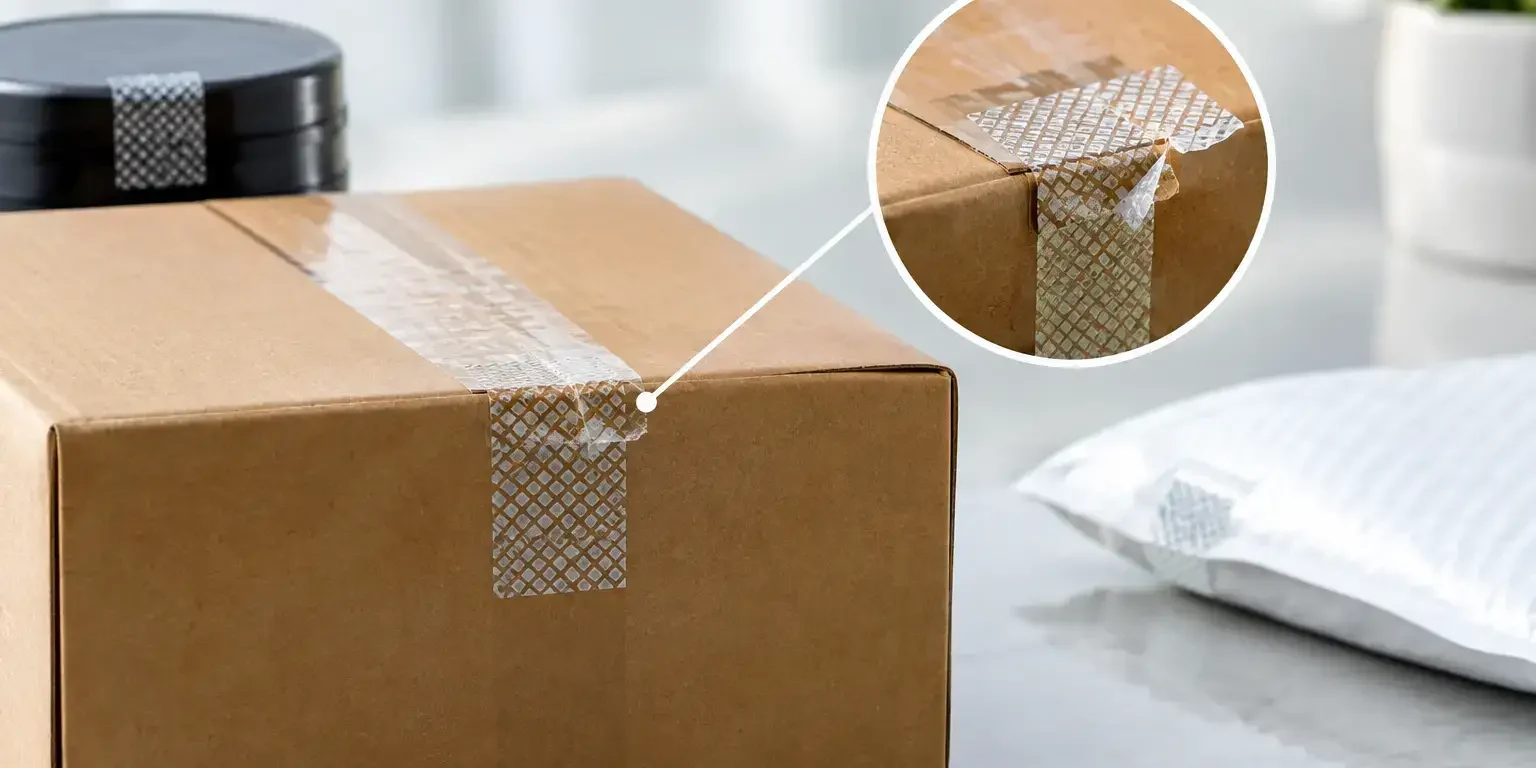
A carton can look untouched after somebody has lifted a flap, removed an item or substituted the contents. That is the problem tamper-evident seals are designed to solve. If you are asking what labels show opening attempts, the short answer is labels that leave a permanent, visible change when a pack, closure or component is disturbed.
For a business, that change creates evidence rather than a vague suspicion. It helps warehouse teams spot interference, gives retailers confidence at goods-in, and reassures customers that the product they receive has not been accessed. The right solution depends on the surface, the way the product is packed and how obvious you need the evidence to be.
What labels show opening attempts?
The most effective labels are commonly called tamper-evident labels, tamper seals or security seals. They are applied across an opening, join or closure so that a person cannot gain access without damaging the label or leaving a clear message behind.
There is an important distinction between a label that makes opening difficult and one that proves opening has happened. A strong adhesive alone may slow somebody down, but it does not necessarily provide a clear record of interference. Tamper-evident materials are engineered to change their appearance, break apart or transfer material when lifted. Once activated, that evidence cannot be neatly put back.
For everyday packaging, the most widely used choices are VOID labels, destructible labels and split or cut labels. Holographic tamper-evident labels can add a further layer of authentication, making it harder for a counterfeit seal to look convincing in the first place.
VOID tamper-evident labels
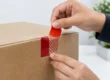
VOID labels are a familiar choice for cartons, electronics, plastic cases and higher-value goods. When somebody tries to peel the label away, a word such as “VOID”, “OPENED” or a custom message appears on the packaging, the label face, or both. The message remains visible after the seal has been disturbed.
This is useful where inspection needs to be quick. A retailer or customer does not need specialist equipment to see that the pack has been opened. It also gives a clear deterrent: anyone considering interference knows they cannot remove the seal cleanly.
The material needs to suit the application. Some VOID constructions leave a residue on the pack, while non-transfer versions reveal the message within the label itself. A residue-free option may be better for reusable cases, whereas a transfer VOID label can provide stronger evidence on a one-time-use carton or enclosure.
Destructible and honeycomb labels
Destructible labels are designed to tear into small pieces if removal is attempted. They cannot be lifted in one piece and reapplied to another product. This makes them particularly effective for warranty seals, equipment housings, pharmaceutical packs and components where access should be immediately apparent.
A honeycomb tamper-evident material works in a similar way. The label fractures along a patterned structure when disturbed, creating an unmistakable broken appearance. Both options are highly visual, but they are less suitable where a label may need to be removed legitimately during servicing or refurbishment.
For some applications, that permanence is exactly the point. If an engineer, distributor or end user needs to know whether an enclosure has been opened, a torn seal provides a simple answer.
Labels with cuts, perforations and split sections
A standard security label can also be made tamper-evident through its design. Die-cut slits, perforations or a deliberately split section can cross a lid and base, a bottle cap and neck, or the opening flap of a carton. Opening the pack breaks the label into separate parts.
This approach can be cost-effective and visually clean, especially when the seal also carries your logo, product name or instructions. It is not always as resistant to manipulation as a transfer VOID or destructible material, so it is best assessed against the value of the product and the likely threat. For low-risk retail packaging, a well-designed split seal may be sufficient. For medicines, premium spirits or sensitive electronics, stronger evidence is usually justified.
Why holographic seals add more than opening evidence
Tamper evidence answers one question: has this pack been opened? A holographic security seal can help answer a second question: is this seal genuine?
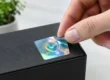
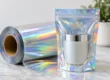
A custom hologram is difficult to reproduce convincingly with ordinary printing. It can incorporate your logo, bespoke patterns and layered visual effects, then be produced on a VOID, destructible or other tamper-evident base. The result is a seal that protects the opening point while strengthening product authentication and brand presentation.
This matters where counterfeiters may replace an original seal with a lookalike. A generic silver sticker may suggest security, but it offers limited protection if anybody can buy something similar. A bespoke holographic label makes the genuine article more recognisable to your teams, trade customers and consumers.
Additional overt or covert features can be considered where the risk warrants them. UV details, hidden text or images, thermo-reactive elements and coin-reactive features can give trained staff practical ways to check authenticity. They should be selected for a reason, not added simply because they sound advanced. The best security design is one that the people checking it can use reliably.
Choosing the right tamper-evident label for your product
Start with the opening route. A label placed neatly on the front of a carton does little if the carton can be opened from the base. Map every practical point of access, including caps, side flaps, mailer closures, dispenser lids and removable panels. The seal must bridge the two parts that separate.
Next, consider the surface. Smooth glass, coated card, textured plastic, powder-coated metal and corrugated board all behave differently. Adhesion is affected by dust, moisture, surface energy, storage temperatures and the pressure used during application. A label that performs well on a clean plastic case may fail prematurely on a rough carton or chilled bottle.
The product journey matters too. A cosmetics brand selling direct to consumers may need a neat, premium seal that supports shelf appeal. An industrial parts supplier may value a highly destructive warranty label that cannot be transferred between components. Pharmaceutical and food-related applications may also require careful consideration of packaging materials, storage conditions and sector-specific compliance obligations.
It is worth deciding who needs to interpret the evidence. Consumers benefit from an obvious visual change such as a broken seal or visible VOID message. Warehouse and service teams may be able to check a subtler feature, provided they are shown what to look for. If a feature is too discreet for the intended checker, it will not deliver its full value.
Common mistakes that weaken a security seal
The first mistake is treating a tamper label as decoration. Position, material and adhesive are functional decisions. A beautiful hologram placed away from the opening point will not show an opening attempt.
The second is relying on a generic stock label for a serious counterfeiting problem. Stock seals can be a useful, low-cost deterrent, particularly for internal controls or short runs. However, they are easier to source and imitate than a bespoke design with brand-specific holographic features.
Another issue is making the label too large or too complicated. A seal should be hard to remove cleanly, but easy to inspect. Clear placement, a legible message and an appropriate size usually outperform a crowded design with security elements nobody notices.
Finally, test before committing to a production run. Apply samples to the actual packaging, leave them through realistic storage conditions, then try to open and reseal the pack. Check what happens when the label is pulled slowly, quickly and at an angle. Honest testing exposes weak points before they reach your supply chain.
Make opening attempts visible, not debatable
The best tamper-evident label is not necessarily the most complex one. It is the one that gives your business clear, dependable evidence at the point where interference matters. For some products, a destructible seal is the right answer. For others, a transfer VOID label or bespoke holographic seal gives a better balance of visibility, authentication and brand value.
HologramLabel.co.uk can help turn the way your product opens, ships and is inspected into a practical security-label specification. Bring the packaging, the risk and your creative ideas to the conversation – the technical choices can be made straightforward from there.