A retailer advertising your product at an implausibly low price is not always selling a counterfeit. They may be selling genuine stock obtained outside your approved channel. That distinction matters, and unauthorised reseller detection gives brand owners a practical way to investigate it before price erosion, warranty disputes and customer distrust become harder to contain.
For manufacturers, distributors and growing consumer brands, the issue is rarely confined to one online listing. Genuine goods can be diverted through surplus stock, discontinued lines, regional distribution differences, liquidation sales or weak controls further down the supply chain. A security label will not replace sound commercial agreements or channel management, but it can provide the visible evidence and authentication cues that make diversion far easier to spot and challenge.
What unauthorised reseller detection should achieve
The aim is not to police every reseller automatically. It is to establish whether a product is genuine, whether its packaging has been interfered with, and whether the route by which it reached a seller is consistent with your authorised distribution model.
That gives your team a clearer basis for action. Instead of relying on screenshots and assumptions, you can compare a suspect item with approved packaging, inspect its security seal and identify patterns across locations, product ranges or batches. The information can support conversations with distributors, marketplaces and retailers, while helping you separate genuine channel diversion from counterfeit activity.
Detection works best when it is designed around the commercial question you need answered. A premium cosmetics brand may need to know whether products sold through a discount marketplace were intended for another territory. An automotive supplier may need to confirm that a replacement part has not been removed from approved packaging. A collectibles business may want buyers to see immediately that an item has arrived unopened and authentic.
Build a detection system around the physical product
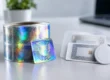
Online monitoring can flag suspicious prices, unfamiliar sellers and copied product descriptions. However, the physical pack is where a brand can introduce a dependable point of inspection. A well-designed hologram label creates a feature that is difficult to reproduce convincingly and straightforward for an authorised team to recognise.
The best approach combines a clear visual identity with one or more features that are not obvious to a casual observer. Your logo, brand colours and a distinctive holographic pattern can make a seal familiar to retailers and customers. UV details, hidden text or images, and coin-reactive or thermo-reactive elements give trained staff additional ways to check a label when a product is in doubt.
Tamper evidence is equally useful. A void, destructible or honeycomb material can show that a seal has been lifted, removed or transferred from another pack. This matters where diverted products may have been repackaged, where components are substituted, or where a reseller is presenting returned goods as new. A hologram that remains intact may not prove that every aspect of the supply chain is correct, but a broken or mismatched seal can be a valuable warning sign.
Choose features that match the real risk
More security is not automatically better security. If every warehouse operative needs to verify products quickly, an overt holographic design and tamper-evident construction may be the right starting point. If a small brand-protection team is investigating sophisticated diversion, covert features can add a second layer of confidence without advertising every check to the market.
It also depends on the product and how it is sold. A small bottle, electronics accessory or retail carton may need a compact label that works on a limited surface area. Industrial products, cases and larger packs can accommodate a more prominent seal. The key is to specify where the label will sit, what material it will adhere to, and whether it must resist moisture, handling or temperature changes in normal use.
Avoid choosing a generic stock seal simply because it looks secure. Stock holograms can be useful for basic tamper indication, especially when speed and cost are the priority. For unauthorised reseller detection, a bespoke design carrying details unique to your brand is usually more effective. It gives your team a known reference point and makes it harder for diverted or substituted goods to blend into legitimate stock.
Create a process for investigating suspect sellers
A label is only useful if people know what to do with the information it provides. Keep the process proportionate and document it from the start. Your commercial, operations and customer-service teams should be able to escalate a concern without needing specialist knowledge of holographic production.
When a suspect product is obtained, record where it was purchased, the seller name, listing details, date, price and photographs of the pack before it is opened. Compare the hologram and any tamper-evident feature against an approved reference. Check placement, finish, design details and signs of removal or resealing. Where your label includes covert checks, limit those instructions to the people responsible for authentication.
Then look for repeat signals. One discounted unit might be an isolated return or an old retailer clearance. Multiple products with the same unusual seal position, damaged packaging or recurring seller network may point to a larger source. This is where a consistent label specification becomes valuable: it helps investigators distinguish meaningful anomalies from ordinary production variation.
Your response should remain evidence-led. An unauthorised seller is not necessarily selling counterfeit goods, and public accusations made too early can create legal and reputational problems. Establish the facts, review your contractual arrangements, and decide whether the right next step is a distributor discussion, a marketplace report, an enforcement route or a change to your supply controls.
Where serialisation fits – and where it does not
A bespoke hologram can show that packaging carries your intended security feature, while variable serial numbers or barcodes can add product-level traceability. Together, they can be particularly useful when a business needs to identify the source of a diverted batch rather than simply verify a label.
That said, serialisation needs a process behind it. Someone must issue the data, associate it with batches or destinations, retain records and investigate exceptions. Without that discipline, a printed code can become little more than decoration. Brands needing variable data, barcodes, serial numbers, asset labels or custom text should plan the label programme with their supply-chain workflow in mind and use a specialist variable-data provider where appropriate.
Make legitimate stock easy to recognise
Detection becomes stronger when authorised partners understand what good stock should look like. Give distributors and key retailers clear, controlled guidance on the location and appearance of your seal, along with simple instructions for reporting damaged or unfamiliar labels. Do not publish every covert detail. The objective is to help trusted partners flag concerns, not to give counterfeiters a production brief.
Customer-facing communication can also help, particularly for products with high counterfeit exposure. A concise message on the packaging or in your support material can explain that the item is protected by a tamper-evident hologram and should arrive with the seal intact. This creates a useful final check at the point where brand damage is often felt most sharply: when the customer opens the product.
For brands working across several packaging formats, keep the system recognisable. The label does not have to be identical on every item, but the security logic should be consistent. A customer buying a small accessory and a retailer receiving a larger case should both be able to recognise the same standard of care.
Start with a label specification that can grow
You do not need to redesign every pack or commit to a huge run before improving channel visibility. Start with the products most frequently diverted, counterfeited or discounted without approval. Define the verification question, select the right mix of overt, covert and tamper-evident features, then test the label in real handling conditions.
Low minimum order quantities make it possible to trial a bespoke approach on a priority line before rolling it out more widely. It is also worth involving procurement, packaging and operations early, as their input will determine whether the chosen material performs properly on the production line and through distribution.
At HologramLabel.co.uk, the practical starting point is a conversation about the risk you are trying to reduce, rather than a confusing list of technical options. Bring the product, the pack and your concerns about resale channels. The right hologram label can turn an uncertain marketplace listing into a product your team can inspect with confidence.