A counterfeit does not need to look perfect to cause damage. If it carries your name, resembles your packaging and reaches a customer through a convincing route, your business may still face the complaint, refund, safety concern and loss of trust. A well-planned brand protection strategy gives customers, distributors and your own team a practical way to distinguish genuine products from imitations or interfered-with stock.
For physical goods, security is not simply a packaging decision. It is a commercial control that protects revenue, reputation and the confidence people place in your product. The right approach makes copying more difficult, package interference more obvious and genuine items easier to recognise.
Start with the risk, not the label
Security labels work best when they answer a defined problem. A cosmetics brand may need to show that a jar has not been opened before sale. An automotive parts supplier may need distributors to identify genuine components quickly. A pharmaceutical or supplement business may need a visible authenticity cue alongside a tamper-evident seal. These are related challenges, but they do not require identical labels.
Begin by looking at where the risk enters your business. Consider the products that are most valuable, most widely distributed or easiest to copy. Review returned goods, customer complaints, marketplace listings and reports from distributors. Ask whether the main concern is counterfeiting, grey-market diversion, unauthorised substitution, package opening or a combination of several risks.
This matters because a generic sticker can create false reassurance. A security feature should suit the threat, the packaging material and the person expected to check it. If customers need to recognise the label without tools, visible holographic effects and clear branded design have a role. If only your team or a trusted distributor should validate stock, concealed features can provide a second level of checking.
Build a brand protection strategy around layers
A single feature is rarely the whole answer. Counterfeiters look for the easiest point to copy, remove or work around. Layered protection raises the effort involved and gives different people different ways to assess a product.
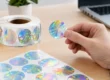
The outer layer should be easy to see. A custom hologram carrying your logo, a distinctive pattern or carefully chosen colours helps buyers associate the seal with the genuine product. Holographic movement and light effects are difficult to reproduce convincingly with ordinary printing, while also adding a premium finish to the packaging.
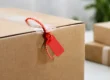
The next layer can deal with package integrity. Destructible materials, void labels and honeycomb tamper-evident constructions are designed to reveal an attempted removal or opening. This is especially useful where the label bridges a carton flap, cap and bottle, or another access point. The evidence should remain clear after tampering rather than allowing a removed seal to be reapplied neatly.
A third layer can be less obvious. UV details, hidden text or images, thermo-reactive elements and coin-reactive features allow trained staff to make a more informed check. These features should not replace a visible seal where consumers need reassurance, but they are valuable when investigating suspicious stock or checking goods within the supply chain.
The balance depends on your product. Too many features can add cost or complicate application without materially improving protection. Too few can leave a valuable product looking easy to imitate. The aim is proportionate security that is understood by the people who use it.
Make tamper evidence part of the pack design
A hologram applied only as a decorative badge may look impressive, but it will not necessarily show whether the pack has been opened. For a seal to provide tamper evidence, its placement and material must be considered at the design stage.
Think about the route a person would take to access the item. On a carton, the label may need to cross the opening flap. On a bottle, it may need to connect the closure to the container. On an electronics box, it may need to cover the point where the lid separates. A good security label makes that action visible without making normal opening unnecessarily difficult for the genuine customer.
Material selection is equally important. Some surfaces are curved, textured, cold, oily or exposed to moisture. Some labels must remain intact through distribution, while others are intended to break apart if removal is attempted. Testing samples on the actual packaging is sensible, particularly if your product is shipped in varying temperatures or handled heavily in warehouses.
Give every checker a clear job
A protection measure is only useful when someone knows what to look for and what to do next. Customers should be able to recognise a simple visible signal, such as a branded hologram and an unbroken seal. They should also know where to report concerns, whether through customer service, a distributor or your usual product-support channel.
Your internal team needs a more detailed process. Warehouse staff, sales teams and account managers should understand the expected position, appearance and behaviour of the label. If a seal is missing, damaged or visually inconsistent, they need a route for escalating the issue rather than making a judgement in isolation.
For higher-risk products, trusted distributors can be shown the covert features used for verification. Keep this information controlled. Publishing every check openly gives counterfeiters a useful design brief. The visible feature builds confidence; the less visible feature supports investigation.
Where individual product-level identification is required, a security label can form part of a wider traceability process. The exact setup depends on whether you need unique codes, batch records, barcodes or serial numbers, and how those details will be managed after printing. It is worth planning the full process before committing to a format, rather than treating variable information as an afterthought.
Protect the supply chain as well as the shelf
Counterfeiting is not always the only issue. Genuine goods can be diverted into unauthorised channels, substituted with inferior items or returned after interference. Security seals help, but they should sit alongside sensible operational controls.
Keep clear records of approved suppliers, packaging versions and production runs. Ensure distributors know which products and formats they are authorised to receive. Photograph genuine packs and labels under normal lighting so your team can compare a suspicious item with a known example. When an incident occurs, retain the product, its packaging and details of where it came from. Patterns are often easier to spot when reports are collected consistently.
This does not mean treating every customer as a potential problem. It means making it harder for dishonest activity to hide within ordinary transactions. A clear, repeatable process also helps legitimate partners feel confident that you take product integrity seriously.
Choose security that works at your order volume
Some businesses delay action because they assume bespoke holographic protection is only practical for very large production runs. Others buy a stock label because it is immediately available, then find that it does not support their own brand or product checks. There is a place for both options.
Stock hologram labels can be a useful visible deterrent for lower-risk applications, short runs or products needing a quick security cue. Bespoke labels offer more control: your own logo, colours, artwork and selected security features can become part of a design that is harder to copy and more recognisable to customers.
The practical question is not simply, “What is the most advanced label available?” It is, “What security will be applied correctly, checked consistently and remain commercially sensible as we grow?” Low minimum quantities can make it possible to test a design on a priority product before extending the approach across a range.
A specialist should be able to explain the choices in plain English, show how a proposed label will behave and help you avoid paying for features that do not address your risk. HologramLabel.co.uk takes this collaborative approach, combining bespoke design support with tamper-evident holographic options for businesses that need protection without unnecessary complexity.
Review after launch
Your first label design should be treated as an active control, not a permanent assumption. Check how it applies on the production line, whether it survives transport and whether customers notice and understand it. Speak to distributors about damaged seals, unusual returns or products appearing in unexpected channels.
Review the approach when you change packaging, enter a new market, introduce a higher-value product or see evidence of copying. Small improvements, such as moving a seal to a more effective opening point or adding a discreet verification feature, can have a meaningful effect.
The most useful brand protection strategy is one your business can maintain. Start with the real risk, make genuine products easier to recognise, and give every person in the chain a simple reason to trust the seal in front of them.