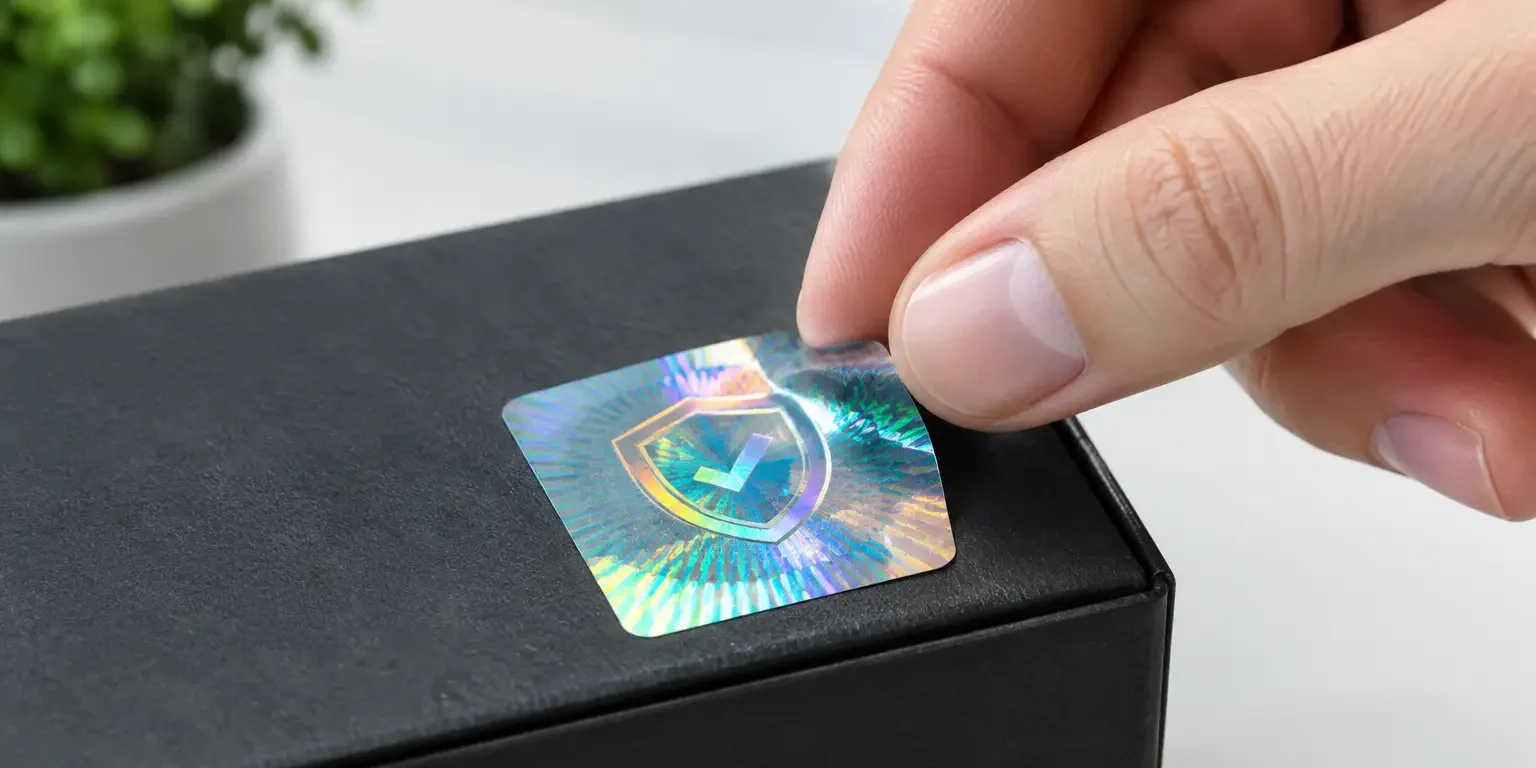
A counterfeit does not need to look perfect to cause damage. If it carries your name, mimics your packaging or reaches a customer through an apparently legitimate route, it can undermine trust in a single purchase. That is why the use of holographic authentication labels is a practical question for manufacturers, brand owners and distributors, rather than simply a packaging decision.
A well-designed hologram label gives customers, stockists and internal teams a quick visual sign that a product is genuine. When paired with tamper-evident materials and carefully chosen security features, it also makes copying, substitution and package interference harder and more obvious. The result is a visible layer of protection that can work from the warehouse to the point of sale.
Why use holographic authentication labels for products?
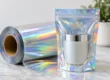
Holographic labels use light, movement and detailed imagery to create effects that are difficult to reproduce with ordinary printing. Tilt the label and its appearance changes: colours shift, patterns move and bespoke imagery becomes visible. People do not need specialist equipment to recognise that distinctive effect, which makes holograms especially useful as a first-level authenticity check.
For a customer deciding whether a cosmetic product, electronic accessory or bottle of premium drink looks legitimate, that immediacy matters. For a retailer receiving stock, it gives staff a simple feature to inspect. For a brand, it creates a consistent authentication marker that counterfeiters must attempt to imitate on every unit.
The value is not that a hologram makes counterfeiting impossible. Determined criminals can copy the general look of almost any packaging feature. Its value is that a bespoke hologram raises the cost, skill and time required to make a convincing fake, while giving legitimate products a recognisable security signature. Counterfeiters often rely on speed, volume and buyer uncertainty. A layered label reduces that advantage.
A visible cue that supports buying confidence
Packaging has a job to do before anyone reads the small print. A holographic authentication label can be seen immediately and can reinforce a customer’s sense that the product has been supplied by a business that takes quality seriously. This is particularly valuable where buyers cannot easily judge a product’s authenticity until after use, such as supplements, replacement parts, skincare, collectibles and electrical goods.
The label can also support premium presentation. A holographic finish can be tailored around a logo, brand colours, text or a custom pattern, so it does not have to look like an off-the-shelf security sticker. Done well, it becomes part of the pack design while still communicating that the item is protected.
That balance matters. A security label that clashes with the packaging may be ignored or removed. A label designed into the product experience is more likely to be noticed, retained and checked.
Evidence of opening and interference
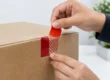
Authentication is only part of the problem. A genuine product may still be diverted, opened, refilled or substituted before it reaches its intended buyer. Tamper-evident holographic seals address this risk by showing when a pack has been opened or a label has been removed.
Destructible materials break apart when lifted. Void labels leave a visible message or pattern behind. Honeycomb-style materials distort and fragment. The right choice depends on the surface, the packaging format and what should happen when somebody attempts removal. A seal on a carton may need to tear cleanly, while a label on a high-value component may need to leave clear evidence on the item itself.
This does not physically stop every attempt at tampering. What it does is make tampering much harder to conceal. That gives retailers, service engineers, customs teams and end users a clear reason to reject or investigate an item before it is sold or fitted.
Build security in layers, not on appearance alone
The strongest case for holographic authentication labels is not the hologram on its own. It is the ability to combine visible, hidden and tamper-evident features in one label. A counterfeiter may reproduce a shiny surface at a glance, but reproducing several carefully selected checks is considerably more demanding.
Overt features are designed to be seen by anyone. They can include a custom holographic image, movement effects, micro-patterns or clear branded artwork. These are ideal for quick inspection by customers and shop staff.
Covert features add a second level of checking for authorised people. UV-reactive details, hidden text or images, coin-reactive elements and thermo-reactive features can confirm authenticity without advertising exactly how the label works. A distributor or field representative can be trained to check these features, while a counterfeiter has less information to work from.
For some products, scratch-off areas can introduce a controlled, one-time reveal. They may be useful where a code or concealed message supports a wider verification process. If serial numbers, barcodes, variable data or asset tracking are central to the project, the label should be planned as part of the wider identification system rather than treated as an isolated packaging feature.
There is no single best combination. Pharmaceuticals and regulated products may place more weight on traceability and tamper evidence. A collector brand may prioritise a highly distinctive bespoke design and hidden verification feature. Automotive and industrial suppliers may need labels that remain legible and securely attached in demanding handling conditions. The best specification follows the threat, the product journey and the people who will carry out the checks.
Where holographic labels make commercial sense
Holographic authentication labels are most useful when a fake, swapped or interfered-with product creates a meaningful commercial risk. That risk may be financial, but it can also involve safety, warranty costs, regulatory exposure or long-term damage to reputation.
They are a strong fit for brands with premium goods, limited-edition products, high-demand items or established resale markets. They can also help businesses supplying components where unauthorised parts may create performance or safety concerns. In alcohol, cosmetics and consumer electronics, the label can help distinguish approved stock in a crowded market. In industrial supply chains, it can support checks on parts, tools, service items and warranty-sensitive equipment.
Smaller businesses should not assume product authentication is only for major global brands. Counterfeiters frequently target growing brands precisely because their products are gaining recognition but their packaging controls have not yet caught up. Low minimum order quantities make it possible to introduce a bespoke security measure without committing to excessive stock.
Choosing the right label specification
Before choosing a design, start with the practical questions. Where will the label be applied? What material is it going onto? Will it face heat, moisture, abrasion or cold storage? Does it need to seal two surfaces, such as a carton flap and outer pack? And who needs to authenticate it: a shopper, a retailer, a warehouse team or an investigator?
Adhesive and material selection are as important as the holographic artwork. A label that looks impressive but lifts easily from the intended surface is not doing its job. Similarly, a highly complex covert feature is of little value if no one in the supply chain knows it exists or how to check it.
It helps to agree a simple inspection process before production. A customer-facing check might be: look for the logo and tilt effect, then confirm that the seal is intact. An internal check may add a UV response or hidden image. Keep the first check quick, and reserve more detailed checks for returns, suspicious stock or higher-risk channels.
A bespoke design service is useful here because technical choices can be made around the actual product rather than a generic template. Share the packaging material, application method, expected environment and concerns about counterfeiting or tampering. That gives the label supplier the information needed to recommend a sensible combination of features, without adding cost or complexity that does not serve the risk.
The trade-off: security must be usable
More security features are not automatically better. Each addition can affect unit cost, production time, application requirements and how easily the label can be inspected. A heavily layered solution may be justified for high-value products or known counterfeiting hotspots. For lower-risk items, a custom hologram with a tamper-evident construction may provide the right balance of deterrence, presentation and price.
Consistency is also essential. If only some product lines carry an authentication label, or label placement changes repeatedly, buyers may not know what to look for. Establish a clear standard for protected ranges and communicate it to relevant retailers, distributors and customer service teams.
The aim is not to make customers suspicious of every product. It is to make genuine products easier to recognise and suspicious products easier to challenge.
When your product is valuable enough to copy, open, refill or divert, a generic sticker is rarely enough. A bespoke holographic label gives you a visible brand marker, a practical tamper check and room for security features that fit the real risks your business faces. Bring the product, packaging and concern to the conversation, and HologramLabel.co.uk can help turn a big security idea into a label people can actually use.